British Columbia’s Record Black Bear
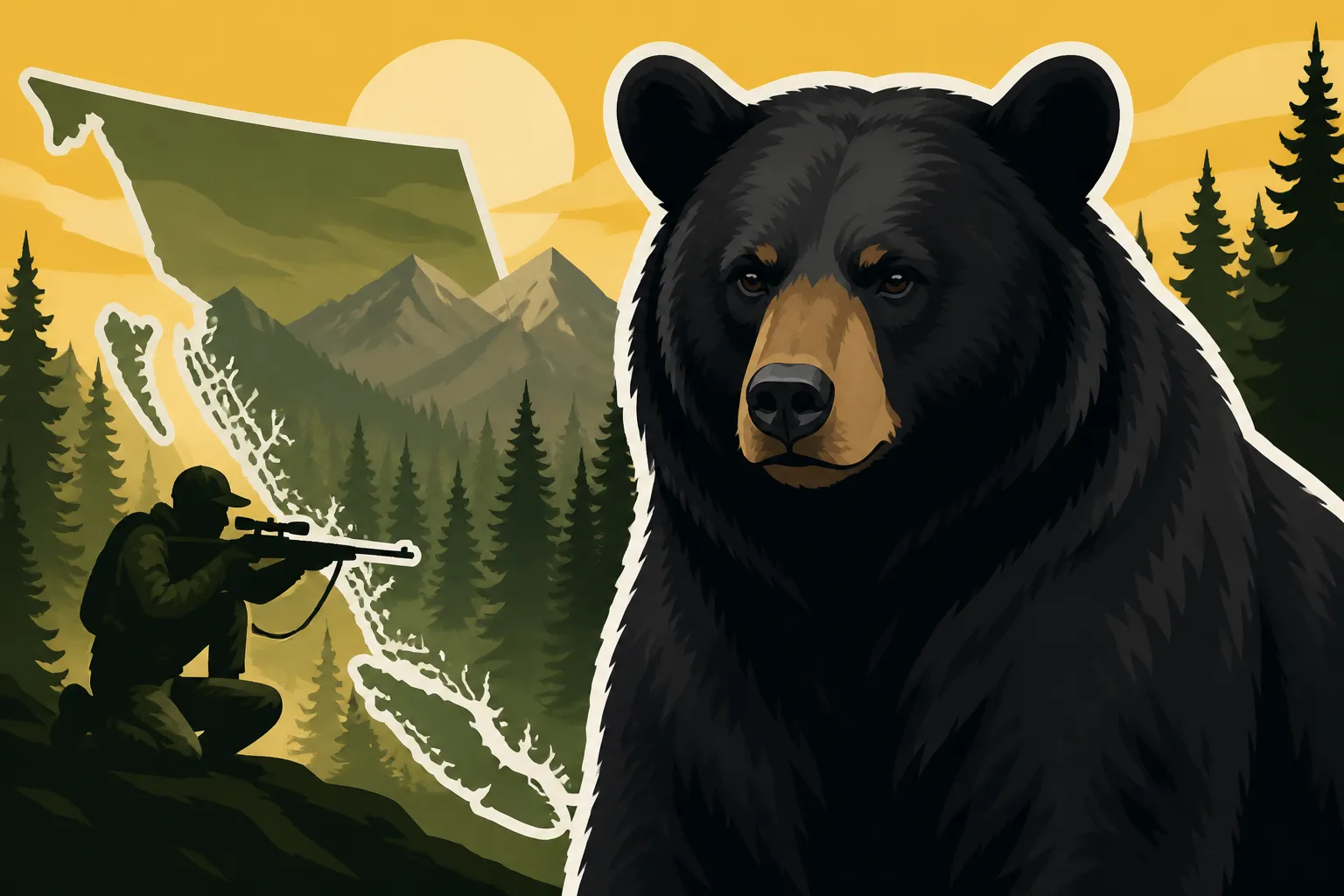
The dream of chasing a record-book black bear in British Columbia is a powerful one, often fuelled by whispers of monstrous skulls and tales of encounters with truly legendary animals. For many hunters, the quest isn't just about harvesting an animal, but about connecting with a wilderness that produces some of the largest black bears on the planet. This guide dives deep into what makes a black bear a "record," the unique factors that allow British Columbia to consistently produce these giants, and how dedicated hunters approach the pursuit of such an incredible trophy.
The Allure of British Columbia's Record Black Bears
There's something uniquely compelling about British Columbia when it comes to black bears. This isn't just another place to hunt bears; it's a place where the confluence of expansive wilderness, varied habitats, and strong genetics creates conditions ripe for truly exceptional animals. Every year, hunters across the province pursue these magnificent creatures, with a select few finding bears that not only take their breath away but also earn a place in the record books.
Why British Columbia is a Black Bear Powerhouse
British Columbia is practically synonymous with big black bears, and for good reason. Our province boasts an incredible diversity of ecosystems, from the dense coastal rainforests to the vast interior plateaus and northern boreal forests. This provides an almost endless buffet of food sources for bears throughout the year. Think about the nutrient-rich estuaries along the coast where bears gorge on sedges in the spring, or the high-elevation berry patches in the fall that allow them to pack on crucial weight before denning. This consistent access to high-quality forage, combined with a relatively stable population across much of the province and genetics that favor larger animals, creates an environment where bears can truly thrive and reach impressive sizes. It’s no wonder so many hunters travel to BC, hoping to find Why British Columbia Grows Big Black Bears.
What Constitutes a "Record" Black Bear
When hunters talk about "record" black bears, they're typically referring to animals that meet the minimum entry requirements for prestigious conservation organizations like the Boone and Crockett Club or the Pope and Young Club. These aren't just subjective measures of how "big" a bear looks; they're based on precise skull measurements. It’s the sheer size of the bear's skull, measured across its length and width, that determines its place in these record books. While every bear taken is a trophy in its own right, a "record" bear signifies an animal of exceptional maturity and physical development, a true giant of the species. It's the ultimate benchmark for a black bear hunter.
Understanding Record-Book Scoring Systems
The world of big game records might seem a little opaque if you're new to it, but it's built on a foundation of objective measurement. For black bears, it's all about the skull. These systems were created not just for bragging rights, but to promote fair chase and the conservation of big game species, encouraging hunters to target mature animals.
Boone and Crockett Club: The Standard for Big Game
For rifle hunters, the Boone and Crockett Club is the gold standard for North American big game records. Their system for black bears focuses on the maximum length and width of the cleaned, dried skull, measured to the nearest sixteenth of an inch. These two measurements are added together to produce a final score. To even be considered for the all-time records, a black bear typically needs to meet a minimum score that represents a truly exceptional animal. This means you're not just looking for a "big" bear, but one with a massive head structure. It's a testament to the bear's age and the richness of its habitat, as it takes many years and consistent food to grow a skull of such proportions.
Pope and Young Club: Archery's Measure of Excellence
If you're an archery hunter, the Pope and Young Club is your equivalent for record-keeping. They utilize the exact same scoring system as Boone and Crockett—measuring the maximum length and width of the cleaned, dried skull. The difference, of course, is that the animal must have been harvested legally and ethically with archery equipment. The minimum entry score for Pope and Young is often slightly lower than Boone and Crockett for black bears, acknowledging the additional challenge of taking big game with a bow. However, it still represents an outstanding accomplishment, reflecting countless hours of practice and dedication in the field. Whether you hunt with a rifle or a bow, the challenge of finding and harvesting an animal that qualifies for either of these clubs is a lifelong pursuit for many.
| Scoring System | Minimum Score (Typical) | Equipment Required | Key Measurement | Focus |
|---|---|---|---|---|
| Boone and Crockett | Generally higher | Firearm | Skull length + width | All-time big game records |
| Pope and Young | Generally lower | Archery equipment | Skull length + width | Archery-harvested big game records |
Factors Contributing to a Trophy Black Bear's Size
You can't just stumble upon a record-book black bear every day. These animals are products of specific conditions—a combination of good genes, a long life, and an abundance of the right kind of food. Understanding these factors is crucial for any hunter hoping to pursue a truly large bear.
The Role of Age and Genetics
First and foremost, a record black bear is an old black bear. Just like humans, bears continue to grow, albeit at a slower rate, throughout much of their lives. A sow might reach her maximum size earlier, but a boar often continues to put on bone and body mass well into its teens. It takes years and years of avoiding hunters, grizzly bears, and other natural dangers to reach that kind of maturity. Beyond age, genetics play a massive role. Some bear lineages are simply predisposed to larger body and skull sizes. You can have two bears living in identical habitats, eating the same food, but if one has the genetic blueprint for a bigger skull, that's the one that might make the book. This is why certain regions of British Columbia are renowned for producing bigger bears consistently.
Optimal Habitat and Abundant Food Sources
A bear needs to eat, and a lot of it, to grow big. British Columbia's diverse habitats provide just that. Consider the coastal regions, particularly during the spring. Bears emerge from hibernation and head straight for the estuaries, where nutrient-rich sedges and grasses provide an easily digestible first meal. This early nutritional boost is vital. As the season progresses, they move into higher country for huckleberries and other fruits. In the interior, burns and cutblocks often become huge berry producers, providing tons of calories. These consistent, high-calorie food sources allow bears to not only survive but thrive, putting on significant weight and contributing to skull growth. Areas with consistent salmon runs in the fall can also be hotspots, providing a protein-packed feast that helps bears build fat reserves for winter, indirectly contributing to their overall health and growth. What Bears Eat on a Coastal Estuary in the spring, or the abundance of berries Hunting Fall Bears on British Columbia Berry Slopes, are key examples of these crucial food sources.
Scouting for Giant Bears
You can't just pick a spot on the map and expect to find a record bear; intentional scouting is paramount. This means more than just driving roads. It involves researching specific Management Units that have a history of producing larger bears, studying satellite imagery for prime feeding areas like old clearcuts, avalanche chutes, or dense berry patches. Tools like GoHunt can be invaluable here, offering detailed mapping and overlays that help identify promising habitat features and access points. Looking for sign is critical: oversized tracks, rub trees where bears scratch and scent mark, and substantial scat deposits can indicate a large bear's presence. Remember, these bears are often solitary and elusive, particularly the biggest boars, so identifying their patterns and preferred hangouts before the season even opens greatly increases your odds. Early spring, when bears are focused on food, is an excellent time for this kind of reconnaissance, helping you target specific locations for Glassing Logging Roads for Spring Bears.
Strategies for Hunting a Record Black Bear
Hunting a record-book black bear in British Columbia is a serious endeavor, requiring more than just luck. It demands careful planning, disciplined execution, and an understanding of bear behaviour throughout the seasons.
Targeting the Right Season: Spring vs. Fall
Both spring and fall offer distinct advantages for black bear hunting, but for a true trophy, many seasoned hunters lean towards the spring. In the spring, bears are emerging from hibernation, often lean and hungry. Their primary focus is finding food to replenish lost fat, which means they are often out and visible during daylight hours. This is when you'll find them on green-up slopes, logging cutblocks, and coastal estuaries. Their coats are also at their prime, thick and luxurious, making for a beautiful rug. British Columbia Spring Bear Season Dates generally run from April into June, offering a fantastic window. In the fall, bears are often preoccupied with the rut (though less pronounced than other big game), and more importantly, gorging on berries and other foods to put on weight for winter. They can be found higher up in berry patches or along salmon streams. While fall offers incredible hunting opportunities, bears can be harder to pattern due to dispersed food sources and their focus on denning. However, if you're looking for sheer body mass, fall bears can be unbelievably heavy. You'll want to check Fall Bear Season Dates by Region as they vary considerably.
Effective Hunting Methods for Big Bears
For record-book black bears in British Columbia, the spot-and-stalk method is king. This isn't baiting or hunting over hounds, which aren't legal or common practice across most of the province for black bears. Spot-and-stalk involves patiently glassing large areas, often for hours on end, identifying a bear, and then executing a strategic approach to get into shooting range. This is where high-quality optics truly shine. You'll often be glassing distant hillsides, recently logged areas, or open avalanche paths. Once a bear is spotted, the real work begins: analyzing the terrain, wind, and bear's behaviour to plan a quiet, undetected stalk. This might mean covering significant ground, navigating difficult terrain, and using every bit of cover available. It’s an incredibly challenging and rewarding way to hunt. Hunters often focus on Hunting a Recent Cutblock in Its Third Year or Hunting a British Columbia Cutblock Edge where new growth attracts bears. Knowing Judging a Boar From a Sow With Cubs is critical before committing to a stalk.
The Patience and Persistence Required
Let's be real: hunting a record black bear isn't something that happens every weekend. It requires an immense amount of patience and persistence. You might spend days, even weeks, glassing hillsides, putting on miles, and seeing many bears that don't meet your criteria. The biggest boars are typically the wariest and often nocturnal, making them even harder to locate during legal shooting hours. You need to be prepared for bad weather, long days, and the mental fortitude to pass on smaller bears in pursuit of a true giant. Many hunters go years without encountering a record-class animal. It's a journey of dedication, learning from every outing, and cherishing the experience regardless of the outcome. This is where your homework, perhaps aided by detailed mapping from GoHunt, really pays off, putting you in the right areas repeatedly.
Post-Harvest Care and Official Measurement
Once you've been fortunate enough to harvest a truly magnificent black bear, the work isn't over. Proper field care is absolutely essential, particularly if you suspect your bear might be a record. Mishandling the skull can easily diminish its potential score or even disqualify it.
Field Care for Trophy Preservation
The skull needs to be carefully removed from the hide, with as much flesh and tissue cleaned off as possible. Be extremely cautious around the delicate nasal bones and jaw hinge, as damage here can impact official measurements. Once the skull is separated, it needs to be thoroughly cleaned. This usually involves simmering it (never boiling, as it can damage the bone) in water, or using a maceration process to get all the remaining tissue off. After cleaning, the skull must be allowed to dry completely for a minimum of 60 days. This drying period is critical because bones can shrink as they dry, and official measurements must be taken from a fully dried skull to ensure accuracy and consistency. Protecting it from insects and rodents during this time is also vital.
Navigating the Official Scoring Process
After the mandatory 60-day drying period, your skull is ready for official measurement. You'll need to locate a certified Boone and Crockett or Pope and Young scorer. These individuals have been trained and certified to perform the precise measurements according to the club's strict guidelines. They will measure the maximum length (from the tip of the nose to the back of the skull) and the maximum width (at the widest point), to the nearest sixteenth of an inch. These measurements are added together to get your final score. The scorer will also fill out all the necessary paperwork, and you'll usually be responsible for submitting this, along with any required photographs and fees, to the respective club. It's a meticulous process, but it ensures the integrity of the record books and celebrates truly exceptional animals.
Documenting Your Trophy
Beyond the official score, thoroughly documenting your trophy is invaluable. Take high-quality photos from various angles immediately after harvest, showcasing the animal in its natural setting. Include photos of the skull before cleaning, and clear images after it's been prepared. These photos not only serve as cherished memories but also as important documentation, particularly if there are any questions during the scoring process. While not strictly required for scoring, keeping detailed notes about the hunt – the location, date, time, weather conditions, and how the hunt unfolded – adds to the story and your personal hunting history. It ensures that the memory of your British Columbia record black bear lives on far beyond the measurements.
Disclaimer
This article is for general informational purposes only and does not constitute professional advice. Laws, prices and regulations vary by location and change over time. Consult a qualified professional for guidance on your specific situation.