Snow Geese on British Columbia’s Coast
For hunters on British Columbia's coast, the sight of vast flocks of snow geese can be both awe-inspiring and, at times, a bit daunting. These incredible birds bring unique challenges and opportunities, particularly when they descend upon our agricultural fields and estuaries in such numbers that managing them becomes a shared responsibility. This guide will walk you through understanding why these geese choose our coast, what it takes to hunt them ethically and effectively, and how to navigate the complexities of access and conservation that come with pursuing these magnificent white birds.
Understanding the Phenomenon: Why Snow Geese Flock to BC's Coast
The sheer number of snow geese that arrive on British Columbia's coast each year is a spectacle. For many, it's a sign of winter's approach, a living, breathing blizzard of white wings against the grey skies. But for farmers and those intimately familiar with the region, it also represents a significant ecological and agricultural dynamic that needs careful management. These aren't just passing migrants; they're here for a reason, and understanding that reason is key to successful hunting and conservation.
Migration Patterns and the Pacific Flyway
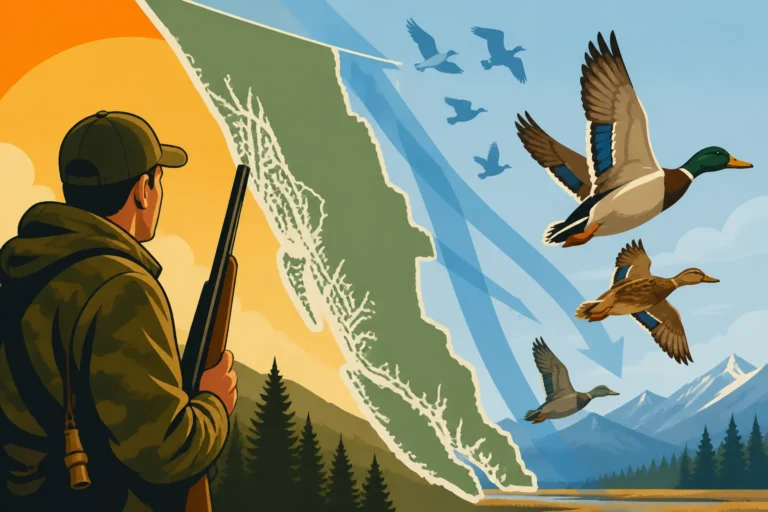
British Columbia sits squarely within the Pacific Flyway, one of North America's major bird migration routes. Each fall, snow geese from their breeding grounds in the Arctic, primarily Wrangel Island in Russia, undertake an epic journey south. They traverse vast distances, eventually staging and wintering in areas with abundant food and relatively milder climates. Our coast, particularly the rich, fertile grounds of the Fraser Delta, offers exactly what they need. They arrive in staggering numbers, often by the tens of thousands, sometimes hundreds of thousands, settling into patterns that can last for months. This constant movement along the flyway dictates when and where you'll find them, making keen observation and timely scouting crucial for hunters. Knowing their traditional arrival and departure times, which can fluctuate with weather patterns, is your first step. For general information on waterfowl movement, understanding Coastal Waterfowl on the Pacific Flyway can be invaluable.
Preferred Coastal Habitats and Food Sources
Once on the coast, snow geese are not picky in the way some other species might be. Their primary goal is to refuel and store energy. They gravitate towards large, open areas where they can feed and have a clear line of sight for predators. Estuaries, with their tidal flats and sedges, are classic spots, but it's the vast agricultural fields of the Fraser Valley that truly draw them in. They'll gorge on leftover grains, corn, potatoes, and even winter wheat crops. This dietary preference is a double-edged sword: it provides ample sustenance for the birds, but it can also lead to significant crop damage for local farmers. Imagine a field you've watched green up all season, only to have a thousand hungry geese descend and strip it bare in a few days. That's the challenge many landowners face. They also utilize shallow ponds and sloughs for roosting and loafing, often flying between feeding areas and these safer resting spots throughout the day. These predictable patterns are what hunters try to key into.
Impact on Agricultural Lands
The sheer volume of snow geese can wreak havoc on crops. A flock of several thousand birds can decimate a field of young sprouts or recently harvested remnants in a matter of days. This isn't just about lost revenue for farmers; it's about their livelihood. Farmers spend countless hours and significant resources tending their fields, only to see their efforts literally eaten away. This makes hunting snow geese not just a recreational pursuit but often a necessary part of wildlife management on the coast. In many areas, farmers are keen for hunters to help mitigate the damage, as traditional deterrents like noisemakers or scarecrows are often ineffective against such large, determined flocks. Understanding this dynamic fosters a better relationship between hunters and landowners, turning a potential conflict into a partnership for effective wildlife management.
Hunting British Columbia's Coastal Snow Geese: What You Need to Know
Hunting snow geese on the BC coast is a unique experience, distinct from pursuing other waterfowl species. It demands specific strategies, a robust gear list, and a solid understanding of the regulations. It's often a high-energy, high-reward hunt, but it requires patience, preparation, and a willingness to adapt to the birds' unpredictable nature.
Regulations and Special Considerations for Snow Geese
Before you even think about stepping into a field, you need to be absolutely dialed in on the regulations. Snow geese are migratory birds, which means federal regulations apply in addition to provincial ones. This typically means you'll need a provincial hunting licence, a federal migratory game bird permit, and a Canadian Wildlife Habitat Conservation Stamp. These stamps, often overlooked, are crucial for supporting wetland conservation. Be sure to check the current provincial synopsis for bag limits and season dates, which can vary by management unit and year. Importantly, for all waterfowl hunting in Canada, non-toxic shot is mandatory. You cannot use lead shot for snow geese or any other migratory birds. This is a critical safety and environmental regulation. Delve into the specifics of British Columbia Migratory Bird Permits and Non-Toxic Shot Requirements for Waterfowl to ensure you're fully compliant.
One common frustration for new hunters is deciphering the exact boundaries and rules. When you're trying to figure out exact flight paths or looking for potential hot spots, tools like GoHunt's mapping features can be incredibly useful for overlaying habitat types with known migration corridors, helping you plan your approach without guesswork. Always confirm the rules for the specific area you intend to hunt.
Here’s a quick overview of common regulatory elements:
| Regulatory Element | Details for Snow Geese (General) |
|---|---|
| Provincial Hunting Licence | Required for all hunters. |
| Federal Migratory Bird Permit | Specific permit for migratory game birds, purchased federally. |
| Habitat Conservation Stamp | Mandatory stamp, often purchased with the federal permit, supporting conservation. |
| Non-Toxic Shot | Absolutely mandatory for all migratory bird hunting. No lead shot. |
| Bag Limits | Can be generous for snow geese due to large populations, but check current synopsis. |
| Possession Limits | Higher than daily bag limits, often reflecting multiple days' harvest. |
| Shooting Hours | Typically from one-half hour before sunrise to one-half hour after sunset. |
| Decoy Limits | No specific limits usually, encouraging large spreads. |
Essential Gear for Field Hunting
Hunting snow geese in fields requires specialized gear, especially if you want to be consistently successful. This isn't a walk-in-the-park kind of hunt; it often involves mud, cold, and a lot of equipment.
- Decoys: This is where snow goose hunting really differs. Forget a dozen floaters; you're going to need hundreds, or at least several dozen large ones, to make a convincing spread. Full-body decoys, silosocks, windsocks, and even rags laid out can create the illusion of a massive feeding flock. A diverse spread with feeder, sentry, and sleeper decoys adds realism. Many hunters use trailers full of decoys, spending hours setting them out and picking them up.
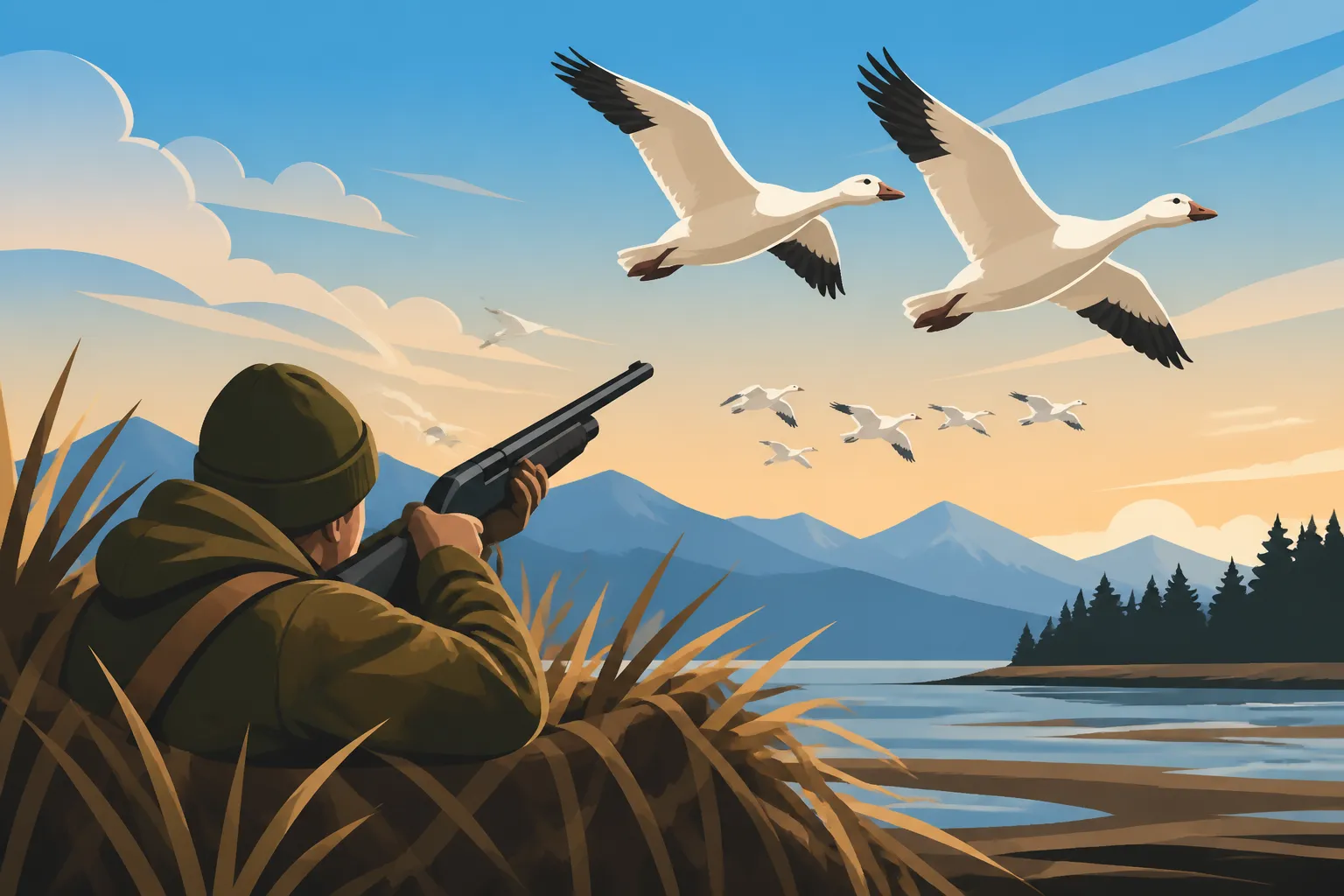
- Blinds: Snow geese have incredible eyesight, so concealment is paramount. Layout blinds are the standard for field hunting, allowing you to lie flat and disappear into the terrain. They need to be brushed in thoroughly with local vegetation – mud, stubble, corn stalks – to blend in perfectly. If you're on a field edge, a well-camouflaged pit blind or A-frame blind might work, but lying flat is generally preferred for the best deception.
- Calls: While not always as critical as for other geese, a good snow goose call is essential for drawing birds in and finishing them. Electronic calls are sometimes permitted for snow geese, given their sheer numbers and the need for population control, but always verify this in the current regulations. Traditional mouth calls can be very effective too, especially for "finishing" birds close to the spread. Practice your clucks, murmurs, and feeding gabble.
- Shotgun and Ammunition: A reliable 12-gauge shotgun is standard, often with a 3-inch or 3.5-inch chamber for heavier loads. Since non-toxic shot is mandatory, you'll be using steel, bismuth, or tungsten loads. Steel shot is common, but heavier, denser alternatives offer better range and knockdown power, especially on larger, high-flying geese. Choke tubes like modified or improved modified are popular choices.
- Weather-Appropriate Clothing: Coastal BC weather can be notoriously damp and cold. Layering is key, with waterproof outer layers, warm insulation, and good waterproof boots for muddy fields. You'll be lying still for long periods, so warmth is crucial.
- Scouting Equipment: Binoculars, spotting scope, and a good mapping app (like GoHunt) are indispensable for finding where the geese are feeding and identifying access points. Scouting days before the hunt is crucial; snow geese move constantly based on food availability and pressure.
Effective Decoying and Calling Strategies
Once you have your gear, knowing how to use it is the next step. Snow geese can be incredibly frustrating – sometimes they decoy perfectly, other times they flair at a thousand yards.
- Scouting is Paramount: You absolutely must scout the fields ahead of time. Look for fresh droppings, disturbed stubble, and actual geese feeding. If you don't see birds, don't hunt there. Snow geese often leave a field as quickly as they arrived if pressured or if the food source runs out. Scouting a British Columbia Management Unit for general game sign can prepare you for specific goose scouting.
- The "X" Marks the Spot: The ideal scenario is to find "the X" – the exact spot where geese are feeding. Set up your blinds and decoys right on that spot. If you can't get on the X, try to set up between a known roosting area and a feeding area.
- Massive Spreads: Snow geese are social birds, and safety in numbers is their mantra. Your decoy spread needs to look like a lot of birds. The more decoys, the better. Spread them out, mimicking a natural feeding pattern, leaving a large "landing zone" or hole where you want the birds to commit. Some hunters even create small "family groups" within the larger spread.
- Concealment, Concealment, Concealment: I can't stress this enough. If the geese see you, it's over. Brush in your layout blinds meticulously. Use natural cover. Keep still. Don't peek out unless you're ready to shoot.
- Calling Dynamics: Snow geese are noisy. Your calling should reflect that. Use a mix of loud, excited squawks to get their attention from afar, then switch to softer, more contented feeding sounds as they get closer. If you have an electronic call (where legal), it can create that wall of sound needed to pull large flocks in. When birds are circling, a strong, unified chorus of calls from your group can often be the final convincing factor.
- Weather and Wind: Wind is your friend. Geese, like all birds, land into the wind. Set your decoys upwind of your blinds, creating a flight path that brings them directly over your position. A strong wind also helps hide your blinds and adds motion to windsocks. Hunting on a blustery, overcast day can often be more productive than a calm, sunny one.
Navigating Access and Conservation on the Coast
British Columbia's coast is a mosaic of public and private lands, urban centres, and sensitive ecosystems. Hunting snow geese here isn't just about calling and decoying; it's about understanding land access rules and playing a vital role in conservation.
Finding Huntable Lands and Access Points
This is arguably the most challenging aspect of coastal snow goose hunting. Much of the prime agricultural land where snow geese feed is privately owned. You must obtain permission from the landowner before stepping foot on their property. Trespassing is illegal, unethical, and will quickly lead to hunting closures for everyone.
- Asking for Permission: This requires courtesy, respect, and often, persistence. Approach farmers well in advance of the season, introduce yourself, explain your intentions, and offer to help with population control. Be prepared for rejections; farmers are busy and wary. A good approach is to offer a clean, responsible hunt, remove all your trash, and leave gates as you found them. Sometimes, offering a share of your harvest can sweeten the deal. Look into Asking a British Columbia Rancher for Access for more tips on this crucial step.
- Crown Land and Estuaries: While harder to access for large-scale field hunting, some public Crown lands, particularly along estuaries and tidal flats, can offer opportunities. These often require boat access or a long walk. Always consult up-to-date maps to confirm land ownership. GoHunt's mapping layers can be invaluable here, helping you identify Crown land boundaries and potential access points, allowing you to scout areas like Hunting an Estuary Flat at Low Tide more effectively.
- Wildlife Management Areas: British Columbia has designated Wildlife Management Areas (WMAs) which often have specific rules regarding hunting. Some of these areas can offer excellent waterfowl opportunities, but always check their specific regulations before planning a hunt.
- The Fraser Delta: This region is a major hub for snow geese. However, it's also heavily populated, with significant private land, critical bird sanctuaries, and restricted areas. Research is paramount to understand what areas are open to hunting and how to access them legally and ethically.
Conservation Efforts and the Hunter's Role
Snow geese populations, particularly the Lesser Snow Goose, have seen a dramatic increase in recent decades, leading to concerns about habitat degradation in their Arctic breeding grounds and agricultural damage in their wintering areas. While this might seem counter-intuitive when discussing hunting, it highlights the hunter's vital role in conservation.
- Population Management: Regulated hunting helps manage these booming populations, preventing overgrazing of fragile Arctic ecosystems and reducing crop damage on wintering grounds. When bag limits are generous, it's a reflection of a healthy, abundant population that benefits from controlled harvest.
- Ethical Hunting Practices: As hunters, we have a responsibility to be ethical and respectful. This means taking clean shots, recovering all downed birds, and not wasting game meat. It also means adhering to all regulations, including those for British Columbia's Four-Point Antler Restriction (though not relevant for geese, the principle of species-specific rules applies), and understanding that our actions reflect on the entire hunting community.
- Habitat Conservation: The funds generated from hunting licences and the federal Habitat Conservation Stamp directly contribute to projects that protect and enhance wetland and waterfowl habitat across British Columbia and Canada. By participating in regulated hunting, you're directly contributing to the future of these magnificent birds and the landscapes they depend on.
Safety and Etiquette in Coastal Hunting Zones
Hunting on the coast, especially near populated areas or on shared lands, requires an elevated awareness of safety and etiquette.
- Firearms Safety: Always follow the cardinal rules of firearms safety: treat every firearm as if it's loaded, always point the muzzle in a safe direction, be sure of your target and what is beyond it, and keep your finger off the trigger until ready to shoot. When hunting in fields, shot can carry a surprising distance, so be acutely aware of roads, houses, livestock, and other people.
- Respecting Property: This goes beyond just getting permission. It means parking your vehicle responsibly, not blocking gates or driveways, cleaning up all spent shells and trash (leave no trace!), and ensuring you don't damage fences or crops. If you hunt a field and leave a mess, you've likely burned that bridge for yourself and other hunters in the future. Remember that British Columbia Trespass and Private Land Law protects landowners.
- Consideration for Others: You might encounter bird watchers, hikers, or other outdoor enthusiasts. Be courteous and respectful. Clearly identify yourself as a hunter and explain what you're doing if necessary, maintaining a positive image of hunting. Avoid setting up too close to residences or public access points, even if legal, to prevent unnecessary disturbance or conflict.
- Weather and Water Safety: Coastal weather can change rapidly. Be prepared for rain, wind, and cold. If hunting near water, especially tidal areas, be aware of tide charts and potential currents. Hypothermia is a real risk, so dress appropriately and bring emergency supplies. Always have a plan for getting yourself and your gear out safely, especially if you're out Hunting in British Columbia's Coastal Rain.
Hunting snow geese on British Columbia's coast is an adventure that connects you directly to the incredible natural rhythms of migration and the complex relationship between wildlife and agriculture. With thorough preparation, a deep respect for the land and its rules, and an ethical approach, it can be one of the most exciting and rewarding waterfowl experiences in the province.
Disclaimer
This article is for general informational purposes only and does not constitute professional advice. Laws, prices and regulations vary by location and change over time. Consult a qualified professional for guidance on your specific situation.