Why Goat Populations Are Sensitive
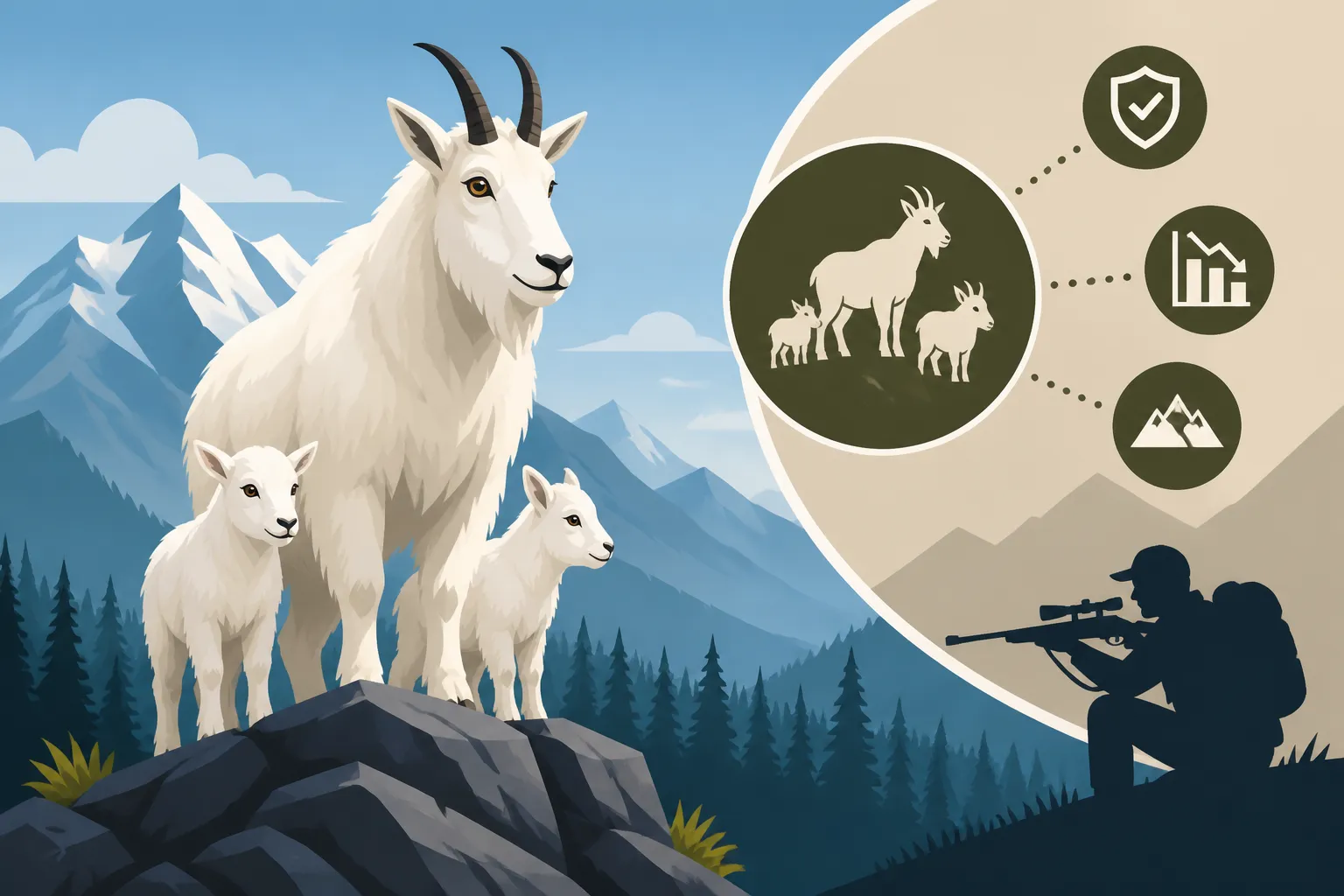
For those of us who cherish British Columbia's wild places, the sight of a mountain goat perched precariously on a sheer cliff face is truly awe-inspiring. These incredible animals represent the spirit of our high country, but their populations are surprisingly delicate. It’s a real challenge for wildlife managers, and for us as hunters, to ensure these iconic creatures thrive. This guide will help you understand the unique vulnerabilities that make British Columbia's mountain goat populations so sensitive and what that means for their conservation.
The Unique Biology of British Columbia's Mountain Goats
Mountain goats (Oreamnos americanus) are truly a marvel of adaptation, built for the most rugged and unforgiving landscapes British Columbia has to offer. However, the very traits that allow them to survive in such extreme environments also make them incredibly vulnerable to population fluctuations. They are not like deer or rabbits, quick to bounce back after a tough year. Their life history strategy is slow and steady, which, while effective in stable conditions, leaves little room for error when pressures mount. Mountain Goats in British Columbia's Peaks is a great resource if you're looking for more general info on these animals.
Slow Reproductive Rates and Long Lifespans
One of the most critical factors contributing to the sensitivity of goat populations is their incredibly slow reproductive rate. Unlike many other ungulates, which might drop twins or even triplets and breed at a young age, mountain goats take their time. A female mountain goat, or nanny, typically doesn't reach sexual maturity until she's two or three years old, sometimes even older in harsh conditions. Even then, she'll usually only give birth to a single kid per year. Twins are rare, and it's even more uncommon for a nanny to breed every single year, especially if conditions are tough or if she's raising a demanding kid.
This delayed start and low annual production mean that it takes a long time for a goat population to grow or recover after a decline. If a herd suffers a significant loss, whether from a harsh winter, an accidental harvest of breeding females, or a new disease, it can take years, even decades, for those numbers to climb back up. Compare this to mule deer, for instance, where a healthy doe might have twin fawns every year from her second year onwards, and you can quickly see the difference in population dynamics. While goats can live a relatively long time, often 12-15 years, this longevity doesn't fully compensate for their low birth rates when it comes to overall population resilience. Every breeding female and every kid born is incredibly precious to the long-term health of the herd.
Habitat Specialization and Niche Requirements
Mountain goats are the ultimate high-altitude specialists. They don't just prefer steep, rocky terrain; they absolutely depend on it for survival. Their unique cloven hooves, equipped with soft, non-slip pads and sharp, hard outer edges, give them an almost unbelievable grip on sheer rock faces. This allows them to access food sources in places no other large mammal can reach and, crucially, to escape from predators. Cliffs, scree slopes, and rugged alpine basins provide their primary defense. Without this critical "escape cover," they are far more vulnerable.
This extreme habitat specialization means they have very specific niche requirements. They need a mosaic of alpine and subalpine meadows for foraging, but always in close proximity to those life-saving cliffs. They need specific mineral licks, often located on exposed rock faces, which are vital for their health. In winter, they rely on areas where high winds blow snow off ridges, exposing forage, or steep slopes where snow slides clear. Their thick, insulating coats are perfect for bitter cold, but they struggle in deep, soft snow that inhibits movement.
The challenge in British Columbia is that while we have vast mountain ranges, not all of it is suitable goat habitat. Human development, even far below the alpine, can fragment these critical areas, making it harder for goats to move between ranges or access seasonal resources. When their preferred habitat is reduced or isolated, their populations become confined to smaller, more vulnerable pockets. This is why understanding Where British Columbia's Mountain Goats Live is so important for their conservation.
Environmental Pressures and Threats to Goat Herds
Even within their seemingly impregnable fortresses of rock and ice, British Columbia's mountain goat populations face a growing array of environmental pressures. These aren't just minor inconveniences; they are fundamental threats that chip away at the already fragile foundations of goat survival. It's a cumulative effect, where one stressor weakens a herd, making it more susceptible to the next.
Climate Change and Habitat Shrinkage
Perhaps the most insidious long-term threat facing mountain goats is climate change. Their specialized alpine habitat is disproportionately affected by warming temperatures. Changes in snowpack can have a profound impact. While less snow might sound beneficial, unreliable snow cover can reduce the predictability of escape terrain, making them more exposed to predators. Earlier snowmelt can alter the timing and availability of their preferred forage plants, throwing their delicate nutritional cycles out of whack. More extreme weather events, such as heavy rain on snow followed by a deep freeze, can create icy conditions that are difficult even for goats to navigate, sometimes leading to localized die-offs.
As temperatures rise, the treeline can begin to creep higher, reducing the open alpine meadows that goats depend on for feeding. This effectively shrinks their available habitat from the bottom up. Goats, with their highly specialized needs, struggle to simply "move up" to find new suitable areas; there's often nowhere left to go. The concept of "climate velocity" — how fast climate zones are shifting — suggests that many species cannot adapt or relocate quickly enough. For animals like mountain goats, whose survival hinges on a very narrow set of conditions, a shrinking, changing alpine environment is a serious concern that will likely challenge their populations for generations.
Human Encroachment and Disturbance
It's a bittersweet reality that as more people seek to explore British Columbia's stunning backcountry, the impact on sensitive wildlife like mountain goats increases. Recreational activities such as hiking, mountaineering, heli-skiing, and snowmobiling are expanding into areas that were once relatively undisturbed goat range. Even seemingly benign activities can be incredibly stressful for goats. When disturbed, they expend precious energy fleeing to escape terrain, energy they need for foraging, growth, and reproduction. Repeated disturbances can displace them from critical winter ranges or important mineral licks, leading to poorer body condition and reduced breeding success.
Beyond recreation, industrial development like mining, logging roads, and resource extraction projects can directly fragment or destroy goat habitat. Even roads built far below their primary range can create barriers to movement, isolating populations. The cumulative effect of these various human activities—the noise, the presence, the alteration of landscapes—adds chronic stress to animals that are already living on the edge in a harsh environment. It's a reminder that even when we don't intend harm, our presence can have a significant, negative impact on these sensitive creatures. Hunters utilizing resources like GoHunt often pay close attention to management unit information, which can sometimes highlight areas with increased human activity and its potential impacts.
Predation and Disease
While mountain goats are masters of defensive terrain, they are not immune to predation. Cougars are perhaps their most significant natural predator, adept at navigating broken country. Wolves, eagles (especially on young kids), and even bears can take goats, particularly during vulnerable times like kidding season or when goats are forced to move off escape terrain due to heavy snow. In a healthy, robust population, natural predation is part of the ecosystem and doesn't typically threaten the overall population. However, when goat numbers are already low due to other environmental stressors, predation can become a much more significant limiting factor, slowing or even reversing recovery efforts.
Disease outbreaks in mountain goat populations are less frequently documented than in some other ungulate species, largely because their remote habitat makes monitoring challenging. However, any disease has the potential to be devastating for small, isolated populations. Their limited genetic diversity in some areas could also make them more susceptible to pathogens if they were introduced. Furthermore, the close proximity within herds at mineral licks, while essential for their health, could also be a vector for disease transmission should an infectious agent emerge. Everything in their life history, from their slow breeding to their habitat, makes them less resilient to any form of widespread mortality.
The Role of Hunting and Management in Goat Conservation
Given the inherent sensitivities of mountain goat populations, their management, and particularly hunting, demands an extremely cautious and data-driven approach. It's a complex dance between conservation, science, and the traditions of sustainable harvest that British Columbia is known for. The goal isn't just to allow hunting, but to ensure that hunting plays a role in the responsible stewardship of this precious resource.
Conservative Harvest Strategies
Hunting for mountain goats in British Columbia is highly regulated, and for good reason. It’s almost exclusively managed through Limited Entry Hunting Draws (LEH), meaning a hunter needs to apply for a specific tag in a specific area, and only a very small number are typically issued each year. This system is designed to keep harvest rates extremely low and prevent overharvesting. If you're looking into these hunts, checking Reading LEH Odds Before You Apply can give you a realistic picture.
A major challenge in managing goat hunting is the difficulty in distinguishing nannies (females) from billies (males) in the field, especially from a distance. Nannies are the breeding stock, the future of the herd, and their accidental harvest can have a disproportionately negative impact on population recovery. Therefore, harvest regulations often emphasize harvesting mature billies, usually identified by their larger horn bases, more robust body size, and often more robust build. Hunters are strongly encouraged, and sometimes even legally required, to confirm the sex of the animal before shooting. The phrase "if in doubt, don't shoot" takes on paramount importance here.
To gather crucial data, all harvested goats are subject to British Columbia's Compulsory Reporting Rules and often compulsory inspection. This means hunters must present the head of their harvested goat to a qualified official within a specific timeframe. This allows wildlife biologists to collect biological samples, confirm sex and age, and track harvest numbers, all of which are vital for understanding population health and adjusting future hunting opportunities. Every piece of information helps managers ensure the long-term viability of these sensitive populations, and the British Columbia's Species Licences and Tags associated with goats reflect this careful approach. For those planning a hunt, knowing What a Mountain Goat Tag Costs is part of understanding the value placed on these limited opportunities.
Research, Monitoring, and Adaptive Management
Effective management of mountain goats relies heavily on ongoing research and monitoring. Wildlife biologists in British Columbia utilize a variety of tools, including aerial surveys, which are crucial for estimating population numbers and trends across vast, rugged landscapes. Ground observations, game camera deployments, and even collaring studies provide more detailed insights into goat movements, habitat use, survival rates, and reproductive success. All this data feeds into a system of adaptive management.
Adaptive management means that hunting quotas, season dates, and specific regulations are not static; they are continuously reviewed and adjusted based on the latest scientific findings. If surveys indicate a population decline in a particular management unit, hunting opportunities might be reduced or even closed temporarily. Conversely, if a herd is healthy and growing, a slight increase in tags might be considered. It's a proactive and responsive approach, recognizing the inherent sensitivity of these animals and the dynamic nature of their environment. How British Columbia's LEH System Works is a testament to this careful, data-driven approach.
This collaborative effort between wildlife biologists, conservation organizations, and the hunting community is essential for the long-term health of British Columbia's mountain goats. Hunters often contribute valuable field observations and voluntarily participate in data collection, becoming an integral part of the conservation solution. The goal is to ensure that future generations can continue to witness and, for some, respectfully pursue these magnificent creatures in their wild alpine homes. This collective stewardship is how we ensure that our mountain goat populations remain robust against the many challenges they face. If you're venturing into their territory, whether hunting or just observing, understanding Hunting British Columbia's Alpine in September or Hunting Above Timberline in Cold Weather can make you a more responsible and effective backcountry user.
Here's a quick comparison of some factors that highlight the sensitivity of mountain goats versus a more common British Columbia ungulate:
| Feature | Mountain Goat | Mule Deer |
|---|---|---|
| Typical Offspring/Year | 1 kid (rarely twins) | 1-2 fawns (twins common) |
| Age at First Breeding | 2-3 years (nannies) | 1-2 years (does) |
| Habitat Specialization | Extreme: high alpine, steep cliffs, escape cover | Moderate: varied habitats, forest, grassland |
| Population Recovery | Slow, requires many years | Moderate to fast, can recover in a few years |
| Vulnerability to Overharvest | High, especially for breeding females | Moderate, can withstand higher harvest rates |
| Response to Disturbance | High stress, energy expenditure, displacement | Moderate stress, adaptable to some disturbance |
| Management Focus | Highly conservative, LEH only, selective harvest | General Open Seasons common, broader harvest |
Disclaimer
This article is for general informational purposes only and does not constitute professional advice. Laws, prices and regulations vary by location and change over time. Consult a qualified professional for guidance on your specific situation.