What a Permit to Accompany Host Must Do
Your brother in law from Alberta, or an old friend from Montana, wants to hunt with you in British Columbia, and you have heard that a Permit to Accompany makes it possible without hiring a guide outfitter. What most hosts do not realize is how much responsibility that permit puts on their shoulders. This guide explains what a Permit to Accompany host must actually do, before, during and after the hunt.
What the Permit to Accompany Makes You Responsible For
A Permit to Accompany is not a favour on paper. It is a legal arrangement that lets a British Columbia resident take the place a licensed guide would normally fill for a visiting hunter. That trade comes with duties, and the province treats the host as accountable for how the hunt is run.
Why the Province Puts the Host in Charge
British Columbia generally requires non-resident and non-resident alien hunters to hunt big game with a licensed guide outfitter. The reasoning is simple: visitors do not know the ground, the regulations or the wildlife, and the guide system keeps someone with local knowledge and legal responsibility beside them. The Permit to Accompany is the narrow exception that lets a qualified resident fill that role instead.
Because the host replaces the guide, the province expects the host to bring the same things a guide would: knowledge of the regulations, familiarity with the area, sound judgement and the ability to keep the hunt legal and safe. If you want the background on why guides are the default for visitors, see Why Non-Residents Need a Guide in British Columbia.
Think of it like lending someone your truck and also agreeing to ride along as the licensed driver. You are not just a companion. If something goes wrong, the question will be what you did, not only what your guest did.
What the Permit Allows and What It Does Not
A Permit to Accompany authorizes you to accompany a specific visiting hunter for specific hunting, during the period on the permit. It does not turn you into a guide, it does not let you take paying clients, and it does not let you hand your guest off to someone else in the field. It also does not exempt your guest from needing their own licence and species licences.
The scope matters. Permits are tied to named people, and the categories of game and the rules around them are set out in the current regulations. The site’s guide What a Permit to Accompany Allows lays out the scope in more detail, and the overview The Permit to Accompany Explained is a good starting point if this is your first time.
Who Can Hold One
Not every resident can act as a host. Eligibility rules cover residency status, holding your own valid British Columbia hunting licence and, in some cases, the relationship between the host and the visiting hunter, along with limits on how many visitors a host may accompany. These details have changed over the years, so read them in the current Hunting and Trapping Regulations Synopsis before applying.
The site’s piece Who Qualifies for a Permit to Accompany walks through the eligibility questions hosts most often get stuck on. If you are unsure whether you qualify, settle it before your guest books flights, not after.
Before the Hunt: The Host’s Paperwork and Planning
Most problems with a Permit to Accompany hunt start long before anyone loads a rifle. The host’s job begins with paperwork and planning, and getting it right early saves a great deal of stress later.
Applying and Matching the Paperwork
The host applies for the permit, naming the visiting hunter and providing the required details for both people. Allow plenty of time. Processing can take longer than expected during busy periods, and you need the permit in hand before the hunt begins.
Check every detail. Names should match identification exactly, and dates should cover the full hunt, including any travel days when you may be carrying firearms in the field. If anything changes, such as the dates or the area you plan to hunt, find out whether the permit needs to be amended. For a sense of fees, see What a Permit to Accompany Costs, and confirm current amounts through the province’s own licensing system before you pay.
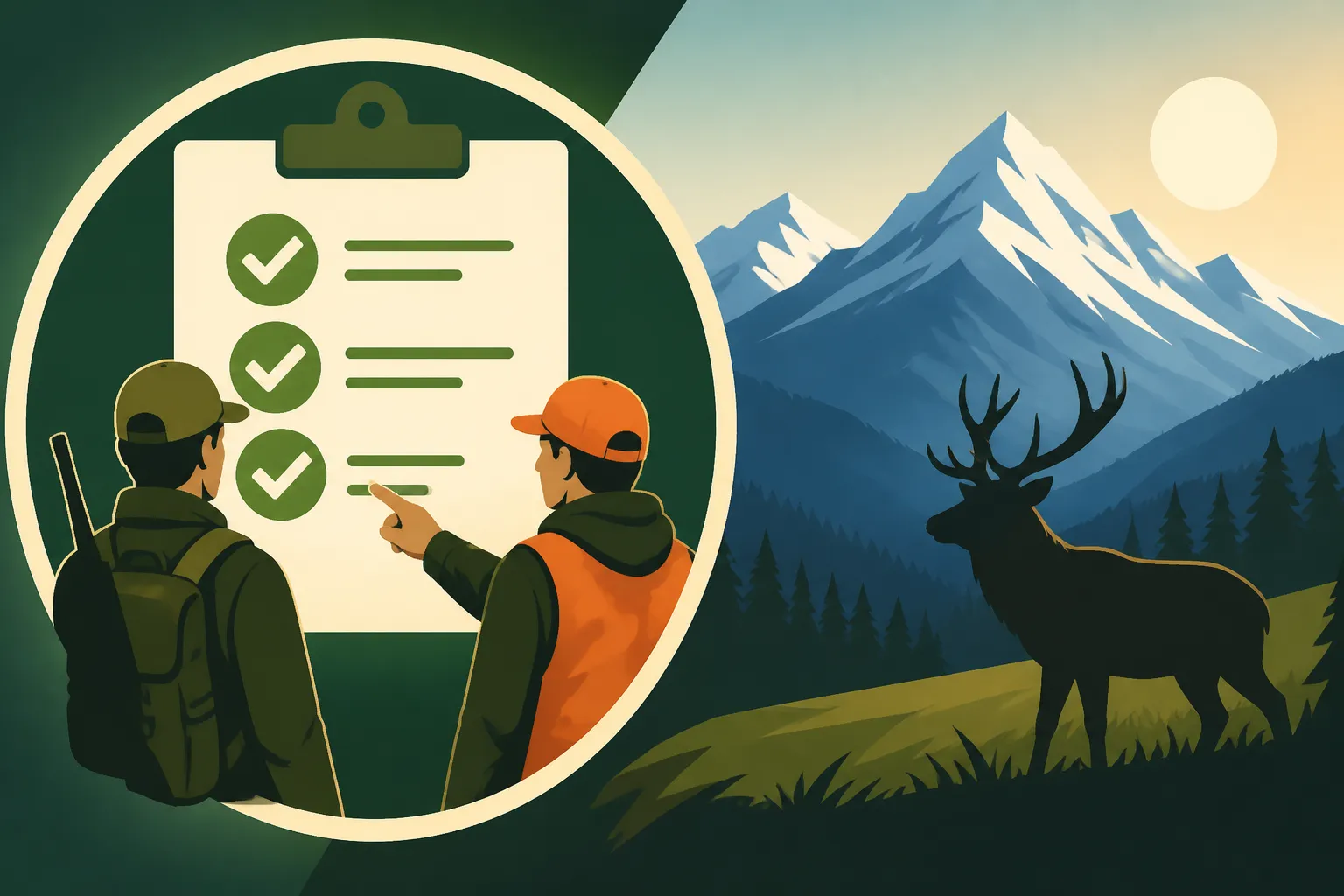
A simple pre hunt paperwork checklist for the host:
- Confirm you meet the current eligibility requirements to act as host.
- Confirm your own British Columbia hunting licence is valid for the hunt dates.
- Apply for the Permit to Accompany with your guest’s correct details.
- Help your guest buy their own hunting licence and the right species licences.
- Confirm whether any Limited Entry Hunting authorization is needed for the species and area.
- Check any firearm declaration and border requirements your guest will face.
- Keep copies of all documents together, both printed and on a phone.
Your Guest’s Licences and Tags
Your guest needs their own licence and the correct species licences for what they plan to hunt. Non-residents and non-resident aliens buy different licence types from residents, and some species have their own rules. Do not assume that what applies to you as a resident applies to your guest.
The site’s articles British Columbia Non-Resident Licence Rules and British Columbia’s Species Licences and Tags are good references. Sit down with your guest and go through exactly which licences they hold, which species and areas they cover and how tags are to be validated after a kill.
Many visiting hunters arrive with a fuzzy sense of the rules, often picked up from hunting in their home province or state. A few minutes at the kitchen table going through the synopsis together can prevent an expensive misunderstanding in the field.
Firearms, Borders and Hunter Education
If your guest is coming from outside Canada, they will need to deal with firearm declaration requirements at the border. Make sure they understand what is required and have the right paperwork ready before they travel. The site’s guide The Non-Resident Firearm Declaration explains the process.
Talk through firearms and ammunition in practical terms too. Is their rifle suitable for the game and the distances you expect? Have they shot it recently at realistic ranges? Are they familiar with safe handling in steep country, on horseback or in a boat if that is part of your plan? You are responsible for the hunt being run safely, so it is reasonable to ask.
Some visitors like to do background research before they arrive. Tools such as GoHunt are popular with American hunters for scouting and regulation research, and that kind of homework can help your guest arrive with realistic expectations. It does not replace your local knowledge or the official regulations, but a guest who has done some reading is easier to host.
During the Hunt: Staying With Your Hunter
The core duty of a Permit to Accompany host is right there in the name. You accompany the hunter. That sounds obvious, but it is where many hosts get into trouble.
What Accompanying Really Means
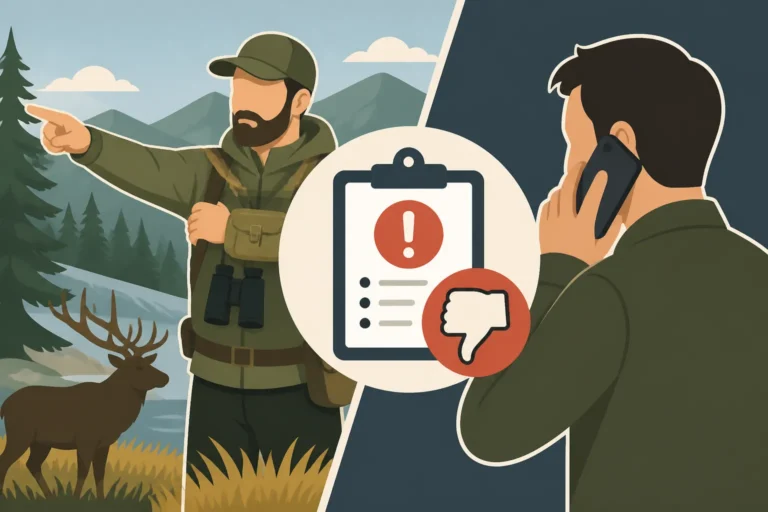
Accompanying means being personally present with your guest while they hunt. It does not mean dropping them at a ridge and picking them up at dark, sitting in the truck while they walk a cutblock, or splitting up to cover two draws and meeting at the bottom. If your guest is hunting, you should be with them, close enough to supervise and direct what is happening.
The regulations describe what counts as accompanying, and you should read that definition rather than relying on what other hunters say. When in doubt, stay closer. A host who is a few steps away when a shot is taken is in a very different position from one who is half a mile away on a radio.
Picture a typical temptation. You and your guest spot two groups of mule deer on opposite slopes. Splitting up would double your chances. As a host, the answer is no. You pick one group and go together.
Keeping the Hunt Legal in the Field
As host, you are expected to know and apply the regulations that matter to the hunt you are running. That includes open seasons and bag limits for the species, any antler or age restrictions in the area, closed areas and road restrictions, legal hunting hours, firearm and ammunition rules, and rules about hunting from vehicles and roads.
You also need to help your guest identify legal animals. That can be harder than it sounds. Distinguishing a legal buck under specific antler point rules, or confirming the sex and age of a moose at distance, takes skill. If you are not sure an animal is legal, the shot should not be taken.
If you hunt near or inside a guide outfitter territory, understand what that means for your hunt. The site’s article Hunting Inside a Guide Outfitter Territory explains how these territories interact with resident and accompanied hunting.
Safety, Ethics and Clean Kills
You are also responsible for safety. That includes muzzle discipline, safe shooting lanes, knowing where other hunters, roads and buildings are, and making sure your guest does not take a shot beyond their skill. In mountain country, it includes weather calls, route choices and knowing when to turn back.
Ethics are part of the role too. Encourage your guest to take only shots they are confident in and to follow up every shot carefully. Have a plan for tracking a wounded animal and for getting the meat out. Wasting meat from a lawfully killed animal is an offence, and a host who lets it happen is part of the problem.
After the Kill: Tags, Meat and Reporting
The hunt does not end when the animal is down. Several legal steps follow, and as host you are responsible for making sure they happen correctly.
Tagging and Validating on the Spot
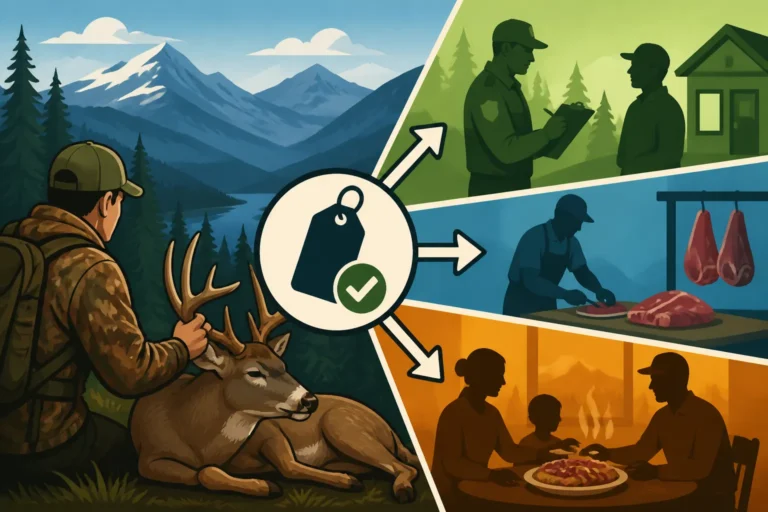
Your guest must validate their species licence and attach any tag in the way the regulations require, immediately after the kill and before the animal is moved, unless the rules say otherwise. Walk them through the process even if they say they know it. Tag designs and validation steps differ between jurisdictions, and visitors often make small mistakes.
Check the date, management unit and other details they fill in. A wrongly completed tag can turn a legal kill into a problem at a check stop. It takes thirty seconds to confirm and can save hours of trouble.
Meat Care and Transport
Meat care is part of a responsible hunt. In British Columbia’s warmer early seasons, that may mean skinning and quartering quickly, hanging meat in shade and getting it to a cooler or processor within a reasonable time. In cold weather, it may mean preventing meat from freezing in a way that damages quality.
Plan how you will get meat out of the field before anyone pulls a trigger. Steep country, long pack outs and limited vehicle access can turn a good day into a long night. Make sure your guest understands the rules around transporting meat, keeping evidence of sex where required and moving game across provincial or international borders.
Compulsory Reporting and Inspection
Some species must be reported or inspected after a kill. The rules can depend on species, area and licence type, and deadlines apply. As host, make sure your guest knows exactly what must be reported, when and how. The site’s guides British Columbia’s Compulsory Reporting Rules and Which Species Need Compulsory Inspection Now are useful references.
Some hosts make this part of the final day’s routine. Before your guest leaves the province, sit down together, confirm what still needs reporting or inspection and check that all paperwork is in order. That small step can prevent a guest from going home with an unfinished legal obligation hanging over both of you.
Host Duties Compared With a Licensed Guide
It helps to see the Permit to Accompany host role side by side with a licensed guide outfitter. They overlap in some areas and differ sharply in others.
| Responsibility | Permit to Accompany Host | Licensed Guide Outfitter |
|---|---|---|
| Who they can take | Named visiting hunters allowed by the permit | Paying clients within their licence |
| Payment | No fee for guiding services | Charges for guided hunts |
| Area | Areas open to resident hunting, subject to rules | Their assigned guide outfitter territory |
| Presence in the field | Must accompany the guest while hunting | Guide or assistant must accompany the client |
| Regulation knowledge | Expected to know and apply the rules | Professional duty to know and apply the rules |
| Equipment and logistics | Arranged between host and guest | Usually provided as part of the package |
| Consequences of violations | Host can face penalties and lose eligibility | Guide can face penalties and licence action |
When a Guided Hunt Is the Better Choice
A Permit to Accompany can be a wonderful way to share hunting with family or friends. It is not always the best choice. If you do not know the area well, cannot commit to staying with your guest every hunting hour or are uncomfortable taking on legal responsibility, a guided hunt may be wiser.
Platforms such as BookYourHunt list guided hunts across British Columbia, and many guide outfitters can also be contacted directly. The site’s piece Guided Versus Permit to Accompany Hunts compares the two approaches in detail, including what each tends to cost and what kind of experience each delivers. Some families hunt guided one year and accompanied another, depending on species and available time.
Common Host Mistakes to Avoid
Experienced hosts and conservation officers tend to mention the same handful of problems:
- Letting the guest hunt alone for part of the day.
- Assuming the guest’s home province or state rules apply in British Columbia.
- Not checking the guest’s licences and species licences against the plan.
- Letting the guest take questionable shots at long range.
- Skipping or delaying compulsory reporting or inspection.
- Accepting money or gear for “guiding” in a way that turns the hunt into a commercial service.
Avoiding these is mostly a matter of planning, honesty with your guest and a willingness to say no in the field.
Being the Kind of Host Your Guest Remembers
A Permit to Accompany hunt can create lasting memories, whether you are introducing a sibling to mountain mule deer, sharing a moose camp with an old friend or watching a parent take one more elk. The legal duties are real, but they exist to protect wildlife, landowners and the hunters themselves.
Setting Expectations Early
Talk with your guest well before the trip. Explain that you are responsible for the hunt, that you will stay with them while they hunt and that you will make the final call on safety and legality. Discuss physical fitness, gear, shooting ability and what success means to both of you.
Good hosts also explain local culture and ethics. That might include respecting private land, following road restrictions, sharing meat with family and being courteous to other hunters you meet.
Your Responsibilities in Brief
If you prepare carefully, stay with your hunter, know the regulations and finish the paperwork properly after the kill, you will have done what a Permit to Accompany host must do. More than that, you will have given your guest a safe, legal and memorable British Columbia hunt, built on your knowledge of the country you call home.
Disclaimer
This article is for general informational purposes only and does not constitute professional advice. Laws, prices and regulations vary by location and change over time. Consult a qualified professional for guidance on your specific situation.