British Columbia’s Whitetail Expansion
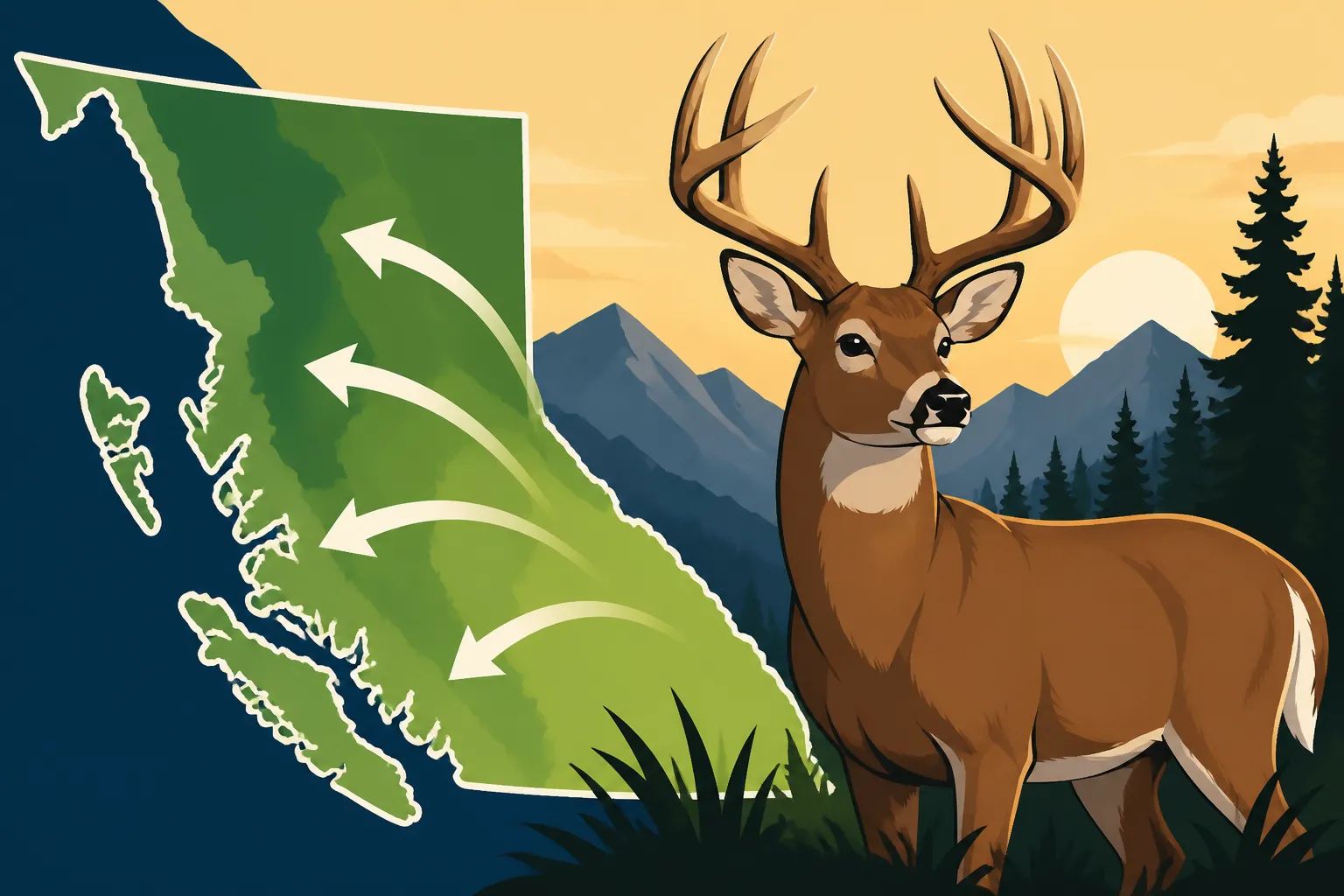
For many years, the idea of consistently hunting whitetail deer in British Columbia felt almost like a myth for most residents, a species more associated with the prairies or eastern forests. Yet, anyone paying close attention to our province's wildlife trends can see a clear shift: white-tailed deer are undeniably on the move, pushing their boundaries further west and north. This guide will take a deep dive into this fascinating expansion, exploring what's driving it, where these deer are making new homes, and what it means for British Columbia's diverse ecosystems and hunting opportunities.
The Shifting Landscape: A Brief History of Whitetail in British Columbia
It wasn't that long ago that spotting a whitetail in much of British Columbia was a truly rare occurrence. For generations, our province was primarily known for its magnificent mule deer in the interior and robust blacktail on the coast. Whitetails were largely confined to the very eastern edges of the province, mainly the Peace River region and parts of the Kootenays, areas that share more ecological similarities with the Alberta foothills and Montana valleys than with the rugged Coast Mountains or dense interior forests.
Early Sightings and North American Movement
White-tailed deer, known for their adaptability and prolific breeding, have always been the most widespread deer species in North America. Their historical range typically extended from the Atlantic to the Rockies, and from southern Canada down to Central and South America. In Canada, their presence was firmly established across the central and eastern provinces. It's truly incredible how resilient and resourceful these animals are, capable of thriving in such a vast array of habitats, from dense forests to agricultural fields and even suburban environments. This inherent adaptability is a key reason we're seeing them make such significant advances into territories that were once considered unsuitable.
Prior to the last few decades, any whitetail sightings west of the traditional Kootenay strongholds or the Peace region were often considered outliers, individuals that had perhaps wandered far from established populations or were part of very small, localized pockets. Hunters would talk about them in hushed tones, almost as if they'd seen a mythical creature. The thought of a widespread, expanding population was simply not on most people's radar. Understanding this historical context helps us truly appreciate the scale of the change that is currently underway across British Columbia's landscapes.
Why British Columbia Was Once Whitetail-Free
So, why did British Columbia resist the whitetail tide for so long? The answer lies in a combination of geographical barriers, historical habitat conditions, and the established presence of other deer species. Our province is a land of dramatic changes, from vast mountain ranges like the Rockies and Coast Mountains to dense, old-growth forests and arid interior grasslands. These diverse ecosystems, while rich in wildlife, weren't historically ideal for a species that thrives on a mix of forest edge, open browse, and agricultural forage.
The dense coniferous forests that dominate much of British Columbia's interior, especially before extensive logging, didn't provide the preferred habitat of whitetails, who generally favour more open, mixed forests with plenty of undergrowth and edge habitat. Our long, cold winters in many regions also played a role, with deep snow making it challenging for whitetails to forage. Mule deer, with their larger ears and tendency to "stot" or bounce over obstacles, are often better adapted to navigating deeper snow and more open terrain. For a long time, the ecological niche that whitetails typically fill was either too harsh or already occupied by our native deer species. However, as we'll explore, many of these historical limitations are now being challenged or even removed, paving the way for the whitetail's surprising push.
Unpacking the Drivers: What's Fueling the Whitetail Advance?
The expansion of white-tailed deer into new areas of British Columbia isn't just a random occurrence; it's a complex phenomenon driven by several interconnected factors. Understanding these drivers is crucial for anyone interested in British Columbia's ecosystems, whether you're a hunter, conservationist, or just someone who enjoys our wild spaces. It's a testament to the dynamic nature of wildlife populations and how profoundly human activities and environmental changes can influence them.
Habitat Alteration and Agricultural Expansion
One of the most significant forces behind the whitetail expansion is the alteration of habitat across British Columbia, largely due to human activity. Extensive logging practices, while sometimes controversial, have inadvertently created vast swaths of prime whitetail habitat. When large areas of mature forest are harvested, they are replaced by clearcuts that regenerate into dense, brushy second-growth. This young, regenerating forest provides an abundance of browse at deer height, offering both food and cover. This new landscape is much more appealing to whitetails than the closed-canopy old-growth that once dominated.
Beyond forestry, the expansion of agriculture, particularly in valleys and flatter plateaus, has created rich food sources. Whitetails are incredibly efficient at utilizing agricultural crops like alfalfa, grains, and even orchards, which provide consistent, high-energy forage, especially important during the lean winter months. These agricultural interfaces, often bordered by regenerating forest, offer the perfect blend of food and cover. As new farms and ranches emerge, or existing ones expand, they create new corridors and pockets of ideal whitetail territory, drawing the deer further into regions where they were once absent. This dynamic change in the landscape is a critical piece of the puzzle, essentially rolling out a welcome mat for these adaptable deer. If you're looking for areas that have seen significant habitat alteration beneficial to whitetails, using tools like GoHunt to scout areas with mixed agriculture and regenerating forest could be very insightful.
Climate Change and Milder Winters
Another powerful, albeit more subtle, driver of the whitetail expansion is the changing climate, specifically the trend towards milder winters in many parts of British Columbia. Historically, deep snowpacks and prolonged cold periods were significant barriers to whitetail survival, particularly in the interior and northern regions. These conditions made it difficult to find forage and increased energy demands, leading to higher winter mortality rates.
However, over recent decades, many areas of British Columbia have experienced shorter, less severe winters with reduced snow accumulation. While we still get our share of dumps, the overall trend is undeniable. Milder conditions mean less energy expended by deer to simply survive, leading to better body condition, higher fawn survival rates, and ultimately, an increase in overall population numbers. This allows them to push into previously inhospitable areas. Imagine a young whitetail buck venturing a little further north or west than its ancestors might have dared; if the winter is mild, it survives, potentially establishes a new breeding group, and the expansion continues. This long-term climatic shift is slowly but surely reshaping the natural boundaries for many species, and whitetails are certainly taking advantage of it. It is also impacting how other species survive, like our resident mule deer, which is covered in topics like What Drought Does to British Columbia Game.
Lack of Natural Predators in New Territories
While British Columbia is home to a robust population of predators like wolves, cougars, and black bears, the dynamic can be different in areas where whitetails are newly establishing. In some regions, especially those undergoing rapid habitat change due to human activity, the traditional predator-prey balance might be temporarily skewed. Young whitetail populations moving into new territories might initially encounter fewer predators adapted to hunting them specifically, or their burgeoning numbers could overwhelm local predator capacities.
For instance, while a cougar will readily take a whitetail, the density of cougars might not always be high enough in every new expansion zone to significantly curb a rapidly growing deer population. Similarly, while wolves are effective deer predators, their distribution might not perfectly overlap with every whitetail hotspot. Even black bears, while opportunistic, tend to be more focused on fawns or scavenging adult deer rather than actively pursuing healthy adults. This relative "release" from intense predation pressure in newly colonized areas can give whitetail populations a critical boost, allowing them to establish a foothold and reproduce unchecked for a period, further accelerating their spread. While many of British Columbia's predators are healthy, for example, the robust numbers of British Columbia's Black Bear population, the shifting prey base can still have an impact.
Where British Columbia's Whitetails Are Spreading: Current Distribution and Hotspots
Tracking the spread of any wildlife species across a vast and diverse province like British Columbia is a complex undertaking. However, by observing harvest data, reported sightings, and scientific studies, we can paint a clear picture of where white-tailed deer have firmly established themselves and where they are actively pushing into new ground. This evolving map of whitetail presence is of great interest to hunters, wildlife managers, and anyone who cherishes our wild places.
The Kootenays and Peace Region Strongholds
For decades, the Kootenays in southeastern British Columbia and the Peace River region in the northeast have been the undisputed strongholds of white-tailed deer in the province. These areas share geographical and ecological characteristics with neighbouring Alberta and Montana, where whitetails are abundant. The Kootenays, with their mosaic of valley bottoms, agricultural fields, and timbered slopes, offer ideal habitat. Here, whitetails have long been a primary target for hunters, and the populations are well-established and robust. The dense timber provides excellent cover, while the river valleys and farmlands offer reliable forage, making it a classic whitetail paradise. Hunters familiar with these regions often recognize the subtle differences in behavior and habitat use compared to mule deer, having learned to scout the thickets and riverine cover where whitetails prefer to hide. Many an early morning has been spent glassing a Hunting a Kootenay Creek Draw waiting for a whitetail to emerge.
Similarly, the Peace River region, often referred to as British Columbia's "breadbasket," offers extensive agricultural lands interspersed with aspen parkland and coniferous forests. This combination creates textbook whitetail habitat, providing an abundance of high-quality forage from crops and natural browse, along with crucial thermal and hiding cover. The deer populations here are thriving, and the region continues to be a top destination for whitetail hunters in British Columbia. If you're a hunter looking for consistent whitetail action, these two regions are your best bet. Knowing British Columbia Deer Season Dates by Region is crucial for planning a successful hunt in these well-established zones.
Inroads into the Okanagan and Thompson-Cariboo
Perhaps the most exciting and significant aspect of the whitetail expansion is their undeniable push into the interior regions, particularly the Okanagan and the Thompson-Cariboo. These areas were traditionally mule deer country, characterized by dry grasslands, ponderosa pine forests, and sagebrush flats. However, the changes in habitat and climate we discussed earlier are making these regions increasingly attractive to whitetails. Hunters and landowners in areas around Kamloops, Kelowna, and Williams Lake are reporting more frequent sightings and even established breeding groups of whitetails.
In the Okanagan, whitetails are finding refuge and sustenance in the irrigated valley bottoms, orchards, and riparian areas along creeks and rivers. They are slowly moving out from these wetter, denser areas into the transitional zones between agriculture and the dryer uplands. The Thompson-Cariboo, with its vast cattle ranches and mixed forests, is also seeing an increase. Regenerating clearcuts and brushy areas along the Fraser and other rivers are providing new corridors for movement and settlement. While not yet as dense as the Kootenays, these regions represent the new frontier of whitetail expansion, offering intriguing opportunities for hunters willing to adapt their strategies. Utilizing detailed mapping resources from platforms like GoHunt can help identify these evolving whitetail pockets in areas traditionally known for mule deer.
Potential Future Expansion Zones
The question on many wildlife enthusiasts' minds is: where will whitetails spread next? Given their current trajectory and adaptability, several other regions in British Columbia could see significant whitetail presence in the coming years. The Fraser Canyon slopes, with their mix of timbered benches and riparian zones, could become a new corridor, allowing whitetails to gradually push closer to the Lower Mainland. The northern interior, including areas like the Bulkley Valley and the Omineca region, also presents possibilities. These areas have extensive logging, creating the type of regenerating forest whitetails favour, and while winters can be harsh, the changing climate may mitigate some of those historical challenges.
It's unlikely we'll see widespread whitetail populations in the truly alpine or dense coastal rainforests due to extreme conditions or unsuitable habitat. However, even on the fringes of these zones, in areas where human disturbance creates suitable edge habitat, sporadic sightings may become more common. The key takeaway is that the whitetail expansion is not a static event; it's an ongoing process. Wildlife managers are carefully monitoring these movements, and hunters should stay informed about localized population shifts, which can often be gleaned from conversations with locals or by digging into harvest data reports available through the province. For a hunter trying to understand these shifts, learning about Reading a British Columbia Regional Boundary can provide context to where these changes are observed.
| Region | Current Whitetail Presence | Primary Habitat | Trend | Hunting Notes |
|---|---|---|---|---|
| Kootenays | Established, High Density | Valley bottoms, mixed forests, agricultural fields | Stable to Slowly Expanding | Excellent opportunities, traditional whitetail hunting strategies effective (still-hunting, stands). Often found in thick cover. |
| Peace Region | Established, High Density | Agricultural land, aspen parkland, coniferous edge | Stable to Slowly Expanding | Strong populations, often found near farmlands and bush lines. Good for glassing field edges and still-hunting woodlots. |
| Okanagan | Expanding, Moderate Density | Irrigated valleys, orchards, riparian zones | Rapid Expansion | Emerging opportunities, focus on river bottoms, creek drainages, and areas bordering agriculture. Tactics might need to adapt from traditional mule deer methods. |
| Thompson-Cariboo | Expanding, Moderate Density | Rangelands, mixed forests, river corridors | Rapid Expansion | Growing populations, look for them in regenerating clearcuts, brushy draws, and riverine habitat. Combines well with mule deer hunting in some areas. |
| Northern Interior | Patchy, Low Density | Logging cutblocks, river valleys | Early Stages of Expansion | Sporadic sightings becoming more common. Hunt areas with significant logging activity or river systems. Be prepared for remote conditions. |
| Coastal/Mountain | Rare/Absent | Dense rainforest, high alpine | Unlikely Widespread Establishment | Extremely rare, likely only transient individuals. Not a target species for hunting here. |
Ecological Ripple Effects: Impacts on British Columbia's Ecosystems
The expansion of white-tailed deer isn't just a matter of changing maps for hunters; it represents a significant ecological shift that has ripple effects throughout British Columbia's complex ecosystems. Any change in a keystone herbivore population like deer can influence everything from plant communities to predator dynamics and the health of other ungulate species. These impacts require careful monitoring and understanding to ensure the long-term health of our province's diverse wildlife.
Competition with Mule Deer and Other Ungulates
One of the primary concerns with the increasing whitetail population is the potential for competition with native ungulate species, particularly mule deer. Mule deer and whitetails occupy similar ecological niches, feeding on many of the same browse species and utilizing similar types of cover. As whitetails move into traditional mule deer territories, they begin to compete directly for food and space. Whitetails are often more adaptable and can thrive in areas with higher human disturbance or agricultural presence, which might give them an edge in some landscapes. This can push mule deer into less optimal habitats or reduce their overall carrying capacity in shared ranges.
While it's not always a direct displacement, increased competition can lead to reduced body condition in both species, lower reproductive rates, and increased vulnerability to disease or predation, especially during harsh winters. Observing how British Columbia's Mule Deer Herds and Their Numbers respond to this pressure is a critical part of wildlife management. It's a complex interaction, and the long-term impacts are still being studied, but it's clear that the arrival of a new, highly competitive herbivore adds another layer of pressure to our existing deer populations and other species like moose. You might even find whitetails using similar areas as moose, like Hunting a British Columbia Lakeshore for Moose.
Disease Transmission Concerns
Another significant ecological concern associated with the whitetail expansion is the potential for increased disease transmission. White-tailed deer are known carriers of certain diseases and parasites that can impact other wildlife and, in some cases, even livestock. One of the most talked-about concerns, though currently not detected in British Columbia, is Chronic Wasting Disease (CWD). While CWD is not yet in BC, it's prevalent in neighbouring Alberta and has been a major concern for wildlife managers across North America. Whitetails, being abundant and widespread, are often a key vector for its spread.
Beyond CWD, whitetails can also carry other pathogens and parasites that could be detrimental to mule deer, elk, and even domestic animals. For example, certain tick species, which carry diseases like Lyme disease, can be more prevalent in areas with high deer densities. An expanding whitetail population could, therefore, increase the risk of these diseases spreading to new areas and impacting a broader range of animals. Wildlife agencies in British Columbia are actively monitoring for CWD and other diseases, and hunters play a crucial role in this surveillance by participating in sample collection and reporting any unusual animal behaviour.
Vegetation Changes and Forest Regeneration
The grazing and browsing habits of white-tailed deer can have a substantial impact on vegetation communities, particularly in areas where their populations become dense. Whitetails are selective browsers, preferring certain shrubs, forbs, and young tree seedlings. As their numbers increase, they can exert significant browsing pressure on these preferred plants, leading to a reduction in their abundance or even a shift in plant species composition. This can be especially problematic in forest regeneration areas, where heavy browsing pressure on young conifers or deciduous trees can hinder reforestation efforts.
Imagine a newly logged area that is naturally regenerating; if a dense population of whitetails moves in, they could browse down the most palatable young trees and shrubs, allowing less palatable species to proliferate. This can alter the future forest structure and reduce biodiversity. These changes in vegetation can then have knock-on effects for other species that rely on those plants for food or cover. Monitoring these habitat changes is an important aspect of managing the whitetail expansion and ensuring the health of our forests for all wildlife. This is especially true in areas that are recovering from disturbance, such as Hunting a Burn on a South Slope or Hunting a Recent Cutblock in Its Third Year.
Hunting British Columbia's Expanding Whitetail Population
For British Columbia hunters, the whitetail expansion presents both new opportunities and new challenges. While our province has long been celebrated for its mule deer, blacktail, and moose, the increasing presence of whitetails offers a chance to pursue a different kind of deer in new territories. Understanding the regulations, effective hunting techniques, and where to focus your efforts is key to making the most of this evolving landscape.
General Open Seasons and Target Areas
British Columbia's hunting regulations generally treat white-tailed deer similarly to mule deer in terms of season dates and licence requirements, though specific antler point restrictions or bag limits can vary by Management Unit (MU) and region. Typically, whitetails are included in the general open seasons for deer, which usually open in early September for archery and mid-October for rifle, extending through much of November in many areas. It's absolutely critical to consult the most current British Columbia Hunting Regulations Synopsis each year, as rules can change. This two-year synopsis is your bible for understanding what's open, where, and when.
As we discussed, the primary target areas for whitetail remain the Kootenays and the Peace River region, where populations are robust and well-established. However, hunters should increasingly look to the Okanagan, Thompson, and Cariboo regions for emerging opportunities. These areas are seeing significant whitetail numbers and can offer excellent hunting, especially for those willing to scout new grounds. Focus your initial efforts on areas with a mix of agricultural fields, riparian zones (river and creek bottoms), and dense, regenerating forest cover. Using digital mapping tools like GoHunt can be invaluable for identifying these habitat features, even in unfamiliar territory, helping you pinpoint potential whitetail hotspots.
Techniques for Whitetail Hunting in British Columbia
Hunting whitetails in British Columbia often requires a blend of traditional techniques adapted to our unique terrain. Unlike mule deer, which are often found in more open country and lend themselves well to spot-and-stalk tactics, whitetails are masters of cover. They thrive in dense brush, thick timber, and areas with plenty of hiding spots.
- Still-Hunting: This involves moving very slowly and deliberately through whitetail habitat, pausing frequently to observe and listen. It's a game of patience and stealth, especially effective in regenerating clearcuts or along creek bottoms. You're looking for subtle movements, a flick of an ear, or a patch of white.
- Stand Hunting: In areas with established whitetail travel corridors, food sources, or bedding areas, setting up a ground blind or treestand can be highly effective. This works particularly well in agricultural fringe areas or bottlenecks between cover and feed. This approach usually requires careful scouting beforehand to identify these key locations.
- Driving/Pushing: In certain scenarios, often with a group of hunters, organized drives can be used to push deer from dense cover towards waiting standers. This is a common tactic in the Kootenays where heavy timber provides ample hiding spots. Safety is paramount here, with clear communication and strict adherence to hunting ethics.
- Calling: While not as common as for moose or elk, some hunters have success using fawn bleats or grunt calls during the rut, especially for curious bucks. Knowing Calling a Blacktail Buck With a Fawn Bleat can sometimes apply, but whitetail calls are different.
- Scouting: Regardless of the technique, thorough scouting is non-negotiable. Look for fresh tracks, rub lines, scrapes, and preferred browse. Whitetails are creatures of habit, and finding their patterns is half the battle. This is where tools like GoHunt truly shine, allowing you to identify potential travel corridors, bedding cover, and feeding areas from your computer before you ever set foot in the woods.
Understanding Regulations and Bag Limits
British Columbia's hunting regulations are nuanced and can vary significantly from one Management Unit to another, and even within the same species. When hunting whitetails, it's absolutely crucial to understand the specific rules for your chosen hunting area. While many regions allow "any buck" whitetail, some might have antler restrictions, such as a minimum number of points on one side, similar to the British Columbia's Four-Point Antler Restriction for mule deer in some areas. There are also specific rules about the number of deer you can harvest per season, known as bag limits, which usually include a combined limit for all deer species.
Always check the current British Columbia Hunting Regulations Synopsis. Don't rely on information from previous years or assumptions based on other regions. The synopsis will detail season dates, bag limits, antler restrictions, and any other special conditions for each Management Unit. Additionally, ensure you have your British Columbia Hunting Licences and Fees paid, including your British Columbia resident hunting licence and the appropriate species licence for deer. Furthermore, if you harvest a whitetail, you'll need to adhere to the British Columbia's Compulsory Reporting Rules, which require hunters to submit a harvest report within 30 days of taking an animal. Understanding and following these regulations is not just about legality; it's about ethical hunting and contributing to sound wildlife management.
The Future of Whitetail in British Columbia: Management and Conservation Considerations
The ongoing expansion of white-tailed deer into new areas of British Columbia presents a unique set of challenges and opportunities for wildlife managers, conservationists, and hunters alike. It requires a thoughtful and adaptive approach to ensure that both the new whitetail populations and the existing native species can thrive, while minimizing any potential negative ecological impacts. The future of whitetail in British Columbia is a story still being written, and how we manage it today will shape tomorrow's landscape.
Balancing Hunter Opportunity and Ecological Concerns
One of the central tenets of wildlife management in British Columbia is balancing the desires of various stakeholders with the ecological health of the environment. The expansion of whitetails offers new hunting opportunities, which can be a positive for hunter recruitment and retention, and contribute to local economies through licence sales and related spending. Hunters also play a vital role in population management, helping to control deer numbers where they might become overabundant or impact agricultural interests.
However, this increased opportunity must be carefully weighed against potential ecological concerns. Unchecked whitetail expansion could, as discussed, lead to increased competition with mule deer, heightened risk of disease transmission, and alterations in plant communities. Wildlife managers are tasked with finding that sweet spot: allowing for sustainable harvest and enjoyment of this expanding resource, while implementing strategies to protect native species and habitats. This might involve specific bag limits, extended seasons in certain areas, or targeting antlerless deer to manage population growth. It’s an ongoing conversation, and public input often plays a role in how these decisions are made. Engaging with organizations like the Guide Outfitters Association of British Columbia, or monitoring the British Columbia's Two-Year Regulations Synopsis for changes can give insight into these discussions.
Monitoring the Front Lines of Expansion
The most critical aspect of managing the whitetail expansion is continuous and rigorous monitoring. Wildlife biologists are actively tracking population numbers, distribution, and health in both established and newly colonized areas. This involves collecting harvest data, conducting aerial surveys, and leveraging citizen science reports from hunters and outdoor enthusiasts. Understanding the exact routes of expansion, the factors that facilitate or hinder their movement, and the impacts on local ecosystems is paramount.
Part of this monitoring also involves proactive disease surveillance, especially for CWD, by collecting samples from harvested deer. The goal is to detect any outbreaks early, allowing for rapid response and containment efforts. As whitetails continue to spread, this data becomes increasingly important, helping managers to predict future trends, identify potential conflict zones (e.g., agricultural damage or increased vehicle collisions), and adapt management strategies accordingly. For hunters, being aware of and reporting your observations, particularly unusual sightings or signs of disease, is a direct way to contribute to this vital monitoring effort. Your eyes and ears on the ground are invaluable to wildlife agencies tracking the long-term impact of Where British Columbia's Whitetails Are Spreading.
Disclaimer
Please remember that hunting regulations, seasons, and wildlife distribution are subject to change. Always consult the most current British Columbia Hunting Regulations Synopsis and local authorities before planning any hunting trip. This guide is for informational purposes only and does not supersede official government regulations.