Hunting Canada Geese on British Columbia Fields
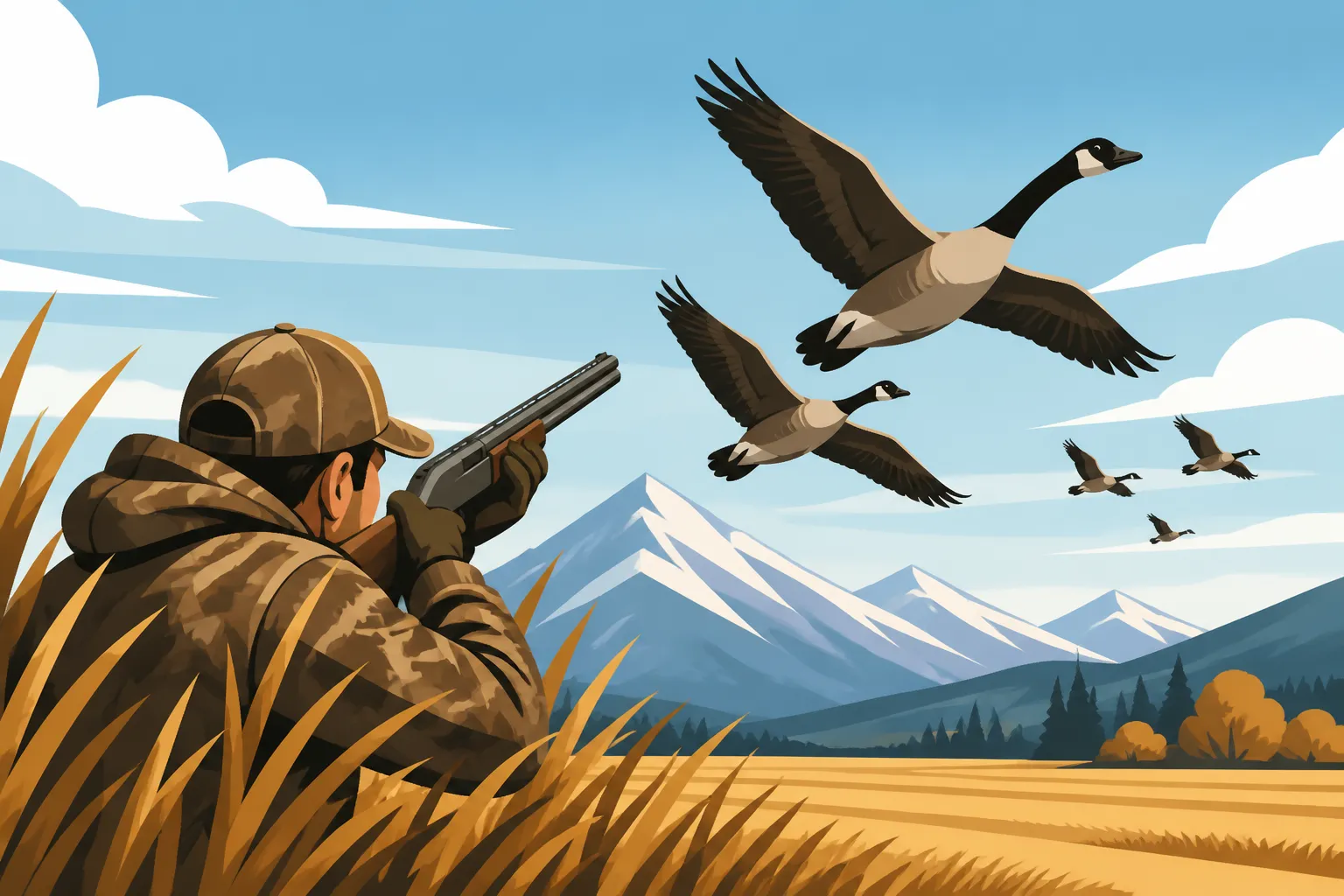
There's a special kind of challenge that comes with hunting Canada Geese over open fields in British Columbia. These birds are incredibly intelligent, with eyesight that seems to pick out the slightest anomaly in a meticulously set spread. You might spend hours scouting, driving dusty backroads, and setting up before legal light, only to have a flock flare at 200 yards, leaving you scratching your head, wondering what went wrong. It's frustrating, but with the right approach and a deep understanding of these magnificent birds, you can absolutely turn those close calls into successful harvests. This guide will delve into the nitty-gritty of field hunting Canada Geese, equipping you with the knowledge to outsmart these wary birds in British Columbia's diverse agricultural landscapes.
Understanding British Columbia's Canada Geese and Their Habits
Hunting Canada Geese successfully in British Columbia's fields starts long before you ever step foot into a stubble field or pasture. It begins with a deep understanding of the birds themselves – their biology, their daily routines, and how they interact with the landscape around them. These aren't just random birds; they're creatures of habit, and learning those habits is your greatest advantage.
Why Geese Favor Agricultural Fields
Canada Geese are opportunistic feeders, and British Columbia's agricultural fields offer a smorgasbord of calorie-rich options, especially during migration and through the colder months. They seek out recently harvested grain fields – think wheat, barley, or corn stubble – where they can glean fallen kernels. These fields provide abundant, accessible food that's easy for them to digest, making them prime feeding grounds. You'll also find them in hay fields, pastures, and even winter wheat fields, where they graze on tender shoots. These open areas also provide a crucial sense of security. With wide-open views, geese can spot predators, including hunters, from a long distance, which is precisely why they're so challenging to approach.
Beyond food, fields often offer convenient access to water sources nearby. Geese need water for drinking and preening, and they'll often fly from a roosting lake or river to a feeding field, then back to water, sometimes multiple times a day. Their flight patterns between these two points become predictable, which is vital information for a hunter. Understanding this daily commute is a critical step in positioning yourself for success.
Recognizing Different Populations and Migration Patterns
British Columbia hosts a mix of Canada Goose populations: some are resident birds that breed and live here year-round, while others are migratory, passing through or wintering in the province. Resident populations, particularly those found around urban centres and parklands, can be incredibly wary due to constant human presence, but they also have very predictable patterns of movement. They often commute from suburban ponds or lakes to nearby agricultural fields daily. Migratory birds, on the other hand, might be less wary initially, especially early in their journey, but they also move through quickly.
The timing of your hunt will dictate which populations you're likely to encounter. Early season hunts might target local, resident birds, while later in the fall and into winter, you'll see more migratory flocks pushing through the Pacific Flyway. This makes understanding the regional "Goose Season Dates by Region" absolutely essential. For instance, the Fraser Valley often sees large numbers of migratory birds, whereas the Interior might have more localized populations for specific periods. Successful hunting often involves adapting your tactics to the specific temperament of the birds you're pursuing, whether they're seasoned local survivors or newly arrived travellers.
Essential Gear and Setting Up for Success
You can't just show up to a goose field with a shotgun and a few shells and expect to fill your limit. Canada Geese, especially those that have been hunted before, are incredibly discerning. They scrutinize every detail, from the realism of your decoys to the slightest glint off your blind. Having the right gear and knowing how to deploy it effectively is paramount to drawing these wary birds into shooting range.
Decoys: The Foundation of Your Field Set
Decoys are, without a doubt, the most critical element of any successful field hunt for Canada Geese. Their purpose is to convince incoming birds that your spread is a safe, attractive place to land and feed. You'll find several types of decoys on the market, each with its own advantages and disadvantages. Full-body decoys are incredibly realistic and offer lifelike dimension, making them highly effective, especially for wary birds. However, they are bulky, heavy, and expensive. Shell decoys are lighter and stackable, offering a good compromise between realism and portability. Silhouettes are the most portable and affordable option, and when deployed correctly in large numbers, can create an impressive visual effect, though they lack the 3D realism that can seal the deal on a windy day.
The key to a convincing spread often lies in variety and numbers. A mix of feeding, sentry, and resting positions adds realism. For Canada Geese, especially in agricultural fields, more is generally better. While you can certainly kill birds over a dozen decoys, large flocks of geese are naturally drawn to other large flocks. Aim for at least two or three dozen if possible, and scale up from there if you can manage it. Realism extends to motion too; consider adding a few motion decoys or using Texas rigs to allow natural movement in the wind. A static, perfectly uniform spread screams "fake" to high-flying geese.
Effective Blinds and Concealment Techniques
Even the most perfect decoy spread will be useless if the geese spot you. Canada Geese have phenomenal eyesight, and they'll pick up on anything that looks out of place. This is where effective concealment comes in. Layout blinds are the gold standard for field hunting. They allow you to lie prone, hidden from view, and pop up quickly for a shot. Look for blinds that are low-profile and easy to set up and deconstruct. Crucially, your blind needs to match the environment. If you're hunting a corn stubble field, a blind covered in corn stalks will disappear. If it's a wheat stubble field, you need a blind that blends with wheat.
Beyond layout blinds, natural cover can also be highly effective. Fence lines, ditches, or clumps of brush can offer excellent concealment, provided they are positioned correctly within your spread and you can remain completely still as birds approach. The key to any concealment strategy is to break up your human outline and blend seamlessly with the surroundings. This often means "brushing in" your blinds with local vegetation – grass, stubble, or even mud if the field conditions allow. Don't be shy about piling on natural cover; it's always better to overdo it than to be silhouetted against the sky. Remember, even a shiny watch or a patch of exposed skin can flare a flock, so attention to detail is critical.
Shotguns, Ammunition, and Non-Toxic Requirements
For Canada Geese, you'll want a reliable shotgun, typically a 12-gauge, though a 10-gauge can offer a bit more punch and pattern density at longer ranges. The ability to cycle quickly for follow-up shots is a major plus, making semi-automatics or pump-actions popular choices. Barrel length often comes down to personal preference, but anything from 26 to 30 inches is common. The most critical factor regarding ammunition for waterfowl hunting in British Columbia, and indeed across Canada, is the requirement for "Non-Toxic Shot Rules in British Columbia." This means lead shot is strictly prohibited for migratory birds.
Steel shot is the most common non-toxic alternative, offering a balance of performance and cost. However, it's less dense than lead, so you'll typically need to use larger shot sizes (e.g., BB, BBB, T) to achieve similar energy and penetration. Bismuth, tungsten-matrix, or other alloys are denser and perform more like lead, but they come at a higher price point. Choose a heavy load with a high pellet count, and always pattern your shotgun with your chosen ammunition and choke combination before the hunt. A modified or improved modified choke is often a good starting point for geese, offering a balance of spread and density at typical shooting distances. The goal is a dense, uniform pattern that will deliver enough pellets to quickly and humanely dispatch a goose at 30-50 yards.
Goose Calls: The Voice of Your Spread
Effective calling is the final piece of the puzzle, bringing your decoy spread to life and communicating directly with approaching birds. There's an art to goose calling, and it's something that takes practice. You don't need to be a champion caller, but you do need to be able to make realistic sounds and understand when to use them. Short-reed Canada Goose calls are popular, allowing for a wide range of vocalizations from deep honks to excited clucks and murmurs.
Start by mastering the basic honk, cluck, and moan. The honk is a greeting call, used to get the attention of distant birds. Clucks and moans are often used when birds are closer, imitating feeding or contented geese on the ground. The comeback call – a series of excited honks and clucks – is crucial for turning birds that are starting to drift away. Timing is everything; over-calling can spook birds, while under-calling might not get their attention. Pay close attention to how the real birds respond to your calls. Sometimes, silence is the best call. Learning to read the birds and adjust your calling accordingly will significantly increase your success.
Mastering Field Hunting Strategies
With your gear sorted and a basic understanding of goose behavior, it's time to put it all into action. Field hunting Canada Geese isn't just about throwing out decoys; it's a strategic game of cat and mouse, where scouting, precise setup, and patient execution are rewarded. It's often said that 90% of goose hunting success comes from 10% of the effort: finding the right spot.
The Critical Role of Scouting and Location
You simply cannot overstate the importance of thorough scouting when it comes to field hunting Canada Geese. Geese are creatures of habit, yes, but their habits can change overnight due to weather, hunting pressure, or new food sources. The most successful hunters are those who put in the miles and hours before the hunt. This means driving secondary roads at dawn and dusk, looking for where geese are feeding, flying, and resting. Pay attention to specific fields – which ones are they actively using? What time of day? Where are they landing within the field?
Tools like GoHunt can be invaluable for identifying potential agricultural areas and understanding land ownership, helping you focus your scouting efforts. Once you've identified active fields, note the access points and potential setup locations. Always ask for landowner permission if you're on private property. Without explicit permission, you could be trespassing. Even on Crown land, identifying specific areas where geese are consistently using "Hunting a Peace Country Grain Field" or similar agricultural settings is paramount. Without scouting, you're essentially guessing, and geese are far too smart for guesswork.
Optimal Decoy Spreads and Placement
Once you've found an active field, your decoy spread needs to mimic what the geese want to see. The wind direction is the most critical factor here. Geese, like all birds, prefer to land into the wind. This means your "kill hole" – the open area where you want the birds to land – should be directly upwind of your blinds. Your decoys should extend downwind from your blinds, creating a natural-looking landing strip. A common spread is a "J" or "U" shape, with the open end of the letter facing the wind, guiding birds directly into your shooting zone.
Think about how real geese naturally group. They often feed in family units, so create smaller clusters of 3-5 decoys within your larger spread, with some individual "sentry" decoys standing upright. Mixing in a few feeder decoys, heads down, conveys a sense of security. If you're "Field Hunting Snow Geese in the Fraser Delta" or other large flocks, you'll need even more decoys to draw them in. Ensure there's enough open space in your kill hole for a large goose to feel comfortable landing. Too many decoys packed too tightly can make a bird hesitate, especially if they're already wary.
Effective Calling and Reading the Birds
Calling is about communication, not just making noise. When you see distant flocks, a series of long, drawn-out honks can get their attention. As they turn and approach, switch to more contented clucks and moans, mimicking feeding birds. This tells them, "Hey, it's safe down here, come join us!" When they are within 100-200 yards, your calling should become more subtle, less aggressive. Use short clucks and murmurs, just enough to keep them interested without overdoing it.
The real skill comes in reading the birds. Are they committed and cupping their wings for a landing? Are they circling warily, high above your spread? If they're cupping, ease off the call and let them come. If they're high and hesitant, a few sharp comeback calls might entice them to swing around again. Sometimes, a "full stop" on the calling can be effective when they are directly overhead, creating a sense of natural quiet. Learning to gauge their distance, height, and body language is key to knowing when to call, when to be quiet, and when to get ready to shoot. Practicing with other hunters can help you fine-tune your technique and learn to interpret the nuanced responses of wild geese.
Patient Execution and Shot Selection
Once the geese are working your spread, patience is your greatest ally. It's incredibly tempting to jump up and shoot as soon as they are within range, but waiting for the absolute best shot opportunity is crucial for ethical hunting and high success rates. Wait until the birds are fully committed, ideally with their feet down, wings set, and directly over your kill hole. Let them come close, usually within 25-35 yards, before you call the shot. This ensures a clean, humane kill.
When you rise, do so quickly and decisively. Choose a single bird, usually one on the leading edge or one that's slightly separated. Focus on the head and neck for the most effective shot. Don't swing wildly at the flock; aim deliberately at one bird, then cycle your gun and pick another. Lead your target appropriately, remembering that geese are large birds but can fly surprisingly fast. After the shot, be prepared to quickly retrieve any downed birds. A good retrieving dog is invaluable here, helping to minimize lost game. For specific scenarios like "Hunting British Columbia's Interior Marshes" or coastal areas, retrieval can be even more challenging due to dense cover or water, making a dog even more essential.
Regulations and Ethical Hunting in British Columbia
Hunting Canada Geese in British Columbia's agricultural fields isn't just about gear and tactics; it's also about understanding and adhering to the specific rules and regulations that govern migratory bird hunting, as well as upholding ethical hunting practices. Failing to do so can result in fines, loss of hunting privileges, and damage to the reputation of all hunters.
Navigating British Columbia's Migratory Bird Regulations
Migratory bird hunting in British Columbia falls under both provincial and federal jurisdiction. Before you head out, you must ensure you have a valid provincial hunting license and species tags, if required, as well as federal permits. Specifically, you will need "The Federal Migratory Game Bird Permit" and the Canadian Wildlife Habitat Conservation Stamp. These permits are crucial and the revenue generated from their sale directly supports habitat conservation efforts across the country.
It's vital to check the current "British Columbia Game Bird Seasons" and bag limits for the specific management unit (MU) you plan to hunt. Season dates and daily/possession limits can vary by region and species. For instance, the bag limits for Canada Geese might be different in the Fraser Valley compared to the Cariboo region. The two-year hunting synopsis is your go-to resource, updated every two years, and available online through the provincial government website. Always carry your licenses and permits with you while hunting, as conservation officers conduct regular checks.
Respecting Landowners and Private Property Access
Many of British Columbia's prime goose hunting fields are on private land. This means obtaining permission from the landowner is not just a courtesy, but a legal requirement. Trespassing, even accidentally, can lead to serious legal consequences and gives all hunters a bad name. Before you even scout a field, use tools like GoHunt or provincial land use maps to identify property boundaries. Once you've identified a promising private field, make the effort to contact the landowner well in advance. Be polite, respectful, and offer to share some of your harvest.
When granted permission, always follow any specific instructions the landowner provides, such as parking locations, areas to avoid, or gates to close. Leave the property cleaner than you found it, picking up all spent shell casings, garbage, and any stray decoys. A simple "thank you" goes a long way, and building a good relationship with landowners is essential for maintaining access to these valuable hunting grounds. Remember, "British Columbia Trespass and Private Land Law" is in effect, and landowners have the right to deny access. Your actions directly impact future hunting opportunities for everyone.
Ethical Hunting Practices and Conservation
Ethical hunting goes beyond simply following the rules; it's about respecting the animals you pursue and the environment they inhabit. This includes making every effort to ensure a clean, humane kill. As mentioned earlier, waiting for a close, clear shot is paramount. Using appropriate ammunition and patterning your shotgun helps ensure you're putting enough energy on target. If a bird is wounded, pursue it immediately and diligently until it's recovered, minimizing suffering. A good retriever dog is a huge asset in this regard.
Furthermore, responsible hunters take care of their harvest. Proper field dressing and storage are essential to ensure the meat is fit for consumption. Waste not, want not – utilize as much of the bird as possible. Participating in conservation efforts, such as reporting poachers via the RAPP (Report All Poachers and Polluters) line, is another crucial aspect of ethical hunting. By acting as responsible stewards of the resource, we ensure that the tradition of hunting Canada Geese in British Columbia's beautiful fields continues for generations to come.
| Decoy Type | Pros | Cons | Best Use |
|---|---|---|---|
| Full Body | Highly realistic, 3D presence, natural movement with wind if weighted properly | Expensive, bulky, heavy to transport, time-consuming to set up | Wary birds, smaller spreads where realism is paramount |
| Shells | Moderate realism, stackable, lighter than full bodies, more affordable | Less 3D presence than full bodies, can look flat on calm days | Large spreads, quick setup, good balance of realism/cost |
| Silhouettes | Very lightweight, extremely portable, most affordable, quick setup of large numbers | Least realistic, only 2D, can look unnatural in certain light | Maximizing numbers, creating a "big flock" impression, long-distance visibility |
| Motion/Flag | Adds dynamic realism, catches attention from afar | Can be expensive, mechanical failures, requires constant activation (flags) | Enhancing static spreads, drawing attention to the kill hole |
Disclaimer
The information provided in this guide is for general informational purposes only and is not intended as legal advice. Hunting regulations, season dates, and licensing requirements can change frequently. It is the sole responsibility of the hunter to consult the most current British Columbia Hunting and Trapping Regulations Synopsis and federal migratory bird regulations before engaging in any hunting activities. Always prioritize safety and ethical hunting practices.