Okanagan Access Near the Highways
It's a common frustration for hunters heading into British Columbia's Okanagan: you see endless hills and draws, but the highways snake through what looks like an impenetrable wall of private land, vineyards, and bustling towns. It can feel overwhelming trying to figure out where the public land actually starts and how to access it without trespassing. This guide is here to untangle that knot, showing you how to find huntable ground and enjoy successful outings right off the main road arteries in the Okanagan.
Understanding the Okanagan Landscape and Its Unique Access Challenges
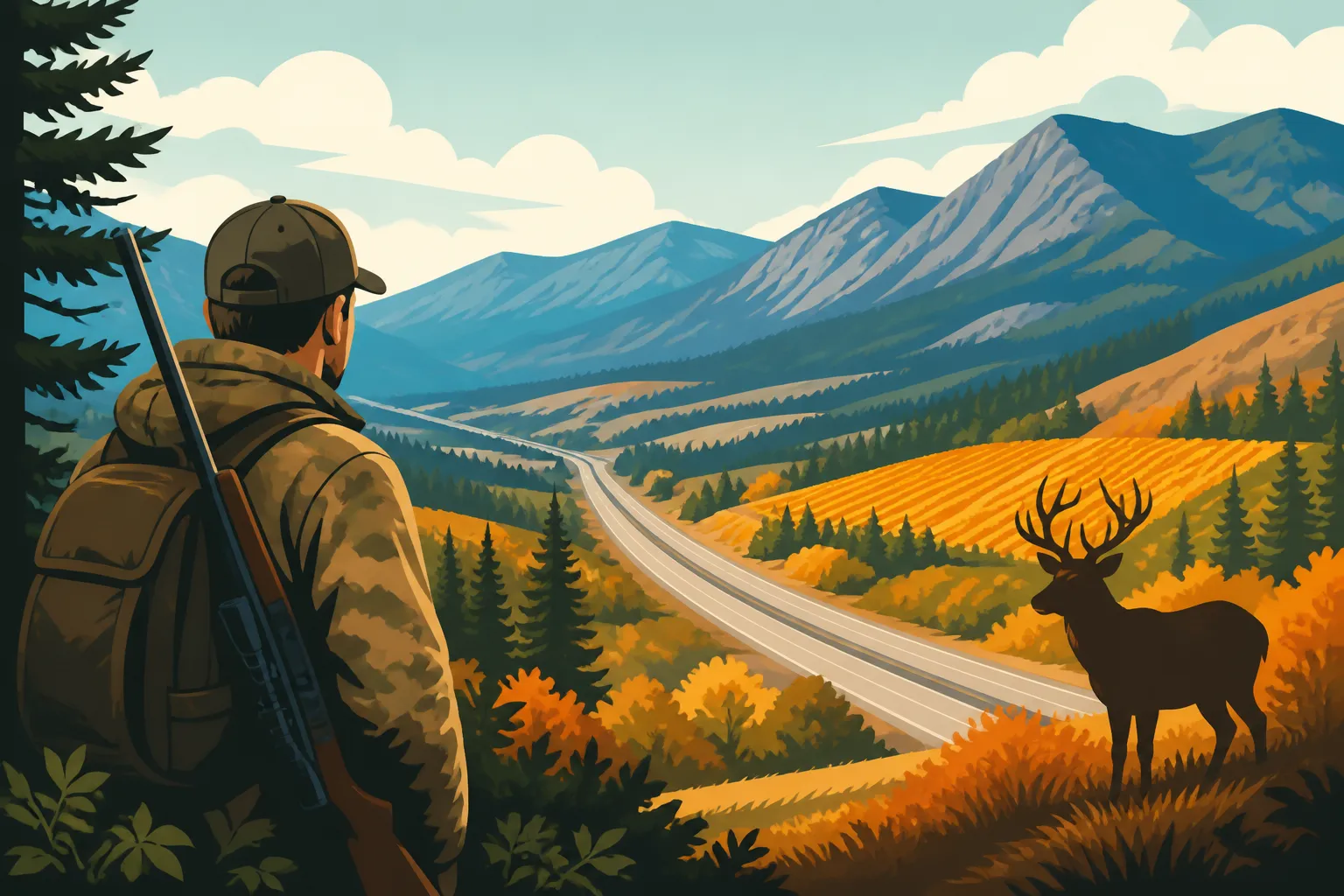
The Okanagan Valley is a stunning, diverse region, stretching from Osoyoos in the south to Vernon in the north, with the Trans-Canada Highway 97 acting as its main artery. While it's famed for its vineyards, orchards, and sunny lakes, it's also a significant big game area. However, the concentration of private land in the valley bottoms and along the main highways creates distinct challenges for hunters seeking easy access.
The Checkerboard of Private and Crown Land
One of the biggest hurdles for hunters in the Okanagan is distinguishing between private and Crown (public) land. The valley floors, particularly around major centres like Kelowna, Vernon, and Penticton, are heavily settled and developed. Large agricultural operations, wineries, and residential areas dominate these areas. This often means that the prime, lower-elevation hunting grounds directly adjacent to the highways are privately owned. For those accustomed to vast, uninterrupted tracts of public land, this can be a real head-scratcher. You might drive for miles seeing nothing but "No Hunting" signs or fences, leaving you wondering if there's any public land left to explore.
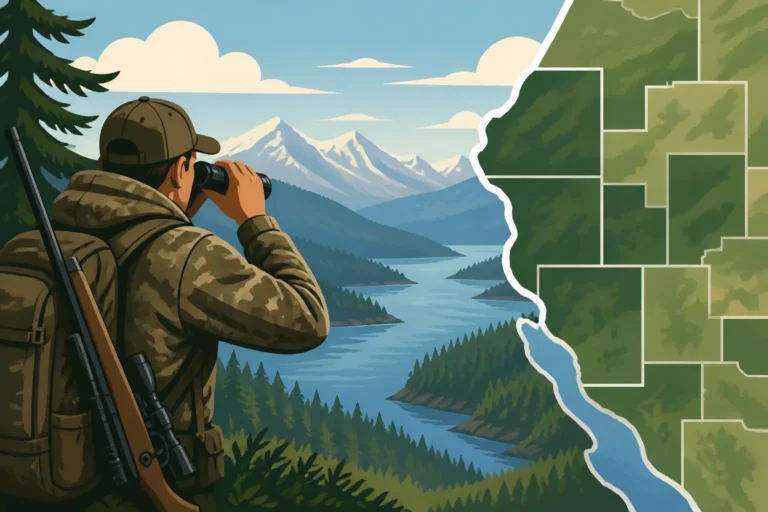
The key is to understand that while the valley bottom is mostly private, the terrain quickly transitions to Crown land as you ascend the hills and mountainsides away from the main highway corridors. This means that direct, obvious access from the highway can be scarce, but it's not impossible to find. Hunters often need to "read between the lines" of the landscape, looking for the tell-tale signs of where the private boundaries end and the public domain begins. Tools like onX Hunt are invaluable here, as they overlay property boundaries directly onto mapping software, making it much easier to identify legal access points and understand the land ownership.
Navigating Road Networks Beyond the Pavement
Beyond the main paved highways, the Okanagan is crisscrossed by an extensive network of secondary roads, including paved rural routes, gravel resource roads, and numerous Forest Service Roads (FSRs). These FSRs are your golden ticket to unlocking the vast tracts of Crown land that lie just out of sight from Highway 97. However, navigating them presents its own set of considerations.
Some FSRs are actively used for logging or other industrial activities, requiring caution and adherence to radio call protocols. Others might be deactivated, meaning they are intentionally degraded to prevent vehicle access, though they often make for excellent walk-in hunting routes. The condition of these roads can vary wildly, from well-maintained gravel to deeply rutted tracks requiring high-clearance 4×4 vehicles. Seasonal closures due to snow, mud, or wildfire activity are also common, particularly in the shoulder seasons. Knowing how to identify Finding Open Forest Roads in British Columbia and understanding their condition before you go is paramount for a safe and successful hunt. It's not just about getting there, but getting back out again, too!
Leveraging Forest Service Roads for Highway-Adjacent Access
Forest Service Roads (FSRs) are truly the arteries of access for hunters in British Columbia's interior, and the Okanagan is no exception. While they might not be directly visible from the main highway in every instance, many FSRs branch off secondary paved roads that are just a stone's throw from the highway, providing pathways into the hills and mountains.
Identifying Promising FSR Entrances
The trick is knowing where to look for these FSR entrances. Often, they're not grand, obvious gateways but rather humble gravel tracks leading off a less-traveled side road. Look for areas where the valley walls begin to steepen, signaling the transition from private agricultural land to forested Crown land. These are prime locations for FSRs to begin their climb.
Many FSRs are marked with small, green signs indicating their name (e.g., "Peachland FSR," "Myra-Bellevue FSR"). However, sometimes the best ones are completely unmarked. This is where pre-hunt scouting, both online with mapping tools like onX Hunt or GoHunt, and physically driving some of the less-traveled side roads, pays huge dividends. Use a reliable GPS or mapping app to confirm you're entering Crown land and to track your route. Pay attention to any gates; some FSRs may have gates that are seasonally locked, or controlled by private timber companies, requiring specific permits or restricting access entirely. A good starting point might be looking for roads that climb out of the valleys around towns like Peachland, Summerland, or along the eastern side of Okanagan Lake above Vernon. These tend to lead quickly into extensive Crown lands.
Driving and Walking Deactivated Roads
Once you're on an FSR, you'll encounter various conditions. Active FSRs, used by logging trucks or other industrial traffic, often require you to monitor a specific radio channel for safety. Always yield to industrial traffic and be prepared for dust, mud, and heavy machinery. But it's often the "deactivated" roads that offer the best hunting opportunities right off the beaten path.
Deactivated roads are purposefully made impassable to vehicles, usually by digging cross-ditches, removing culverts, or planting large boulders. While this can be frustrating for motorized access, it creates fantastic walk-in hunting areas. These old roads often follow contours, making for easier hiking than bushwhacking, and they act as natural travel corridors for game. Animals quickly learn that these areas see less human pressure, and you'll often find excellent sign. A key strategy is to park your vehicle safely off the main FSR and hike in on these deactivated spurs. This allows you to quickly get away from road noise and into prime habitat without having to trek miles deep into the wilderness. Remember to check regulations regarding vehicle use on FSRs; some areas have specific restrictions that differ from other parts of the province. For deeper insights, read up on Driving a Deactivated Logging Road.
Navigating Private Land and Respecting Boundaries
The Okanagan is dotted with private property, from sprawling vineyards and orchards to cattle ranches and residential acreages. Knowing how to deal with this patchwork of land ownership is crucial for any hunter wishing to access areas near the highways.
Identifying Private Property Clearly
It cannot be stressed enough: know where you are. Many frustrated hunters have run afoul of the law or earned the ire of landowners simply by misidentifying property lines. Fences can be misleading, and sometimes a field that looks like Crown land might actually be part of a private farm. This is where technology truly shines. Mapping applications like onX Hunt are indispensable in the Okanagan, showing property boundaries in real-time on your phone or GPS device. This level of detail helps you confidently identify Crown land access points and avoid inadvertent trespass.
Beyond digital tools, good old-fashioned observation is key. Look for posted signs ("No Trespassing," "Private Property," "No Hunting"), property markers, fences, and changes in land use (e.g., manicured orchards abruptly giving way to natural forest). If in doubt, err on the side of caution. Remember that even if you're standing on Crown land, you might be overlooking or shooting towards private property. Always be aware of your surroundings and consider your backstop carefully. For more detail on legalities, check out British Columbia Trespass and Private Land Law.
Seeking Permission and Being a Good Ambassador
One of the most underutilized strategies for Okanagan hunters is simply asking for permission. While many large operations might have a blanket "no access" policy, smaller landowners, especially those with treed lots or marginal grazing land adjacent to Crown land, might be open to granting access, especially for foot traffic. It's a matter of respect and building relationships.
When approaching a landowner:
- Be respectful and polite: Introduce yourself, state your intentions clearly, and offer to share your contact information.
- Dress appropriately: Show up clean and presentable, not covered in mud or with a loaded rifle.
- Offer to help: Sometimes, landowners might have minor tasks you could assist with, such as closing a gate, reporting suspicious activity, or even helping with a small chore.
- Know the rules: Be clear on the hunting regulations for the area and assure them you will follow all rules.
- Respect their decision: If they say no, accept it gracefully and thank them for their time. Do not argue or try to persuade them further.
A positive interaction, even if it doesn't result in immediate access, can sometimes open doors down the road. Furthermore, being a good ambassador for hunting reflects positively on all hunters, helping to preserve access for everyone.
Game Species You'll Find Near Okanagan Highways
While the Okanagan is known for its agricultural bounty, the hillsides and broken country adjacent to the highways host a surprising variety of big game and upland birds. These animals are often accustomed to human presence and use the fragmented landscape to their advantage.
Mule Deer and Whitetail Deer
Mule deer are the quintessential big game animal of the Okanagan. They thrive in the dry, open timber and sagebrush flats that characterize much of the region's hillsides. Near the highways, you'll often find them utilizing brushy draws, stands of aspen or pine, and transition zones where private land gives way to Crown. Early morning and late evening are prime times to spot them as they move between bedding and feeding areas. During the rut, they become more active, and bucks are more focused on does, sometimes making them less cautious. Learning to differentiate What a British Columbia Mule Deer Weighs and their habits will increase your success.
While mule deer are dominant, white-tailed deer are also present in the Okanagan, particularly in the lower, thicker riparian zones and near agricultural fields. They are often more secretive than muleys, preferring dense cover. If you find thick pockets of timber or brush near water sources, especially where there's an interface with private agricultural lands, you might encounter whitetails. Hunting deer in these highway-adjacent zones often involves a lot of glassing from elevated positions, followed by careful stalks. Consider reading Glassing an Interior Hillside for Mule Deer for tactical tips.
Black Bears and Upland Birds
Black bears are common throughout British Columbia, and the Okanagan is no exception. They are incredibly adaptable and can be found in a variety of habitats, from dense timber to berry-laden slopes and even foraging near orchards or vineyards on the periphery of private land. Look for them in spring when they emerge from hibernation, often feeding on new green growth in avalanche chutes or along south-facing slopes. In the fall, they'll be feasting on berries and other mast crops to put on weight for winter. Hunting bears in these areas requires vigilance and a keen eye for sign, especially scat and claw marks on trees.
For upland bird hunters, the Okanagan offers opportunities for various grouse species. Ruffed grouse prefer dense deciduous cover along creek bottoms and in mixed forests, while blue grouse (also known as dusky grouse) are often found higher up in coniferous forests. Chukar and California quail are also found in the drier, rockier parts of the Okanagan, particularly in the southern reaches. These birds often inhabit the same fragmented landscapes as deer and bears, providing a diverse hunting experience. Hunting Ruffed Grouse in an Alder Bottom can be a great way to explore these areas on foot.
| Species | Typical Habitat Near Highways | Best Access Method | Key Times to Hunt |
|---|---|---|---|
| Mule Deer | Dry timber, sagebrush flats, brushy draws, transition zones. | FSRs (vehicle & walk-in), private with permission | Early morning, late evening, during the rut |
| White-tailed Deer | Dense riparian areas, thick timber, edges of agricultural fields. | FSRs (walk-in), private with permission | Early morning, late evening |
| Black Bear | Dense timber, berry slopes, avalanche chutes, creek bottoms. | FSRs (vehicle & walk-in) | Spring (green-up), Fall (berry season) |
| Ruffed Grouse | Alder bottoms, mixed forest, creek edges. | FSRs (walk-in), secondary rural roads | Mid-day, when active |
| Blue Grouse | Coniferous forests, higher elevations. | FSRs (vehicle & walk-in) | Mid-day, when active |
Essential Gear and Tactics for Roadside Hunting
Hunting near British Columbia's Okanagan highways isn't about sitting on the asphalt; it's about utilizing those accessible routes as a springboard into productive areas. This approach requires specific gear and tactics to maximize success and ensure safety.
Optics and Scouting: Your Best Friends
Given the often-broken and open terrain of the Okanagan hillsides, high-quality optics are absolutely non-negotiable. Binoculars (10×42 or 10×50 are excellent choices) and a spotting scope can help you pick apart distant hillsides and identify game that would be invisible to the naked eye. Before you even set foot out of the truck, spend time glassing. Pull over safely on an FSR or a quiet side road, set up your tripod, and systematically scan all the available terrain. Look for movement, differences in texture or colour that suggest an animal, or tell-tale horizontal lines that don't belong in a vertical landscape.
Pre-season scouting is also vital. Long before opening day, drive some of the FSRs you plan to hunt. Note where the habitat looks promising, where old skid roads lead off into thickets, or where fresh tracks might indicate recent animal activity. Pay attention to water sources and natural funnels. You can also use online satellite imagery (from tools like onX Hunt or GoHunt) to identify key features like clear-cuts, mature timber, or north-facing slopes that might hold game during warmer parts of the day. Remember, the more you know about an area before you hunt, the better your chances of success. Scouting a British Columbia Management Unit Online offers valuable advice.
Stealth, Foot Travel, and Blaze Orange
While you're starting "near the highway," successful hunting will quickly take you off the road and onto your feet. Vehicles tend to make noise and carry scent, alerting game. Once you've identified a promising area, park your vehicle legally and safely, then transition to stealthy foot travel. Many of the most productive spots are just a few hundred yards off the main FSR, areas that other hunters might overlook if they're simply "road hunting." Walk slowly, stop frequently, and listen. Pay attention to wind direction to keep your scent from blowing towards game.
Given the potential for other recreational users and hunters in these more accessible areas, wearing blaze orange is not just a good idea, it's often legally required or strongly recommended, particularly during general open season. This increases your visibility to other people, significantly enhancing safety. Even when legal requirements might be relaxed, common sense dictates a blaze orange vest or hat, especially when moving through brushy areas or near roads. Safety is always paramount, and being easily seen by others is a cornerstone of responsible hunting. For a full breakdown, review the British Columbia Blaze Orange and Safety Rules.
Planning Your Trip and Respecting Local Communities
A successful hunt near the Okanagan highways isn't just about finding game; it's about planning effectively and being a considerate visitor to the communities you pass through. This region is popular, and balancing hunting activities with other recreational and residential uses is key.
Essential Paperwork and Regulations
Before you even pack your bags, ensure all your paperwork is in order. You'll need a valid British Columbia hunting license, and the appropriate species tags for whatever you intend to pursue. If you're a non-resident of BC, the rules for licenses and tags are different, and you may even need a guide or a Permit to Accompany a resident hunter. Check the current British Columbia hunting regulations synopsis meticulously. Regulations can change annually, and specific Management Units (MUs) within the Okanagan might have unique restrictions on hunting methods, season dates, or antler point requirements. Don't assume; verify everything. Resources like British Columbia Resident Hunting Licence Cost and the official synopsis will be your best friend.
Always carry your valid hunting licence and species tags with you, along with photo identification. It's also a good practice to have a copy of the current regulations synopsis, either printed or digitally accessible, in case you need to reference a rule in the field. Understanding the nuances of a British Columbia Management Unit Map will help you align your hunt plan with the legal boundaries and regulations for each specific area.
Camping, Leave No Trace, and Community Relations
While hunting near highways implies a certain level of accessibility, overnight stays might still be part of your plan. British Columbia offers various camping options, from designated recreation sites on Crown land to random camping. Camping Rules on British Columbia Crown Land outlines what's permitted. If you're planning to camp, always practice Leave No Trace principles. Pack out everything you pack in, minimize your impact on the environment, and be considerate of other users.
Remember that you are often hunting close to communities where residents might not be accustomed to seeing hunters. Be mindful of where you park, how you dispose of game waste, and your overall behaviour. Ensure your firearms are cased and unloaded when traveling through populated areas, and avoid displaying harvested game in an overt manner in public view. Supporting local businesses, even if it's just buying gas or groceries, helps foster positive relations between hunters and the communities that provide access to the hunting grounds. By being respectful, responsible, and prepared, you not only increase your chances of a successful hunt but also ensure that these accessible Okanagan hunting opportunities remain available for future generations.
Disclaimer
This article is for general informational purposes only and does not constitute professional advice. Laws, prices and regulations vary by location and change over time. Consult a qualified professional for guidance on your specific situation.