British Columbia’s Four-Point Antler Restriction
One of the most common head-scratchers for deer hunters across British Columbia, especially those new to certain regions or even seasoned folks transitioning between areas, is the four-point antler restriction. It's not just a number; it's a critical regulation that, if misunderstood, can turn a successful hunt into a heartbreaking mistake. This guide is here to untangle the complexities, explain the 'whys,' and offer practical advice so you can confidently identify and pursue legal bucks.
Understanding British Columbia's Four-Point Antler Restriction
The "four-point antler restriction" is a game management tool you’ll encounter frequently in British Columbia’s deer hunting regulations. It's one of those rules that sounds simple enough on paper, but out in the field, when the adrenaline is pumping and a buck is moving through cover, correctly identifying a legal animal can become surprisingly challenging. It requires a keen eye, patience, and a thorough understanding of what counts as a point.
What Exactly Constitutes a Four-Point Buck?
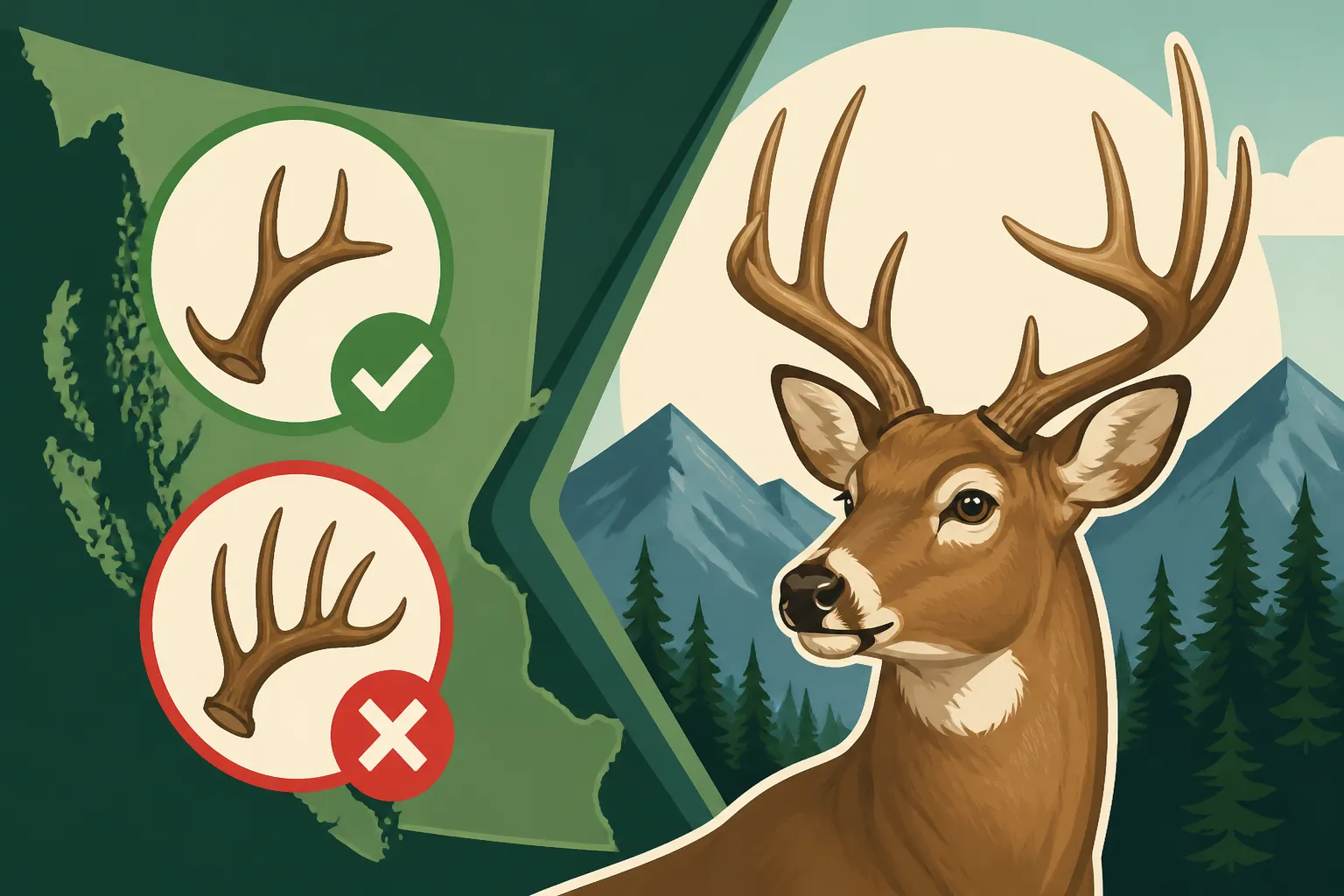
At its core, a "four-point" buck in British Columbia refers to an antlered deer where at least one antler has a minimum of four points, not including the brow tine. This distinction is absolutely crucial and often where confusion begins. A point is typically defined as a projection off the main beam that is at least one inch long and longer than it is wide. It must originate from the main beam or another point.
Let's break down the counting:
- Brow Tines: These are the points closest to the deer's head, typically projecting forward or slightly upward from the base of the antler. For the purpose of the four-point rule, these are not counted. This means a buck with a main beam, three points extending upwards, and a brow tine would typically be considered a three-point, not a four-point, for regulatory purposes.
- Main Beam: The primary shaft of the antler. Points are typically counted as projections off this main beam.
- Typical vs. Non-Typical: Most hunters are looking for "typical" points that grow in a symmetrical, predictable pattern. However, non-typical points – abnormal growths, stickers, or drop tines – also count towards the four-point minimum if they meet the length criteria. The regulation doesn't differentiate between typical and non-typical when it comes to the minimum point count.
Imagine you're glassing an interior hillside for mule deer. You spot a nice buck, and through your binoculars, you see what looks like four distinct points on its right antler, plus a brow tine. That brow tine does not count towards the four-point minimum. So, if those other four points meet the length criteria, that antler is a legal "four-point side." If the other antler only has three points (excluding its brow tine), it's still a legal deer because only one antler needs to satisfy the requirement. It's not about both antlers being four-point or better; it's "four-point or better on one side." This regulation is one of the many nuances you'll find when trying to understand British Columbia's Four-Point Antler Rules.
The Rationale Behind Antler Point Restrictions
The decision to implement antler point restrictions isn't about making a hunter's life harder, believe it or not. It's a strategic wildlife management tool designed to achieve specific conservation and herd health objectives. The primary goal of a four-point restriction, especially for species like mule deer and black-tailed deer, is to influence the age structure and genetics of the buck population.
Here’s why wildlife managers employ this rule:
- Allowing Younger Bucks to Mature: In areas with high hunting pressure, younger bucks, particularly 1.5 to 2.5-year-olds, are often harvested before they reach their full potential. These younger bucks typically have fewer points. By imposing a four-point rule, managers aim to "pass" these younger bucks, allowing them to survive another season or two. This gives them a chance to grow larger bodies and develop more complex antlers, which can lead to a more robust, healthier herd overall.
- Improving Buck-to-Doe Ratios: If too many young bucks are harvested, the buck-to-doe ratio can become skewed, potentially impacting breeding success and herd dynamics. Allowing more bucks to mature helps maintain a healthier ratio, ensuring more older, experienced bucks are available during the rut.
- Promoting Genetic Diversity: While antler size isn't the sole indicator of genetic quality, allowing bucks to age and express their genetic potential contributes to a stronger gene pool within the herd. This can lead to larger, healthier deer over generations, though this is a long-term goal.
- Hunter Satisfaction (Long-Term): While initially frustrating for some, the hope is that by increasing the number of mature bucks in the population, hunters will eventually have a better chance of encountering and harvesting truly impressive animals. This can lead to a higher quality hunting experience and greater satisfaction in the long run.
It's a delicate balance. Some regions might have "any buck" seasons, while others might have a "2-point or better" rule, but the four-point restriction is quite common, particularly for species like the Mule Deer Across British Columbia's Interior. These rules are part of a broader strategy for British Columbia Hunting Licences and Fees and overall species management, reflecting specific conditions and goals for deer populations in different areas.
Navigating the Regulations and Management Units
Understanding what a four-point buck is is only half the battle. The other, equally crucial part is knowing where and when these rules apply. British Columbia's hunting regulations are complex, with rules often varying significantly from one Management Unit (MU) or region to another, and even changing between seasons. Relying on word-of-mouth or last year's memories can lead you astray, so being diligent about consulting the official sources is paramount.
Where the Four-Point Rule Applies
British Columbia is divided into nine hunting regions, and within those regions, hundreds of smaller Management Units. Each MU often has its own specific regulations for different species, particularly deer. The four-point antler restriction is not universal across the entire province for all deer species. For instance, it's very common for Mule Deer Hunting in British Columbia and Black-Tailed Deer Hunting in British Columbia, but you might find "any buck" seasons in certain areas, or even specific "2-point or better" rules in others.
To figure out where the four-point rule applies for your specific hunt, you absolutely must consult the current British Columbia's Two-Year Regulations Synopsis. This document is your bible. Here's how to navigate it:
- Identify Your Region: First, determine which of British Columbia's Nine Hunting Regions your chosen hunting area falls into.
- Locate Your Management Unit (MU): Pinpoint the specific MU number (e.g., 8-15 for parts of the Okanagan).
- Check the Species-Specific Regulations: Within that MU, look up the regulations for the deer species you intend to hunt (Mule Deer, Black-Tailed Deer, or White-Tailed Deer in British Columbia's Valleys). The synopsis will clearly state the antler restrictions, if any, for that species during the specified season dates.
For example, a specific MU in the Kootenays might have a four-point restriction for mule deer during the general open season, but an "any buck" archery season, or perhaps even a limited entry hunt for "any bull" elk, which is a completely different scenario. This variability underscores the importance of granular research. Tools like GoHunt, which provide detailed mapping and regulation overlays, can be incredibly helpful for visualizing these boundaries and rules on a map, making it easier to plan your hunt than flipping through pages of the synopsis. When you are Scouting a British Columbia Management Unit, always double-check these details.
Identifying a Legal Buck in the Field
This is where the rubber meets the road, and honestly, it's where most hunters experience the most anxiety. Identifying a legal four-point buck in the field requires patience, good optics, and often, passing on a buck you're not 100% sure about. The consequences of misidentification—a wasted animal, a hefty fine, and potentially losing your hunting privileges—are severe.
Here are some practical tips:
- Use Quality Optics: This cannot be stressed enough. A good pair of binoculars (10×42 or 12×50) and a spotting scope are indispensable. Don't just scan; study the antlers carefully. Look for each point, ensuring it meets the length criteria and clearly originates from the main beam.
- Patience is a Virtue: Deer rarely stand perfectly still, broadside in an open field, waiting for you to count their points. They move, they're in cover, and light conditions can be challenging. Resist the urge to rush a shot. Wait for the deer to present itself in a way that allows for clear identification. If it doesn't, let it walk.
- Count Multiple Times: Once you spot a buck, try to count the points on each antler multiple times. Do it slowly, methodically. Don't let your excitement cloud your judgment. Remember, brow tines don't count towards the four-point minimum.
- Field Judging Challenges: Distance can play tricks on your eyes. A point that looks long enough at 100 yards might shrink at 300 yards. Practice field judging by looking at photos or videos of deer with known antler configurations. Focus on the length of the point relative to its width.
- "If in doubt, don't shoot": This is the golden rule. If you can't definitively confirm that one antler has four legal points (excluding the brow tine), do not pull the trigger. There will always be another deer, another season. It’s far better to walk away empty-handed than to harvest an illegal animal. Understanding "Judging a Four-Point Mule Deer Buck" takes practice.
Strategies for Hunting Four-Point Bucks
Hunting deer under a four-point antler restriction requires a slightly different approach than an "any buck" season. You’re not just looking for "a deer" or even "a buck"; you’re specifically targeting a mature buck, one that has reached a certain level of antler development. This means shifting your scouting, hunting tactics, and mindset.
Scouting for Mature Deer
Successfully taking a four-point buck often starts long before opening day, with dedicated scouting. Mature bucks are generally more elusive, wiser to hunter pressure, and tend to inhabit slightly different areas or use cover more effectively than younger deer.
- Focus on Post-Season and Early Season Scouting: Pay attention to shed antlers from the previous year. If you find larger, four-point sheds, you know there are mature bucks in that area. In the early season, before heavy hunting pressure starts, look for signs of larger-bodied deer. These bucks often show up on trail cameras or through glassing in areas with good forage and cover.
- Locate Sanctuary Areas: Mature bucks often utilize dense cover, steep terrain, or remote pockets as sanctuary zones, especially during hunting season. They might only venture out into more open feeding areas during low light conditions. Identify these escape routes and bedding areas, and plan your approach accordingly.
- Identify Rutting Hotspots: While the four-point rule doesn't require you to hunt the rut, understanding British Columbia Big Game Season Dates, specifically when the rut peaks, can give you an advantage. During the rut, bucks are more active and less cautious as they search for does, increasing your chances of encountering a legal animal. The "When British Columbia's Mule Deer Rut Peaks" and "When the Blacktail Rut Peaks" are crucial times to be in the field.
- Use Digital Tools to Your Advantage: As mentioned earlier, platforms like GoHunt can be invaluable for mapping out potential habitat. You can overlay private land boundaries, identify areas with good cover, water sources, and connect with other hunters who share intel (respecting ethical boundaries, of course). This digital scouting can save you countless hours in the field and help you prioritize where to focus your efforts. Knowing how to use these tools effectively with a British Columbia MU Map can be a game changer.
Ethical Considerations and Avoiding Mistakes
The four-point antler restriction places a significant ethical burden on the hunter. It demands a commitment to positive identification and a willingness to walk away from a shot if there's any uncertainty. The pressure to fill a tag can be immense, but maintaining ethical standards is paramount.
- Positive Identification is Non-Negotiable: Before you even think about shouldering your rifle or drawing your bow, you must be 100% certain that the buck in your sights meets the legal requirements. This means taking the time to count points, confirm they are at least one inch long, and exclude brow tines from your count. Rushing this step is the most common reason for mistakes.
- Resist "Ground Shrinkage": It's a common joke among hunters, but "ground shrinkage" – where a deer looks bigger before you shoot it than after – is a real psychological phenomenon. Don't let the excitement of the moment convince you a marginal buck is legal. Be disciplined.
- Consequences of Misidentification: The repercussions of shooting an illegal deer in British Columbia are serious. You could face significant fines (which can be several thousand dollars), have your hunting licence suspended or revoked, and forfeit your gear and the harvested animal. Beyond the legal penalties, there’s the ethical weight of having taken an animal unnecessarily and the damage to the reputation of hunters as a whole.
- Practice with Photos and Videos: Spend time practicing your point counting skills using photos and videos of deer. Challenge yourself to quickly and accurately identify legal bucks. This mental exercise can build confidence and improve your field judgment when it matters most. Remember, this rule is about conservation. When you harvest a What a British Columbia Mule Deer Weighs or a What a Coastal Blacktail Weighs, ensure it's legal.
| Antler Point Counting Rule | Description | Common Species & Regions (Example) |
|---|---|---|
| Four-Point or Better | At least one antler must have a minimum of four points, each at least 1 inch long and longer than wide. Brow tines do not count. | Mule Deer in many Interior MUs, Black-tailed Deer in some Coastal MUs. |
| Two-Point or Better | At least one antler must have a minimum of two points, each at least 1 inch long and longer than wide. Brow tines do not count. | Younger buck seasons in specific MUs, often for White-tailed Deer. |
| Any Buck | No antler point restriction. Any antlered male deer is legal. | Archery seasons in some areas, specific MUs with higher deer populations. |
| Spike-Fork | A buck with at least one antler having a main beam and one fork, but no more than two points total on that antler (excluding brow tine). | Less common in BC, but used for specific management goals in other regions. |
Always remember to cross-reference this general information with the current British Columbia's Two-Year Regulations Synopsis for the most accurate and up-to-date rules for your specific hunting area and season. The rules can change, so always check before heading out. Don't forget to secure your British Columbia Deer Species Licence Cost before the season begins!
Disclaimer
The information provided in this guide is for general informational purposes only and does not constitute legal advice. Hunting regulations in British Columbia are complex and subject to change. It is the responsibility of every hunter to consult the official British Columbia Hunting and Trapping Regulations Synopsis, available from the BC government, and any local notices or updates, before engaging in any hunting activities. Always ensure you are aware of and compliant with all current laws and regulations.