How British Columbia’s LEH System Works
The British Columbia Limited Entry Hunting (LEH) system can feel like a labyrinth, confusing even seasoned hunters with its unique rules, application processes, and the often-frustrating reality of draw odds. It's not just a simple lottery; it's a carefully managed system designed to balance hunting pressure with wildlife conservation in specific areas or for particular species. This comprehensive guide aims to demystify the LEH system, walking you through everything from understanding its purpose to navigating the application process and improving your chances of drawing that coveted tag.
What Exactly is Limited Entry Hunting (LEH) and Why Does BC Have It?
For many hunters, the phrase "Limited Entry Hunting" conjures images of frustration, hope, and endless speculation about draw odds. It's a system that, at its core, seeks to manage specific big game populations and distribute hunting pressure more equitably across various regions and species in British Columbia. Unlike general open seasons where anyone with a valid licence and species tag can hunt, LEH zones are carefully regulated to prevent overharvesting and ensure sustainable wildlife populations for future generations. It's a critical tool in modern wildlife management, allowing biologists to fine-tune harvest rates based on local population dynamics and habitat conditions.
General Open Season Versus Limited Entry
The distinction between a General Open Season (GOS) and a Limited Entry Hunt is fundamental to understanding hunting in British Columbia. A GOS allows any licensed hunter to pursue a specific species within designated management units (MUs) and during defined dates, provided they hold the appropriate species licence and follow bag limits and antler restrictions. For example, many areas have a general open season for black bears or certain deer. These seasons are broad, accommodating a large number of hunters without requiring a draw.
Limited Entry Hunting, however, steps in where GOS isn't suitable. This system is implemented for species or areas that require stricter harvest control due to sensitive populations, specific management objectives (like increasing older age class animals), or high hunter demand in easily accessible areas. Think of it as a rationing system for a highly valued resource. Instead of an unlimited number of hunters, a finite number of authorizations (tags) are issued through a random draw, ensuring that only a predetermined number of animals are harvested in a specific area during a particular timeframe. This careful control is paramount for long-term wildlife health and quality hunting experiences.
Conservation and Management Goals
At its heart, the LEH system serves critical conservation and management goals. British Columbia is home to diverse ecosystems and iconic species like moose, Rocky Mountain elk, mountain sheep, and mountain goats, many of which are highly sought after by hunters. Without LEH, these populations could face immense pressure, leading to localized declines, habitat degradation, and a reduction in the quality of the hunting experience. For example, some moose populations in the Interior have faced challenges, and the LEH system allows managers to precisely control the number of bull moose harvested in specific areas, ensuring sufficient breeding stock.
Furthermore, LEH helps manage hunter congestion. Imagine trying to hunt a popular valley for elk during a general open season with hundreds of other hunters; it would quickly become chaotic and less enjoyable for everyone. By limiting the number of hunters through a draw, LEH aims to provide a higher quality, more dispersed hunting experience, reducing competition and promoting ethical hunting practices. It’s about more than just animal numbers; it’s about managing the entire ecosystem, including the human element, to ensure a sustainable future for British Columbia hunting. This careful stewardship also helps address concerns about specific herds, such as those that impact British Columbia's Caribou Recovery Effort.
Eligibility and Applying for the LEH Draw
Navigating the application process for British Columbia's LEH draw can feel daunting, but it's a straightforward sequence of steps once you know what's required. The system is designed to be accessible through the provincial government's online platform, but preparation is key. Missing a deadline or overlooking a crucial detail can mean missing out on a draw opportunity for an entire year. So, let's break down exactly what you need to do before and during the application window.
Licensing and FWID Requirements
Before you can even dream of applying for an LEH tag, you absolutely must be properly licensed. This means holding a valid British Columbia Hunting Licences and Fees. For resident hunters, this involves purchasing a basic hunting licence. If you're a non-resident, the rules are different, typically requiring you to be accompanied by a licensed guide outfitter or hold a special permit.
Crucially, every hunter needs a British Columbia's FWID (Fish and Wildlife ID). This unique identifier is your digital hunting passport, linking all your licences, tags, and application history to your profile. If you're new to hunting in BC or haven't hunted in a while, getting your FWID should be your very first step. It's also important to note that when you purchase your annual hunting licence, a portion of the fee typically goes towards the Habitat Conservation Trust Foundation (HCTF) surcharge, which funds vital conservation projects across the province. You can often manage your FWID and purchase licences online through the BC government's hunting and fishing portal.
The Application Process Step-by-Step
Once you have your FWID and a valid hunting licence, you're ready to tackle the LEH application itself. The entire process is conducted online through the BC government's MFLNRORD (Ministry of Forests, Lands, Natural Resource Operations and Rural Development) system. Here’s a typical breakdown:
- Access the Online System: Log in to your BC Fish and Wildlife account using your FWID.
- Navigate to LEH Applications: Find the section dedicated to Limited Entry Hunting applications.
- Select Your Hunt Choices: This is where the real strategy begins. You'll browse through available LEH hunts, which are categorized by species, management unit, and season dates (e.g., "Moose, MU 5-10, Sept 1-15, Bull"). You can typically select up to six choices, ranked in order of preference. Be mindful that you can only draw one LEH tag per species, even if you apply for multiple choices for that species.
- Pay the Application Fee: There's a small, non-refundable fee for each LEH application. This covers the administrative costs of running the draw.
- Confirm Your Application: Double-check all your selections before submitting. Once submitted, changes are usually not possible.
Remember, the deadlines are strict. Historically, When British Columbia's LEH Applications Open is in the spring, and the British Columbia's LEH Application Deadline is usually in May or June, but these dates can shift, so always verify the current year's regulations.
Party Applications Explained
For many hunters, sharing the experience with friends or family is a huge part of the tradition. The LEH system allows for party applications, which can be a great way to ensure that if one person draws a tag, everyone in the group has the opportunity to hunt together. When applying as a party, all members must list the exact same hunt choices, in the exact same order of preference.
The key change in recent years is how the point system (now an entry-based lottery) interacts with party applications. Previously, the lowest point holder determined the party's odds. Now, with the system being a true lottery, each point you've accumulated for a specific species translates into an "entry" for that species' draw. If you apply as a party, the total number of entries for that specific hunt choice is the sum of all individual entries for each member of the party. For instance, if you have 5 entries for a moose draw and your buddy has 3, your party application for moose will have 8 entries. This means your chances of drawing as a party are effectively increased by pooling your entries. If your party is drawn, all members who applied for that specific tag will receive an authorization. This system encourages group hunting and can significantly improve your odds compared to applying individually if you have members with accumulated entries.
Understanding LEH Odds and Zones
The core of the LEH system's mystery often lies in understanding the odds. It's not just about throwing your name in a hat; it’s about strategic thinking, understanding historical data, and recognizing how various factors influence your chances of drawing a tag. The provincial government provides information, but interpreting it correctly requires a bit of savvy.
Decoding the Odds Table
Every year, after the application period closes, the provincial government releases tables detailing the draw odds for each hunt. This table typically shows the number of applications received for each hunt code versus the number of authorizations (tags) issued. The odds are usually presented as a ratio, like "1:10" or "1:50," meaning for every 1 tag, there were 10 or 50 applicants, respectively.
Understanding these numbers is crucial. A hunt with odds of 1:5 might seem promising, while 1:200 can feel like a pipe dream. However, it's not always that simple. High odds don't necessarily mean an easy hunt, and low odds don't mean it's impossible. Factors like accessibility, terrain, and population density all play a role in how challenging a hunt will be, even if you draw the tag. For serious hunters, delving into these historical odds, often available on the government's hunting website or through platforms like GoHunt, is an annual ritual. These resources allow you to analyze trends and make more informed decisions about your application, helping you in Reading LEH Odds by Zone.
The Point System and Its Impact
British Columbia's LEH system has evolved, and understanding the current point system is vital. It's no longer a traditional "preference point" system where higher points guarantee a draw. Instead, it operates as a modified lottery. For every year you apply for an LEH hunt for a specific species and don't draw, you accumulate one "entry" or "chance" for that species' draw in subsequent years. So, if you've applied for moose LEH for five years and haven't drawn, you'll have five entries for the moose draw in the sixth year, plus your current year's entry, totaling six entries.
This means hunters with more accumulated entries have a numerically higher chance of being selected, as their name essentially goes into the virtual hat more times. However, it remains a lottery, meaning that while higher entries increase your statistical probability, they don't guarantee success. A first-time applicant can still draw a highly coveted tag, while someone with many entries might still strike out. The intent is to reward persistence while still keeping the system accessible and fair for everyone. Knowing How LEH Points Carry Over and how they translate into draw entries is a cornerstone of a smart application strategy.
Regional and Management Unit Considerations
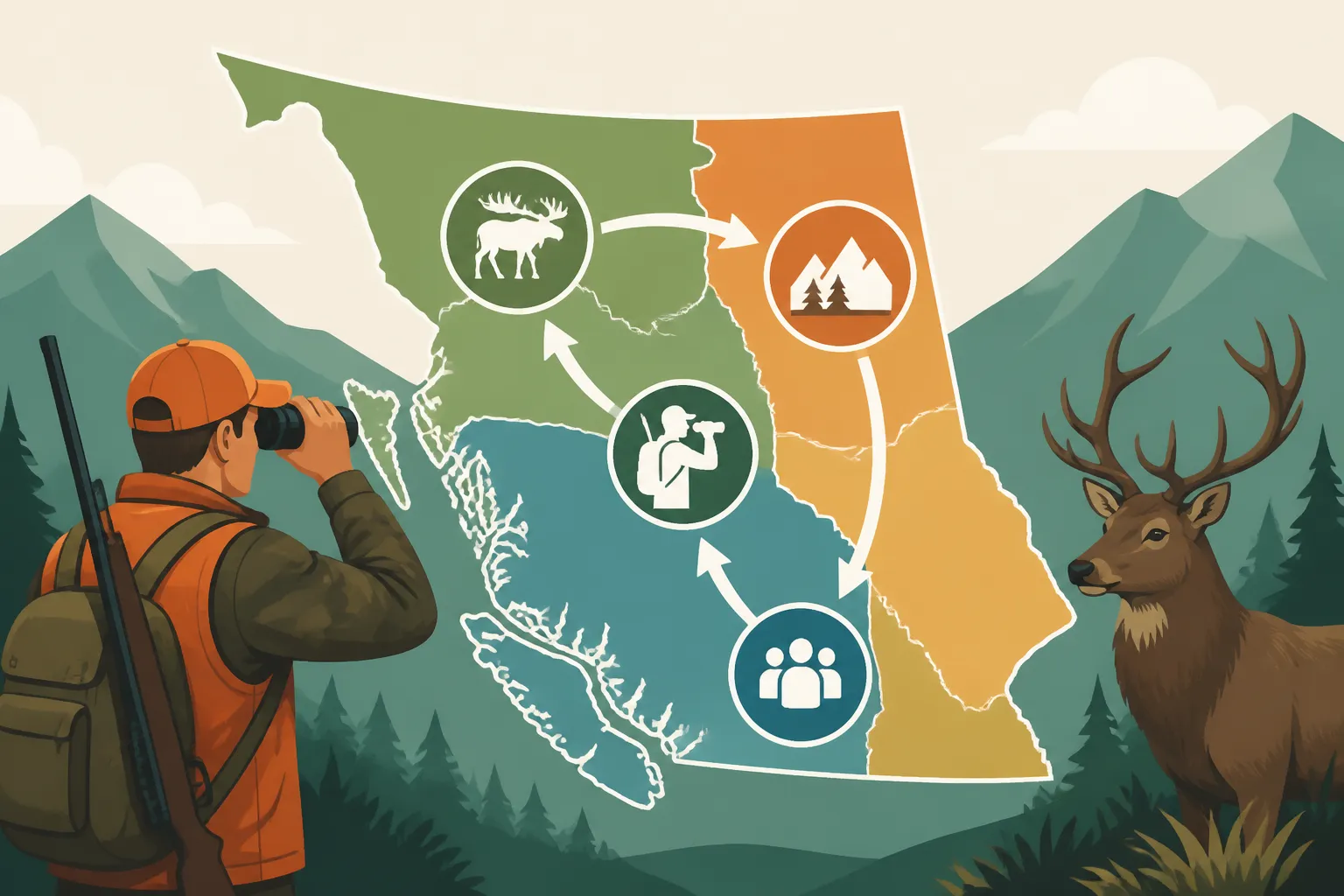
British Columbia is vast and incredibly diverse, divided into nine hunting regions, which are further subdivided into numerous British Columbia's Management Units and Regions. Each MU has unique characteristics, wildlife populations, and hunting regulations. What applies in the dense coastal rainforests of Region 1 might be entirely different from the arid grasslands of Region 3 (Thompson-Okanagan) or the remote wilderness of Region 7 (Omineca).
When considering LEH applications, it’s not enough to just pick a species; you need to understand the specific management unit and its unique circumstances. Some MUs are highly accessible via extensive British Columbia's Forest Service Road Network, leading to higher hunter pressure and thus, tougher draw odds. Others are extremely remote, requiring significant effort, potentially involving horseback access or even fly-in camps, which naturally reduces applicant numbers and can lead to better odds. Researching the terrain, habitat, access restrictions, and historical success rates for specific MUs is paramount. Tools like GoHunt can layer satellite imagery and public land data over MU boundaries, offering a powerful visual aid for scouting and strategizing your LEH picks long before you even apply.
What Happens After You Apply?
The application is in, the fee is paid, and now comes the hardest part for many hunters: the wait. The period between the application deadline and the release of results can feel interminable, filled with anticipation and hopeful scouting. Once results are out, the next steps depend entirely on whether you were successful in drawing a tag.
Checking Your Results
The excitement, or dread, culminates when LEH results are released. Typically, this happens a few weeks or months after the application deadline. The provincial government announces When LEH Results Are Released through its online portal, usually via an email notification that directs you to log in to your FWID account. Upon logging in, you'll see a clear indication of whether you were successful in drawing any of your chosen hunts.
For those who drew a tag, there's a rush of excitement and the immediate shift to planning the actual hunt. For the majority who don't draw, it's a familiar feeling of disappointment, often accompanied by a renewed commitment to applying next year and continuing to accumulate those valuable entries. It's important to remember that not drawing is the norm for many popular hunts, and it's a reality every BC hunter faces.
Tag Acquisition and Reporting
If you are one of the fortunate few to draw an LEH authorization, congratulations! Your LEH authorization will be accessible through your online FWID account. This isn't just a piece of paper; it's a legal document that specifies the species, management unit, and exact season dates you are permitted to hunt. You must carry this authorization with you while hunting, along with your general hunting licence and species tag.
After a successful harvest, British Columbia has strict compulsory reporting requirements. For many LEH species like moose, elk, sheep, and goat, you are mandated to report your harvest within a specific timeframe – often 30 days. This involves submitting details like the date, location (MU), sex, and sometimes age of the animal. This data is crucial for wildlife managers to assess harvest rates, monitor population health, and make informed decisions for future seasons. Failing to report a harvest can lead to penalties, so always be diligent about this critical step.
What if You Don't Draw?
The reality for most LEH applicants is that they won't draw a tag for their desired species or area every year. It’s part of the game. So, what are your options when that happens?
First, don't despair! While an LEH tag offers a unique hunting opportunity, it's far from the only way to hunt in British Columbia. Many species, particularly deer and black bears, have robust General Open Seasons across various regions. You can still plan a fantastic hunt focusing on these opportunities. Review the British Columbia Big Game Season Dates and plan your excursions into MUs that offer General Open Season hunts. You might consider a Rifle Hunting British Columbia's General Open Seasons for mule deer in the Interior or a coastal black bear hunt in the spring or fall.
Second, consider this year's "failure" as an investment in next year's success. Every time you apply for an LEH and don't draw, you accumulate another entry for that species, increasing your mathematical chances for future draws. Use the time to scout new areas, hone your skills, and research potential LEH choices for the following year. Perhaps you'll consider applying for a less popular hunt, a different species, or a more remote management unit that historically has better odds. The journey of hunting in BC is often about persistence and making the most of every opportunity, drawn tag or not.
Strategic Application Tips for LEH Success
Drawing an LEH tag often feels like pure luck, but there’s a distinct strategy you can employ to tilt the odds slightly more in your favour. It’s not about cheating the system, but rather about making informed, calculated choices based on available data and a deep understanding of the province’s hunting landscape.
Researching Your Hunt Area
The most successful LEH applicants aren't just guessing; they're meticulously researching. Before you even think about putting down a hunt code, you should be poring over the British Columbia's Two-Year Regulations Synopsis to understand all the rules and restrictions. Beyond that, dive into maps – topographic maps, satellite imagery, and forestry maps. Websites and apps like GoHunt can be invaluable tools here. They allow you to overlay private land boundaries, forest service roads, and even historical wildfire data with management unit boundaries.
Consider what access looks like. Are there active logging roads, or will you need to hike in for miles? What's the terrain like? Steep mountainsides, dense timber, or open grasslands? Knowing the ground you plan to hunt, even before you draw a tag, is essential for a realistic application. You might be dreaming of a remote mountain goat hunt, but if you're not physically prepared for the brutal pack out, it might not be the right draw for you. Thoroughly Scouting a British Columbia Management Unit Online can make all the difference, helping you envision the hunt and select appropriate choices.
Maximizing Your Chances
Beyond accumulating entries, there are several ways to strategically approach your LEH application to maximize your chances.
Firstly, consider applying for multiple choices (up to six) for different species or areas. While you can only draw one LEH tag per species, diversifying your choices increases your overall odds of drawing something. Don't put all your eggs in one basket, so to speak. If your dream moose hunt in a prime area has 1:100 odds, balance it with a less competitive deer hunt in a different MU as a lower preference.
Secondly, leverage party applications wisely. As discussed, party applications now sum the individual entries of all members, increasing the total number of chances for that hunt. This can be a very effective strategy if you have a group of friends who consistently apply for the same species and have built up a good number of entries collectively. Just ensure everyone in the party lists the exact same hunt choices in the same order.
Thirdly, look for less desirable hunt types. These might include late-season hunts when weather is harsher, hunts for antlerless animals, or hunts in areas known for difficult access. While not as glamorous as an early-season bull elk hunt, these often have significantly better odds because fewer people apply for them. Sometimes, a successful hunt for a cow moose is far more rewarding than never drawing for a bull.
Considering Less Popular Hunts
This tip goes hand-in-hand with maximizing your chances, but it deserves its own focus because it's often overlooked by hunters fixated on "trophy" hunts. British Columbia offers a vast array of LEH opportunities, and not all of them are for the most coveted species in prime time. By strategically targeting less popular hunts, you dramatically increase your drawing odds.
For instance, while everyone might be applying for a prime early-season Mule Deer Hunting in British Columbia buck tag in a renowned area, there might be excellent odds for an antlerless mule deer tag in a nearby, less-pressured management unit later in the season. These hunts are often vital for population management and can still provide a challenging and rewarding experience, not to mention filling your freezer. Similarly, a British Columbia Moose Season Dates hunt in a very remote northern region, perhaps requiring a float plane or significant horseback packing, might have much better odds than a drive-to moose hunt closer to population centers.
Another example is looking at Black Bear Hunting British Columbia's Spring LEH options in lesser-known areas, or even late-fall hunts for bears. Many hunters focus on spring, but a fall hunt can be equally productive and offer better odds. It requires flexibility in your expectations and a willingness to explore areas and seasons that others might shy away from. This strategic thinking, coupled with thorough research using tools like GoHunt, is what often leads to consistent LEH success for savvy BC hunters.
Navigating the British Columbia LEH Landscape
The British Columbia LEH system is a living, breathing entity that changes and adapts with wildlife populations, habitat conditions, and management priorities. Successful navigation of this system isn't just about applying correctly; it's about staying informed, managing expectations, and embracing a broader perspective on your hunting journey.
The Evolving Regulations
One of the most crucial pieces of advice for any hunter in British Columbia is to always, always read the current British Columbia's Two-Year Regulations Synopsis. Wildlife regulations are dynamic, not static. What was legal last year might be different this year. Season dates, bag limits, antler point restrictions, and even specific LEH zones can and do change based on scientific data, conservation needs, and public input. Relying on outdated information or hearsay is a recipe for a violation.
For example, a management unit that had a general open season for deer five years ago might now be under LEH due to declining populations or increased pressure. Conversely, some LEH hunts might open up to GOS if populations are thriving. The synopsis is your authoritative source for all hunting rules. It's available online through the provincial government's website and should be reviewed thoroughly each regulatory cycle, especially before planning your LEH applications. Don't leave it to chance; your hunting future depends on staying current.
Balancing Expectations and Reality
Let's be realistic: drawing a prime LEH tag, especially for highly sought-after species like sheep or specific elk hunts, is often a long shot. Many dedicated hunters apply for years, even decades, before drawing certain coveted authorizations. It's easy to get caught up in the excitement and potential, but it's vital to temper your expectations with a healthy dose of reality.
The LEH system is a privilege, designed for wildlife management first and hunter opportunity second. Not drawing a tag is the experience for the vast majority of applicants each year. Embrace the process, appreciate the opportunities that do exist in the General Open Seasons, and use the LEH system as a bonus rather than your sole focus. The real joy of hunting in British Columbia often lies in the planning, the scouting, the time spent in the backcountry, and the camaraderie, regardless of whether you punch an LEH tag. Focusing solely on the draw can lead to annual disappointment and detract from the overall enjoyment of hunting.
Utilizing Technology for Better Decisions
In today's digital age, hunters have unprecedented access to information and tools that can significantly aid in their LEH strategy. While the official BC government website is the primary source for applications and regulations, third-party platforms and apps have emerged as invaluable resources for deeper analysis.
Tools like GoHunt, for example, offer sophisticated platforms that compile historical draw odds, provide interactive mapping features with various data layers (like satellite imagery, private land boundaries, and historical harvest data), and even help you track your application history and points/entries. These resources can transform your LEH planning from a hopeful guess into a data-driven strategy. You can research potential areas for Moose Hunting British Columbia's Interior, visualize terrain, identify access points, and see how historical draw odds for specific hunt codes have trended over time. While these tools don't guarantee a draw, they empower you to make the most informed choices possible, increasing your statistical probability of success and allowing for more efficient planning once that coveted tag is in hand.
| Feature | General Open Season (GOS) | Limited Entry Hunting (LEH) |
|---|---|---|
| Access | Open to all licensed hunters within season dates | Requires successful draw of a specific authorization |
| Management Purpose | Broad recreational hunting, general harvest | Fine-tuned population management, controlled harvest |
| Species/Areas | Wider range of species and MUs | Specific species, sex, age, MUs, or season dates |
| Competition | Can be high in popular areas, no application needed | Competition through draw odds, application required |
| Application | None | Annual application via BC govt. online portal |
| Odds/Points | N/A | Point system (now entries), annual draw odds |
| Flexibility | More flexible on hunt timing within season | Fixed dates and locations per authorization |
| Examples | Most deer, some bear, upland birds | Moose, sheep, goat, specific elk, certain deer hunts |
Disclaimer
The information provided in this guide is for general informational purposes only and is not legal advice. Hunting regulations in British Columbia are subject to change. It is the individual hunter's responsibility to consult the most current British Columbia Hunting and Trapping Synopsis and relevant provincial government websites for the official and most up-to-date regulations before planning or undertaking any hunting activity.