Decoying Ducks on a Coastal Estuary
Hunting ducks on a vast, ever-changing coastal estuary in British Columbia can be one of the most rewarding yet challenging pursuits. The sheer scale of these tidal environments, combined with the unpredictable movements of migratory waterfowl, often leaves hunters feeling overwhelmed. This guide is designed to cut through that complexity, providing you with actionable strategies for effectively decoying ducks and increasing your success rate on BC's dynamic coast.
Understanding British Columbia's Coastal Estuaries for Waterfowl
British Columbia's coastline is a mosaic of stunning landscapes, and its estuaries are particularly vital ecosystems for countless species, especially waterfowl. These transitional zones where fresh river water meets the salty Pacific are incredibly rich in nutrients, creating a buffet for migrating ducks and geese. However, their dynamic nature means you need to be smart and adaptable to hunt them successfully.
The Dynamic Nature of Estuary Environments
Coastal estuaries are defined by their constant ebb and flow, driven by powerful ocean tides. This isn't just about water moving in and out; it completely reshapes the landscape, exposing vast mudflats at low tide and submerging them under several feet of water at high tide. The Fraser Delta, for example, is a prime example of this, with its massive tidal flats supporting huge numbers of birds. Currents can be incredibly strong, especially in narrower channels or during significant tide swings, which poses both a challenge and an opportunity for decoying. Ducks use these tidal changes to their advantage, feeding on exposed invertebrates and plant matter when the tide is out, and moving to deeper, calmer areas to rest or dabble when the tide is high. Understanding the tide charts is not just helpful; it's absolutely crucial for planning your hunt, predicting bird movement, and ensuring your safety. Ignoring the tides can leave your boat high and dry, or worse, sweep your decoys (and you!) out to sea.
Key Duck Species and Their Habits
Our BC estuaries host an incredible diversity of ducks, each with its own preferences and behaviours. You'll primarily encounter two main categories: dabblers and divers. Dabbling ducks, like Mallards, Pintails, Wigeon, and Green-winged Teal, typically feed in shallow water by tipping up, never fully submerging. They favour mudflats, marshy edges, and shallow channels where they can access submerged vegetation, seeds, and invertebrates. Divers, on the other hand, such as Scaup, Bufflehead, Goldeneye, and Scoters, prefer deeper water, plunging fully underwater to feed on shellfish, small fish, and aquatic insects. Knowing which species you're targeting will heavily influence your decoy choice, spread placement, and even the type of calls you use. For instance, a shallow-water dabbler spread won't do much good if the birds in the area are primarily deep-water divers. Coastal Black-Tailed Deer in British Columbia can sometimes be found foraging on the edges of these estuaries as well, though your focus will clearly be on the feathered kind.
Seasonal Migrations and Timing
British Columbia sits right on the Pacific Flyway, a major migratory route that funnel millions of waterfowl through our province each year. This means the species present, and their numbers, change throughout the hunting season. Early in the fall, you might see more local birds and early migrants. As the colder weather sets in up north, waves of birds pour into our estuaries from Alaska, Yukon, and the northern interior, peaking around late fall and winter. Weather patterns play a massive role; a sudden cold snap inland can push birds to the coast, while persistent rain might keep them hunkered down. Learning the British Columbia Duck Season Dates and the specific regional variations is paramount. Pay attention to weather forecasts and reports from other hunters to gauge when the major pushes are happening. Successfully decoying ducks often comes down to being in the right place at the right time, when new birds are less wary and more likely to respond to a spread.
Essential Decoy Spreads and Strategies for Estuary Hunting
Decoying ducks on a coastal estuary requires more thought than simply tossing out a few plastic birds. The vastness of the water, the constant movement of tides, and the wary nature of coastal ducks demand a strategic approach to your decoy spreads.
Choosing the Right Decoys
The foundation of any successful decoy spread is, well, the decoys themselves! For estuary hunting, realism and durability are key. You'll want a good mix of species-specific decoys that accurately represent the ducks in your area. Mallard, Wigeon, and Pintail decoys are excellent starting points for dabblers, while Scaup, Goldeneye, and Bufflehead are essential for diver setups. Don't skimp on quality; cheap, shiny decoys that don't float realistically will often spook more birds than they attract.
Consider the following types:
- Floaters: Your bread and butter. Ensure they have good keel weights to ride naturally in choppy water.
- Full-Bodies: If you're setting up on exposed mudflats during low tide, full-body field decoys can be very effective, giving the impression of birds feeding.
- Motion Decoys: These are game-changers, especially on still days or for attracting wary birds. Jerk cords that create ripples and head motion, or spinning wing decoys (like Mojos), add crucial realism. However, be mindful of rules regarding their use, as some areas may have restrictions. When you're planning your spread and trying to visualize how birds will react, digital mapping tools like
GoHuntcan help you scout potential areas for setup beforehand, giving you an idea of the terrain and where ducks might naturally congregate.
Effective Decoy Layouts for Tidal Waters
The way you arrange your decoys is just as important as the decoys themselves. Coastal ducks often fly in groups and land into the wind, so your spread needs to guide them into a comfortable landing zone within shooting range.
Here are a few popular and effective layouts:
- The J-Hook or U-Shape: This is a classic for a reason. You create a long line of decoys extending out, then curve it back towards your blind, leaving an open "landing zone" in the crook of the 'J' or 'U'. The idea is to make ducks want to land in the safety of the open water surrounded by "other birds." Ensure the opening is facing into the prevailing wind, as ducks almost always land into the wind.
- Loose Flocks: Instead of rigid lines, group your decoys in smaller, natural-looking clusters, mimicking how real ducks congregate. This can look more natural to wary birds. Place dabblers in shallower areas and divers slightly further out in deeper water.
- The "Runway" Approach: If you're hunting a wide-open flat, consider a long, narrow spread that acts like a runway, leading birds directly to your desired landing zone.
Anchoring is critical in tidal waters. Strong currents will quickly move poorly anchored decoys. Use heavy anchor weights (2-3 lbs minimum) and sufficient length of line. Many experienced coastal hunters use line winders to manage the longer lines needed. For hunting British Columbia's Coastal Rain, it's also smart to ensure your decoys are rigged to shed water effectively and remain visible.
Incorporating Motion and Calling
Static decoys can work, but adding motion and realistic calling will significantly increase your odds. Ducks are constantly moving, preening, and feeding, and your spread should reflect that activity.
- Jerk Cords: Simple, inexpensive, and incredibly effective. A jerk cord system allows you to create ripples and movement with several decoys from the comfort of your blind. A subtle tug every minute or so can make a huge difference in how convincing your spread appears.
- Spinning Wing Decoys: Love them or hate them, they often work. The flashing wings of a spinning decoy are highly visible from a distance and can draw birds in, especially on overcast days. However, some birds, particularly those that have been hunted heavily, can become "spinner shy," so use them judiciously.
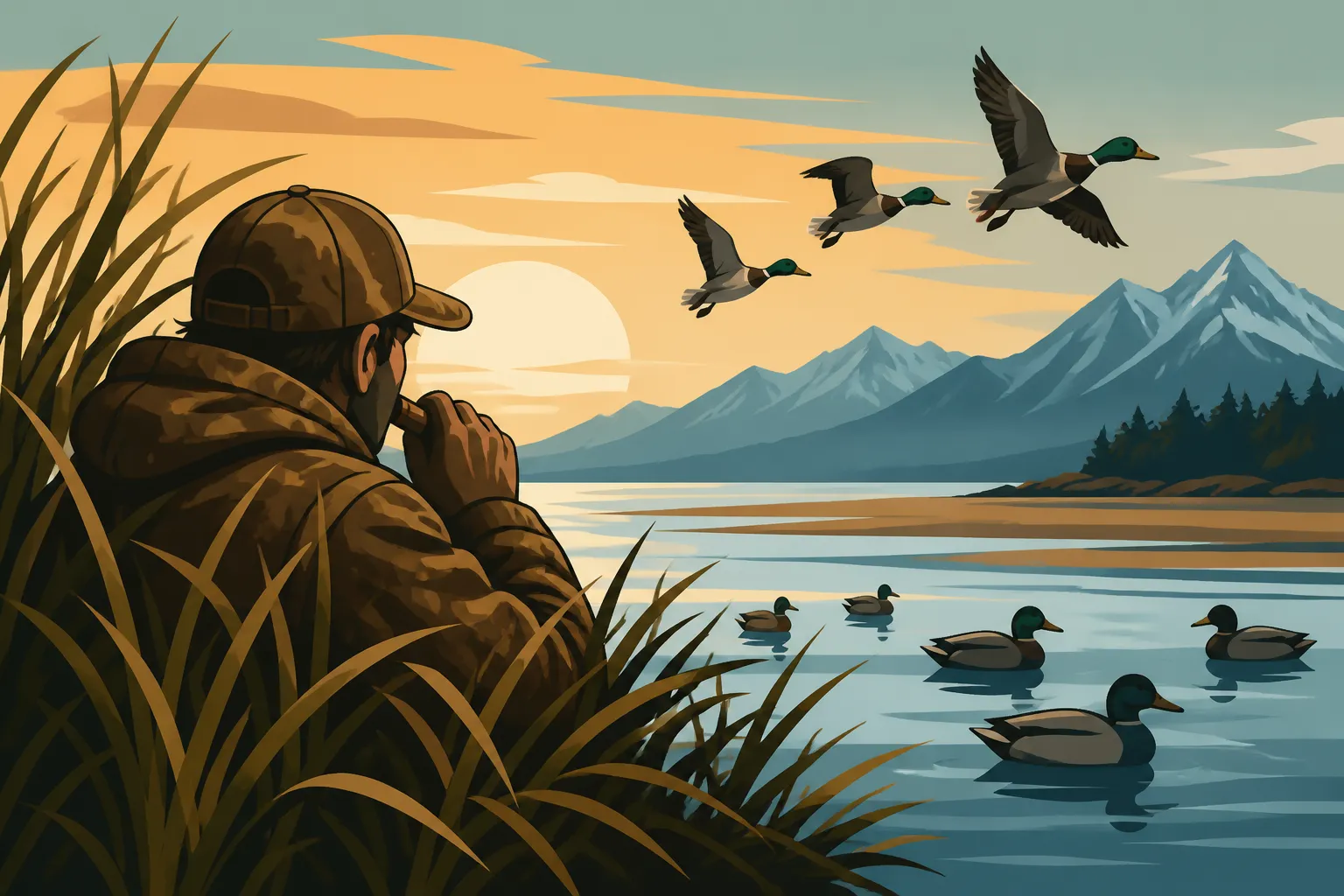
- Duck Calls: Mastering a few basic calls – a greeting call, a feeding chuckle, and a comeback call – can bring hesitant birds closer. Don't overcall; often, less is more, especially when birds are already committed to your spread. Match your calls to the primary species you're seeing. For example, a sharp Pintail whistle or a Wigeon "whistler" call can be incredibly effective when those birds are working the area. For a broader understanding of waterfowl opportunities, check out Waterfowl Hunting British Columbia's Estuaries.
Setting Up Your Blind and Managing Access on the Coast
Successfully decoying ducks on a British Columbia coastal estuary involves more than just your decoys; it's about how well you blend into the environment and how effectively you manage the unique challenges of coastal access. Many hunters find the sheer openness of estuaries daunting when it comes to concealment, and rightfully so.
Concealment in Open Estuary Environments
Unlike timber or agricultural fields where natural cover is abundant, estuaries can often feel incredibly exposed. This makes effective concealment paramount. Ducks have exceptional eyesight, and anything that looks out of place will quickly send them flaring away.
Consider these options for your blind setup:
- Natural Cover: Whenever possible, use what the estuary provides. Drifts of logs, clumps of marsh grass, or the high bank of a tidal channel can offer excellent cover. You'll need to scout these locations at various tide levels to ensure they remain viable throughout your hunt.
- Layout Blinds: For hunting large, open mudflats or sandbars, a layout blind is often the most effective solution. These low-profile blinds allow you to lie flat, covering yourself with natural vegetation or camouflage netting to blend seamlessly with the surroundings. They're designed to be highly portable, a definite plus when dealing with changing tides and access points.
- Portable Panel Blinds: If you're setting up along a grassy bank or in slightly more structured cover, portable panel blinds (often made of camouflage fabric or natural materials like raffia grass) can provide a quick and effective hide.
- Boat Blinds: If you're hunting from a boat, a well-camouflaged boat blind is essential. Ensure it breaks up your outline and doesn't create unnatural shadows. Remember, your blind needs to be effective from all angles, as ducks will often circle before committing. Pay close attention to the sun's position throughout the morning to avoid being backlit, which will silhouette you against the sky.
Navigating Tides, Boats, and Access Points
Coastal hunting is inherently tied to the water, and often, that means a boat. Choosing the right vessel and understanding navigation are critical for safety and success.
- Boat Choice: For most estuary hunting, a shallow-draft boat like an aluminum jon boat, a small tiller-steered fibreglass boat, or even a specialized duck boat with a mud motor is ideal. You'll often be navigating very shallow water, crossing mudflats, and dealing with varying currents. A deep-V hull designed for open ocean is usually unsuitable.
- Tidal Planning: This cannot be stressed enough. Always consult tide charts, know the high and low tide times, and understand the difference between neap and spring tides. Plan your entry and exit points carefully, accounting for the rising and falling water. Many an unsuspecting hunter has found their boat stranded on a mudflat for hours. You can even use tools like
GoHuntto layer tide information over satellite imagery to predict water levels in specific areas. - Access Points: Public boat launches can be limited in some estuary areas, and private land borders many prime spots. Always respect private property signage. Research your chosen hunting area thoroughly to identify legal access points. Sometimes, you might need to carry gear a significant distance, especially if you're targeting areas beyond vehicle or easy boat access. Understanding Hunting British Columbia's Logging Road Network can sometimes offer alternative access to less conventional spots near the coast.
Safety Considerations and Ethical Hunting Practices
Hunting on an estuary presents unique safety challenges. The vastness, cold water, strong currents, and often unpredictable weather demand extra vigilance.
- Non-Toxic Shot: British Columbia mandates the use of non-toxic shot (steel, bismuth, tungsten-iron, etc.) for all waterfowl hunting. This is crucial for protecting the birds and the environment. Make sure you're using the correct ammunition as outlined in the Non-Toxic Shot Rules in British Columbia.
- Life Jackets: Always wear a PFD (personal flotation device) when in a boat, especially in cold water or strong currents. It's not just a good idea; it could save your life.
- Weather: Estuary weather can change rapidly. A calm morning can quickly turn into a windy, choppy, and rainy day. Check the marine forecast before you leave and be prepared to pack up if conditions become unsafe. Hypothermia is a real risk with cold water and wind. Hunting British Columbia's Coastal Rain is a common occurrence, so be equipped with appropriate waterproof gear.
- Navigation: Carry a GPS, map, and compass, and know how to use them. Fog can roll in quickly, disorienting you in an otherwise familiar area.
- Retrieval: Ensure you have a reliable method for retrieving downed birds. A good dog is invaluable, but if you don't have one, a sturdy canoe, kayak, or even waders might be necessary, depending on the water depth. Ethical hunting demands that you make every reasonable effort to recover your game.
- Respect Other Users: Estuaries are often used by birdwatchers, photographers, and other recreational users. Be courteous and represent the hunting community positively.
Advanced Tactics and Troubleshooting for Coastal Duck Hunters
Once you've got the basics down, it's time to refine your approach. Coastal duck hunting is a game of continuous learning and adaptation. Birds are smart, and they quickly learn from hunting pressure, so your tactics need to evolve.
Adapting to Changing Weather and Duck Pressure
The weather dictates everything on the coast. What worked last week might fail miserably today because of a shift in wind, temperature, or precipitation. High winds can make decoying challenging, as birds struggle to fly precisely and might be pushed off their usual flight paths. In these conditions, focusing on protected bays or lee sides of islands might be more productive. On calm, clear "bluebird" days, ducks tend to be warier. They can see everything from a distance, making flawless concealment and ultra-realistic spreads even more critical.
- Wind Direction: Always set your decoys so birds will land into the wind, naturally presenting them for a shot. The wind direction can shift, so be ready to adjust your spread or even relocate your blind if needed.
- Precipitation: Rainy or foggy days can be a gift for duck hunters. The reduced visibility often makes birds less wary, flying lower and committing to spreads more readily. However, it also means you need to be extra diligent about your own visibility and safety.
- Hunting Pressure: Coastal birds get educated fast. If an estuary sees heavy hunting pressure, birds will quickly become "decoy shy" or avoid popular areas. This means you might need to move to less accessible spots, hunt mid-week when pressure is lower, or employ more subtle, natural-looking spreads. Sometimes, simply reducing the number of decoys in your spread can make it more appealing to wary birds that have seen large, elaborate spreads every day.
Combining Decoying with Scouting
You wouldn't build a house without a blueprint, and you shouldn't hunt without thorough scouting. Pre-season and in-season scouting are perhaps the most important factors for consistent success.
- Pre-Season Scouting: Before the season even opens, take time to visit the estuary at various tide levels. Identify natural cover, potential blind locations, flight corridors, and where ducks are feeding and resting. Look for shorelines with abundant food sources. Tools like
GoHuntare invaluable here, allowing you to study satellite imagery, topo maps, and public land boundaries from home. You can often see historical flight lines, marshy areas, and tidal channels that are otherwise invisible from the ground. - In-Season Scouting: Even during the season, take time to observe birds without hunting them. Watch how they react to wind, tide, and other hunters. Where are they landing? Which species are present? Are they feeding or resting? This intelligence will help you refine your decoy placement, calling, and blind location for your next hunt. Combining this observational scouting with digital tools like
GoHuntcan help you connect observed bird behaviour with specific geographical features. Understanding how to use these tools for Scouting a British Columbia Management Unit Online can give you a significant advantage.
Dealing with Difficult Birds and Late Season Challenges
As the season progresses and birds become more seasoned, they develop an almost uncanny ability to detect anything unnatural. This is where advanced tactics come into play.
- Shy Birds: If ducks are flaring far out, they're seeing something they don't like. Re-evaluate your concealment, reduce the number of decoys, or switch to a more natural, subtle spread. Sometimes, less calling is more effective. You might also need to extend your spread further out, giving them more room to commit without feeling crowded.
- Bluebird Days: On bright, sunny, calm days, ducks have perfect visibility. Focus relentlessly on concealment. Use minimal, highly realistic decoys, and prioritize jerk cords for subtle motion over flashy spinners. You might need to make longer shots, so practice your shooting in advance.
- Frozen Conditions: Late-season cold snaps can freeze over parts of the estuary. Focus your efforts on any open water you can find – small pockets where the current keeps the ice at bay, or areas near flowing rivers. These become natural congregation points for ducks. You might need to break ice to create a landing zone for your decoys. This is also when having British Columbia Goose Season Dates in mind can be beneficial, as geese are often more resilient to colder weather and may still be active.
Remember, every hunt is a learning experience. Pay attention to what works and what doesn't, and be willing to experiment. The most successful coastal duck hunters are those who are constantly observing, adapting, and refining their techniques.
Common British Columbia Estuary Duck Species and Decoy Preferences
Here's a quick reference for some of the common duck species you'll encounter on BC's coastal estuaries and general guidelines for decoying them effectively. Keep in mind that duck behaviour can vary based on local conditions and hunting pressure.
| Species | Type | Typical Estuary Habitat | Decoy Size/Coloration | Decoy Placement Strategy | Notes |
|---|---|---|---|---|---|
| Mallard | Dabbler | Shallow water, marsh edges, tidal flats | Standard size, natural Mallard colours | Clusters near marsh, landing zone in open water | Very vocal, respond well to calling. Common. |
| American Wigeon | Dabbler | Shallow water, eelgrass beds, tidal flats | Slightly smaller than Mallards, natural Wigeon colours | Often mix with Mallards, slightly more wary | Known as "baldpates." Can be tricky to decoy; small groups are key. |
| Northern Pintail | Dabbler | Open tidal flats, shallow channels | Slimmer profile, distinctive Pintail colours | Away from cover, in open water. Love space. | Elegant fliers. Very wary; good spread needs open landing zone. |
| Green-Winged Teal | Dabbler | Small channels, protected marshy areas | Small, natural Teal colours | Tight clusters near cover, close to shore | Fast flyers, often arrive in large groups. Small decoys help. |
| Greater/Lesser Scaup | Diver | Deeper channels, open bay areas | Standard size, black and white | Large rafts in open water, far from shore | "Bluebills." Decoy with large numbers, often in big rafts. |
| Bufflehead | Diver | Protected inlets, shallow bays | Small, distinctive black and white | Small groups of 2-3, close to blind or shore | Very small, often solitary or in pairs. Can be attracted to small spreads. |
| Common Goldeneye | Diver | Bays, open water, near rocky shorelines | Standard size, bold black and white | Loose groups, can mix with Scaup | Fast fliers, often dive on approach. |
Disclaimer
Hunting in British Columbia carries inherent risks. This guide provides general information and recommendations; however, individual hunters are responsible for their own safety, adherence to all current provincial and federal hunting regulations, and obtaining all necessary licenses and permits. Wildlife regulations, access rules, and environmental conditions can change frequently. Always consult the most up-to-date BC Hunting and Trapping Synopsis before planning any hunt. The author and publisher are not responsible for any accidents, injuries, or legal infractions that may occur. Responsible and ethical hunting practices are paramount.