Hunting the Pemberton Valley
Hunting the Pemberton Valley in British Columbia presents a unique set of challenges and incredible rewards, often leaving hunters feeling overwhelmed by the sheer scale of the landscape and the intricacies of access. This guide aims to demystify the process, offering practical advice and deep insights into successfully navigating and hunting this beautiful, rugged region.
Unpacking the Pemberton Valley Landscape for Hunters
The Pemberton Valley is a stunning microcosm of British Columbia's diverse terrain, tucked away in the Coast Mountains. It's a place where agricultural valley bottoms quickly give way to steep, timbered slopes and eventually rugged alpine peaks. Understanding this varied topography is crucial for any hunter planning a trip here, as it dictates everything from species distribution to how you'll move through the land.
Geographical Features and Their Hunting Implications
The heart of the Pemberton Valley is the Lillooet River floodplain, a relatively flat, fertile area that supports both agriculture and wildlife. However, step away from the valley bottom, and you're immediately confronted with dramatic elevation changes. The surrounding Coast Mountains rise sharply, carved by numerous creeks and drainages. This creates a mosaic of distinct habitats: dense riparian zones along the river, mixed coniferous and deciduous forests on the lower and mid-slopes, and then the subalpine and alpine environments above the tree line.
For hunters, these features mean you need to be versatile. The valley bottom, while often private land, funnels animal movement and can offer glimpses of deer or bears on the edges of agricultural fields, especially during low light. As you ascend, the timbered slopes provide critical cover and feed for deer and bears, particularly in second-growth areas or around recent clearcuts. The steepness here is no joke; expect demanding climbs and descents. Further up, the alpine zones, accessible by logging roads or strenuous hikes, hold the promise of mountain goats and offer incredible glassing opportunities for other game that might venture higher in late summer and early fall. The dense brush on many slopes, particularly alder and salmonberry thickets, can be incredibly difficult to navigate, even for seasoned hunters. You'll quickly learn why a good pair of sturdy boots and a lot of patience are essential here.
Habitat Types and Game Concentration Areas
The varied habitats within the Pemberton Valley are directly linked to where you'll find game. The river flats and lower benches, often dominated by cottonwood, alder, and willow, are prime spots for blacktail deer, particularly as they seek browse and cover. These areas also draw black bears, especially in spring when they emerge from dens to feed on new growth and later in fall, when berry crops are abundant. When exploring these lower elevations, you'll want to pay close attention to the interfaces between private land and Crown land, as well as the edges of clearcuts and natural openings.
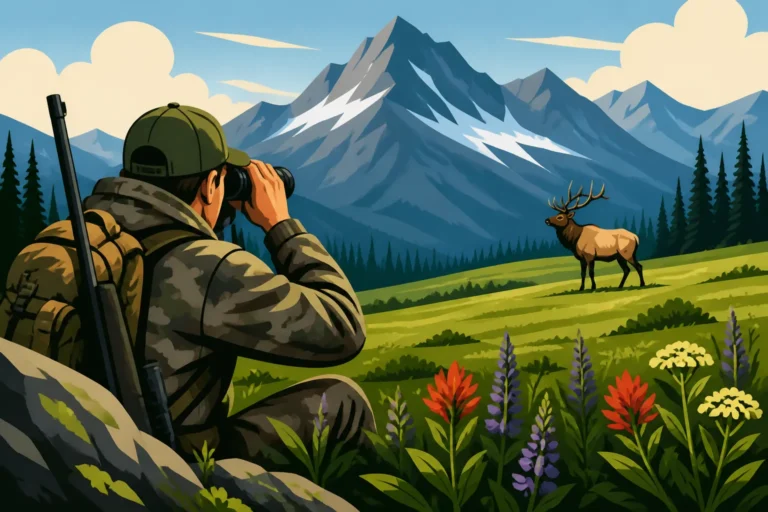
Moving up the mountainsides, you'll encounter a mix of old-growth timber, mature second growth, and younger regeneration from past logging activity. Hunting a Second-Growth Timber Block can be incredibly productive for blacktail deer, as the new growth provides ample forage while the residual timber offers security cover. Bears also utilize these areas, especially where there are berry patches or natural clearings. Higher up, particularly in the subalpine meadows and rock slides, you might find mountain goats, which prefer the rugged, broken terrain for escape. While less common, moose and elk can occasionally be found in specific drainages or higher elevation wetlands, though they are not the primary target species for most Pemberton hunters. Glassing these diverse habitat types, from river bottoms to alpine bowls, is a key strategy for success. You might use a tool like onX Hunt to visualize these different habitat zones, combining satellite imagery with topography to identify potential game hot spots before you even set foot on the mountain.
Game Species and Seasons in the Pemberton Valley
While British Columbia boasts a wide array of game, the Pemberton Valley really shines for specific species, mainly blacktail deer and black bears. However, for those willing to work harder and accept lower odds, there are opportunities for other, more elusive game. Knowing what to expect and when to hunt is critical for any successful trip.
Blacktail Deer and Black Bears: The Valley's Main Draws
Blacktail Deer: The coastal blacktail deer are the most prevalent deer species in the Pemberton Valley. These deer are notoriously wary and thrive in the dense, wet forests of the Coast Mountains. They use the thick cover to their advantage, often remaining unseen even when you're incredibly close. You'll find them at various elevations depending on the season, moving to lower, snow-free areas in winter and spreading out into higher timber and subalpine zones in the warmer months. The rut usually peaks in November, offering a prime opportunity to catch bucks on the move, but they can be challenging to locate due to the thick vegetation. Focus your efforts on clearcut edges, old logging roads, and creek bottoms where they seek out forage. Understanding their movements with the seasonal changes is paramount. Check out Black-Tailed Deer Hunting in British Columbia for a broader understanding of these elusive animals.
Black Bears: British Columbia is renowned for its black bear population, and the Pemberton Valley is no exception. Bears are abundant here, ranging from the valley floor to the alpine. Spring offers excellent opportunities when bears emerge from hibernation, often found on green-up slopes, old logging roads, and avalanche chutes, foraging for fresh vegetation. Fall hunting can be equally productive, particularly when berry crops (blueberries, huckleberries, salmonberries) are ripe on the mountain slopes. Bears are constantly on the move, following food sources, so understanding seasonal food availability is key. Remember, bear safety is paramount, so always carry bear spray and know how to use it, especially when navigating dense timber. For more details, consider Black Bear Hunting British Columbia's Spring.
Less Common but Present: Moose, Elk, and Goat Opportunities
While deer and bears are the primary species, the Pemberton Valley and its surrounding mountains do hold some more specialized hunting opportunities.
Mountain Goats: For the true mountain hunter, the high, rugged peaks surrounding the Pemberton Valley offer challenging but rewarding mountain goat hunting. These hunts are almost exclusively conducted as Limited Entry Hunts (LEH) and require significant physical exertion, often involving multi-day backpack trips into steep, rocky terrain. Goats prefer the most inaccessible areas, making glassing from a distance and careful stalks essential. The season is typically in the fall, and the weather can be unpredictable at high elevations, quickly turning from sunny to snowy. If you're considering this, be prepared for a mentally and physically demanding experience. Hunting Mountain Goat on British Columbia Rock goes into further detail about this formidable pursuit.
Moose and Elk: Moose and elk are not primary game animals in the immediate Pemberton Valley but are occasionally found in certain remote drainages or higher elevation plateaus further into the Coast Mountains. These opportunities are generally limited to specific LEH zones or General Open Seasons that are restricted to certain areas. For moose, look to willow-filled creek bottoms and marshy areas, often deeper in the backcountry. Elk, particularly Roosevelt elk, might be present in patches of old-growth timber, especially in more remote coastal valleys that extend inland. These hunts are rare and typically require extensive scouting and local knowledge. Hunters targeting these species will need to consult the specific Management Unit regulations meticulously, as their presence is very localized and highly restricted.
Here’s a simplified overview of typical season windows for common species in the Pemberton Valley, though always check the official British Columbia Hunting and Trapping Regulations Synopsis for the most current and exact dates for your specific Management Unit (MU):
| Species | Primary Season Window | Typical Habitat Areas | Hunting Method Notes |
|---|---|---|---|
| Blacktail Deer | Fall (Sept – Dec) | Lower to mid-elevation timber, clearcut edges, river flats | Spot-and-stalk, still-hunting, particularly challenging in dense cover. |
| Black Bear | Spring (April – June), Fall (Sept – Nov) | Logging roads, clearcuts, avalanche chutes, berry patches, estuaries | Glassing open areas in spring, stalking in fall, calling. |
| Mountain Goat | Fall (Sept – Oct) | High alpine cliffs, steep rocky slopes | Backpack hunting, strenuous physical exertion, LEH only. |
| Moose / Elk | Highly restricted, LEH only | Remote drainages, old-growth timber, higher elevation wetlands | Very limited opportunity, often requiring specific draw tags and extensive access. |
Navigating Access and Terrain in the Pemberton Valley
Accessing prime hunting grounds in the Pemberton Valley can be a double-edged sword. On one hand, an extensive network of logging roads can get you into some remote country. On the other, these roads can be rough, require specific vehicles, and are often gated or deactivated, meaning you'll need to use your feet. Knowing how to navigate this system is paramount.
Logging Roads and Forest Service Road Network
The backbone of access into the Pemberton Valley's hunting grounds is its network of Forest Service Roads (FSRs) and active logging roads. These roads often branch off main highways and can lead you deep into drainages and up mountainsides. However, they are not maintained like public roads. Expect gravel, potholes, washouts, and sometimes substantial water bars that require a high-clearance 4×4 vehicle. Many FSRs are active logging routes, meaning you might encounter heavy industrial traffic. Always drive with headlights on, at a reasonable speed, and be prepared to yield to logging trucks. Using a radio with the correct frequency (often a 'resource road' channel) is crucial for safety on these routes, allowing you to communicate your position to industrial users.
Beyond the main active FSRs, you'll find countless deactivated spur roads. These are no longer maintained, often overgrown, and can be severely washed out or blocked by fallen trees. While they can't be driven, they offer fantastic foot access points into otherwise inaccessible terrain. Finding Open Forest Roads in British Columbia can be challenging without local knowledge or up-to-date mapping. This is where digital mapping tools like onX Hunt or GoHunt become indispensable. They allow you to download offline maps, see FSRs, identify potential deactivations, and understand the terrain features and property boundaries as you navigate. They often show Crown land boundaries, which is critical since much of the valley floor is private. Always respect private property signs and know your legal access points.
Backcountry Access and Alpine Approaches
For hunters seeking true solitude and the challenge of mountain game, the Pemberton Valley offers extensive backcountry opportunities. This often means leaving the vehicle behind at the end of a drivable FSR and continuing on foot. Expect steep climbs, dense brush, and stream crossings. There are some established hiking trails that can provide a route into higher elevations, but many areas require bushwhacking through dense coastal timber.
Reaching the alpine to hunt species like mountain goats, or simply to glass for deer and bears in subalpine meadows, is a significant undertaking. It requires excellent physical fitness, appropriate gear for all weather conditions (which can change rapidly at elevation), and strong navigation skills. Carrying a reliable GPS device or a smartphone with detailed offline maps (like those from onX Hunt) is critical. Satellite Communication on a Remote Hunt is not just a good idea, it's essential. Cell service is virtually non-existent once you leave the main valley floor. Personal locator beacons (PLBs) or satellite messengers can be lifesavers in an emergency. Preparing for backcountry travel means packing light but effectively, with emphasis on layered clothing, waterproof outer shells, a robust first-aid kit, and enough food and water for the duration of your trip. Don't underestimate the demands of this rugged country.
Essential Planning and Safety for a Pemberton Hunt
A successful hunt in the Pemberton Valley, like anywhere in British Columbia, isn't just about finding game; it's about meticulous planning, understanding the rules, and prioritizing safety. This region demands respect for its wildness and requires thorough preparation.
Understanding Regulations and Season Dates
Before you even think about packing your rifle or bow, you absolutely must delve into the British Columbia Hunting and Trapping Regulations Synopsis. This document is your bible, detailing season dates, bag limits, antler restrictions, and specific rules for each Management Unit (MU). The Pemberton Valley typically falls within MU 3-16, but always verify this and check for any special restrictions within that unit. Regulations can change annually, so relying on outdated information is a recipe for trouble. You'll need to know:
- General Open Seasons vs. Limited Entry Hunting (LEH): Many species in BC have both General Open Season (GOS) opportunities and LEH draws. For species like mountain goat, LEH is often the only option, requiring a successful draw application well in advance. British Columbia's Limited Entry Hunting Draws explains this system in detail.
- Antler Restrictions: Pay close attention to rules like "four-point or better" for mule deer (though less common for blacktail, it's still good to check), or minimum horn curl requirements for sheep.
- Bag Limits: Understand how many of each species you can harvest per season and per year.
- Compulsory Inspection and Reporting: Some species, like bears, may require compulsory inspection of the skull and hide. All harvested big game animals must be reported within specific timeframes. Learn about British Columbia's Compulsory Reporting Rules.
Using a tool like GoHunt's Insider or the specific provincial website to review the regulations for MU 3-16 will ensure you're compliant. Don't assume. Always double-check.
Gear, Weather, and Emergency Preparedness
The weather in the Pemberton Valley and surrounding Coast Mountains can be incredibly variable and unforgiving. Even in early fall, you can experience everything from warm sunshine to torrential rain and even early snow at higher elevations. Hunting in British Columbia's Coastal Rain means being prepared for wet conditions, as moisture can penetrate even the best gear over time.
Your gear list should prioritize layering, waterproof outer shells (jacket and pants), and sturdy, waterproof hiking boots that are broken in. Consider synthetic materials or merino wool, which retain warmth even when wet. A good quality backpack that fits well and can carry heavy loads (should you be successful) is non-negotiable for backcountry hunts. Navigation tools, as mentioned, are critical, along with a headlamp, fire-starting kit, knife, and a comprehensive first-aid kit.
Emergency preparedness goes beyond gear. Always leave a detailed trip plan with someone responsible, including your route, expected return time, and who to contact if you don't check in. Learn about Emergency Planning in British Columbia's Backcountry. Be aware of the risks of hypothermia, dehydration, and animal encounters (especially with bears). Knowing basic wilderness first aid can make a huge difference. While the hunting is fantastic, the mountains here are wild, and they demand your respect and a high level of self-sufficiency.
Disclaimer
This article is for general informational purposes only and does not constitute professional advice. Laws, prices and regulations vary by location and change over time. Consult a qualified professional for guidance on your specific situation.