Where British Columbia’s Mountain Goats Live
For many hunters, the thought of pursuing mountain goats in British Columbia conjures images of endless alpine vistas, grueling climbs, and the ultimate test of endurance. It's a dream hunt for sure, but the sheer scale and ruggedness of British Columbia's mountains can make pinpointing where these majestic animals actually live feel like finding a needle in a haystack. This guide aims to pull back the curtain on the specific habitats and geographical strongholds of British Columbia's mountain goats, helping you understand their world so you can better prepare for yours.
Understanding British Columbia's Mountain Goat Habitat
British Columbia’s mountain goats are creatures of the extreme, perfectly adapted to live in some of the province's most unforgiving landscapes. They aren't just found "in the mountains"—they thrive in very specific niches within those mountains, often at elevations and on terrain that would challenge most other large mammals. Understanding these preferences is the first step to successful scouting and hunting.
The Alpine and Subalpine Zones: Their True Domain
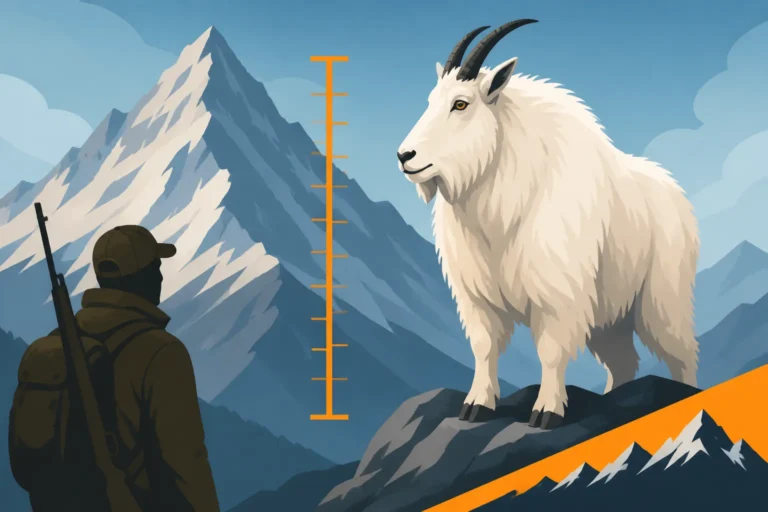
When we talk about mountain goat habitat, we are unequivocally talking about the alpine and subalpine zones. These are the high-elevation ecosystems above the treeline (alpine) or just below it (subalpine), characterized by sparse, tough vegetation and exposed rock. Goats spend the vast majority of their lives in these harsh environments, even in the dead of winter. It's a world of jagged peaks, sheer cliffs, and expansive snowfields.
The specific elevation can vary depending on the region and local treeline, but generally, you'll find goats comfortable anywhere from 5,000 to over 8,000 feet, sometimes even higher. Their preference for these lofty locales isn't just about escaping predators; it's also about specialized foraging and access to critical mineral deposits. They graze on tough grasses, sedges, mosses, lichens, and a variety of low-growing alpine plants that are incredibly nutritious, even in sparse quantities. These plants are often found clinging to steep, rocky slopes, avalanche chutes, and high meadows. Their unique hooves, with soft, rubbery pads and hard, sharp outer edges, provide incredible traction on slick rock and ice, allowing them to navigate terrain that would be impassable for most other ungulates.
Coastal vs. Interior Goats: Subtle Differences
While all mountain goats in British Columbia belong to the same species ( Oreamnos americanus ), there are some subtle, yet important, differences in their habitat use between the coastal mountain ranges and the interior ranges. These distinctions are largely driven by climate, precipitation, and geology.
Coastal mountain goats, found in the Coast Range and on Vancouver Island, experience a significantly wetter, often milder climate than their interior counterparts. Their habitat is frequently characterized by rainforests pushing up into the subalpine, leading to areas with dense vegetation, constant fog, and heavy snow loads. Here, goats often utilize lower elevations during certain times of the year, particularly where steep, rocky bluffs meet old-growth timber, providing shelter from the elements and access to different forage. The coastal mountains also tend to be more glaciated and precipitous, demanding even greater climbing prowess. Hunting British Columbia's Coastal Rain is a different game altogether, and goats here are no exception.
Interior mountain goats, residing in the Rocky Mountains, Purcell, Selkirk, and other ranges, face a drier, colder, and often more extreme continental climate. Their habitat tends to be rockier, with more exposed scree slopes and less dense timber below the treeline. Snowfall can be immense but often drier, and temperatures plunge much lower in winter. While still seeking out cliffs and escape terrain, interior goats might rely more heavily on south-facing slopes for snowmelt and sun exposure in the colder months. Despite these regional variations, the core requirements remain the same: steep, rugged, high-elevation terrain with access to forage and escape cover.
Key Mountain Ranges and Regions for Goats
British Columbia is a vast province, and thankfully, mountain goats are distributed across many of its majestic mountain ranges. However, some regions stand out as classic goat country, offering both significant populations and the challenging, remote wilderness that defines a true mountain goat hunt.
The Coast Range: Rugged and Remote
The Coast Range of British Columbia is arguably one of the most iconic and extensive mountain goat habitats. Stretching for hundreds of kilometers along the Pacific coastline, this range is a labyrinth of steep-sided fjords, massive glaciers, and jagged peaks. The sheer scale and ruggedness of this area mean that accessing goat country often requires significant effort, whether by boat, float plane, or days of arduous backpacking.
Within the Coast Range, specific areas like the mountains north of Vancouver, those along the inlets of the central coast, and the vast wilderness extending north towards the Skeena and Stikine regions, hold healthy populations. These goats are masters of their domain, frequently seen clinging to impossible cliffs high above the ocean. Hunters pursuing goats here often contend with persistent coastal rain and fog, which can add layers of difficulty to an already demanding hunt. However, the reward of seeing a white ghost against the dark rock and green timber of the coast is unparalleled. For planning purposes, using detailed topographical maps and tools like GoHunt can be invaluable for identifying potential travel routes and bedding areas within this challenging landscape, especially when scouting for areas known for goats.
The Rocky Mountains: Classic Goat Country
Moving inland to the eastern flank of British Columbia, the Rocky Mountains present another stronghold for mountain goats. This range forms the natural border with Alberta and is renowned for its towering limestone peaks, deep valleys, and expansive alpine bowls. The Rockies offer a different kind of challenge than the Coast Range, often characterized by drier air, colder winters, and vast tracts of roadless wilderness.
Key areas within the British Columbia Rockies include the Elk Valley, the Flathead drainage, and the extensive ranges extending north into the Peace and Northern Rockies regions. Here, goats are often found on high, exposed ridges, cliff faces, and in the upper reaches of subalpine basins. They utilize the steep terrain for both security and access to diverse forage. Hunting British Columbia's Alpine in September is a prime time in the Rockies, when goats are often visible on sunny slopes before heavy snows arrive. Access here can involve extensive logging road networks, but the best goat country often lies far beyond the reach of vehicles, requiring significant foot travel or horseback packing.
Other Notable Goat Areas: Smaller, but Productive Pockets
While the Coast Range and the Rockies are the major players, British Columbia boasts several other mountain ranges and isolated peaks that hold respectable populations of mountain goats. These areas, though perhaps less extensive, can still offer incredible hunting opportunities for those willing to explore.
The Purcell, Selkirk, and Monashee mountains in southeastern British Columbia are excellent examples. These ranges, part of the Columbia Mountains, have rugged, glaciated peaks that provide ideal goat habitat. Access here can sometimes be a bit easier than in the most remote parts of the Coast Range, with more established trail systems and forest service roads penetrating deeper into the mountains. However, the terrain is no less steep or challenging. Similarly, portions of the Cariboo and Omineca ranges in the central interior also host smaller, but often thriving, goat populations, particularly on isolated peaks and rocky outcroppings that rise above the surrounding plateau. Hunters should consult the Mountain Goat Season Dates by Region to align their scouting and hunting efforts with open seasons in these diverse areas. Each of these "smaller" ranges offers a unique mountain hunting experience, but the fundamental requirement for finding goats remains the same: a willingness to climb and search the highest, steepest ground available.
Identifying Prime Goat Terrain Within a Region
Knowing which mountain range to focus on is one thing; pinpointing where mountain goats actually spend their time within that range is another entirely. Goats are quite particular about their immediate surroundings, always seeking a balance of food, water, and, most importantly, security.
Avalanche Chutes and Cliffs: Food and Safety
Avalanche chutes are veritable cafeterias for mountain goats. These natural clearings, carved out by seasonal snow slides, often hold a richer diversity and abundance of palatable vegetation than the surrounding timber or mature alpine meadows. As snow melts, fresh growth quickly emerges, providing crucial forage. Goats will often descend into the upper reaches of these chutes to feed, especially in spring and early summer.
However, safety is paramount for goats, and they are rarely far from their ultimate escape route: sheer cliffs and broken rock. These precipitous features provide instant refuge from predators like wolves, cougars, and bears. When goats feel threatened, they don't run into the timber; they ascend vertically, scaling impossible faces where their predators cannot follow. Hunters should therefore focus their attention on the confluence of these two elements: areas where lush avalanche chutes terminate or intersect with complex, vertical rock formations. This combination often points to prime goat habitat, where they can feed with relative comfort knowing an escape is always close at hand.
Mineral Licks and Water Sources: Essential Resources
Like all ungulates, mountain goats require essential minerals for their health and growth, particularly during certain physiological stages like antler development (for billies) or lactation (for nannies). This often leads them to seek out natural mineral licks, which are patches of ground rich in salts and other vital nutrients. These licks can be found in various forms, from seepages on cliff faces to muddy wallows in high alpine basins. Locating these licks can be a strong indicator of goat presence, as animals will travel considerable distances to visit them regularly.
Water sources are another critical factor, though perhaps less limiting for goats than for other species, as they can derive a significant amount of moisture from the plants they consume and from melting snow. Nevertheless, access to reliable water is important. Small alpine tarns, glacial meltwater streams, and persistent snowfields all serve as sources. When scouting, especially in drier interior regions, identifying areas that offer both quality forage and a consistent water source in close proximity to escape terrain is key. Hunters might use digital mapping tools, like those offered by GoHunt, to identify contours that suggest water accumulation or historical landslide areas that could expose mineral-rich soils.
Aspect and Elevation: Seasonal Movements
Mountain goats, while primarily alpine dwellers, do exhibit seasonal movements driven by weather, forage availability, and reproductive cycles. Understanding these patterns, often tied to slope aspect and specific elevation bands, is crucial for hunters.
In spring and early summer, as snow begins to recede, goats will often move to south-facing slopes. These slopes receive more sun exposure, causing snow to melt faster and vegetation to green up earlier, providing vital fresh forage. Nannies with kids might be particularly fond of these sunny, sheltered areas. As summer progresses, and lower elevations become warmer and potentially more bug-ridden, goats tend to move higher, seeking cooler temperatures and new growth in the highest alpine meadows. During the rut in late fall, billies become more active, moving across wider areas in search of nannies, and they might be found in slightly more diverse terrain, though always close to secure ground. In winter, goats typically remain in their high-elevation strongholds, often seeking out wind-swept ridges where snow is scoured away, exposing forage, or using steep, timbered slopes for thermal cover. Knowing mountain goat season dates is essential, as these often coincide with specific seasonal movements. These seasonal shifts mean that where you find goats in August might be very different from where they'll be in October.
Challenges and Considerations for Hunting British Columbia's Mountain Goats
Hunting mountain goats in British Columbia is not for the faint of heart. It's an undertaking that demands exceptional physical fitness, meticulous planning, and a deep respect for the unforgiving alpine environment. The very nature of where these animals live dictates the unique challenges and considerations that hunters must face.
Accessing Remote Goat Country
The most significant hurdle for many aspiring goat hunters is simply reaching the areas where these animals reside. As we've explored, goats live in the highest, steepest, and often most remote parts of British Columbia's mountain ranges. This means traditional road access is often limited or non-existent.
Hunters often rely on a combination of strategies to get into prime goat country. This might involve flying in via float plane or helicopter to a remote lake or alpine landing strip, followed by days of backpacking. Others might use pack horses to carry gear into the subalpine before switching to foot travel for the final ascent into true goat habitat. Even when road networks exist, such as British Columbia's extensive British Columbia Forest Service Road Network, the best goat country almost always lies miles beyond the last accessible vehicle track, requiring arduous foot travel over rugged, untrailed terrain. Why Goat Hunting Is the Hardest Pack Out is a common refrain, and getting into these areas is often only half the battle.
Weather and Terrain Hazards
Once you're in goat country, the environment itself presents a formidable adversary. Mountain weather in British Columbia is notoriously unpredictable and can change rapidly and dramatically. A sunny morning can quickly give way to blinding fog, torrential rain, hail, or even snow, even in the middle of summer. Temperatures can plummet, and wind chill can be extreme. Proper gear for all conditions, including robust rain gear, warm layers, and a reliable shelter, is non-negotiable.
The terrain itself is equally hazardous. Hunting mountain goats often means navigating scree slopes, boulder fields, snow patches, and sheer rock faces. Rockfall is a constant danger, and a single slip can have severe consequences. Experience in alpine travel, including basic mountaineering skills, is highly advantageous. Hunters must be prepared for route-finding challenges, potential exposure, and the sheer physical toll of ascending and descending thousands of feet over rough ground. Emergency Planning in British Columbia's Backcountry is not just good practice, it's a necessity for these types of hunts.
Conservation and Population Dynamics
British Columbia's mountain goat populations, while generally healthy in many regions, are considered sensitive due to their specialized habitat, low reproductive rates, and vulnerability to overharvesting or habitat disturbance. The province manages these populations carefully through Limited Entry Hunting (LEH) draws and specific regulations, often including restrictions on horn length (curl rules) or sex of the animal.
Ethical hunting practices are paramount to ensure the long-term health of these magnificent animals. This includes diligent field identification of legal animals, understanding How Big a Mountain Goat Gets (especially distinguishing billies from nannies, which can be challenging), and having a high degree of shot placement confidence in steep terrain. Conservation efforts also involve minimizing disturbance to sensitive alpine ecosystems and supporting initiatives that protect their unique habitats from encroaching development or other pressures. Understanding British Columbia's Mountain Goat Numbers and the factors affecting them provides a broader context for responsible hunting.
British Columbia Mountain Goat Habitat Overview
| Feature | Coast Range | Rocky Mountains | Other Interior Ranges (Purcell, Selkirk) |
|---|---|---|---|
| Typical Elevation | 5,000 – 8,500+ feet (often lower in specific areas) | 6,000 – 9,000+ feet | 5,500 – 8,500+ feet |
| Terrain | Extremely steep, glaciated, fjord country | Jagged peaks, limestone cliffs, extensive scree | Rugged, steep, often more forested below treeline |
| Climate | Wet, mild to cool, frequent fog, heavy snowfall | Dry, very cold winters, hot summers, variable snow | Variable; can be drier than coast, colder than mid-interior |
| Vegetation | Lush alpine/subalpine meadows, coastal rainforest edge | Sparse alpine growth, grasses, sedges, krummholz | Mix of alpine forage, subalpine forest edge |
| Access | Very remote, often boat/plane/multi-day backpack | Remote but some logging road penetration, horseback, backpack | Varying remoteness; some trail systems, more road access in places |
| Key Attraction | Untouched wilderness, dramatic coastal views | Classic high-altitude mountain hunting | Good populations, potentially less pressure in some pockets |
Disclaimer
This article is for general informational purposes only and does not constitute professional advice. Laws, prices and regulations vary by location and change over time. Consult a qualified professional for guidance on your specific situation.