What a British Columbia Mule Deer Weighs
One of the most common questions that rattles around a hunter's mind when they spot a mule deer in British Columbia is, "How big is that thing, really?" It’s more than just idle curiosity; knowing the approximate weight of a mule deer can profoundly impact your hunt plan, from the gear you pack to the route you choose out of the backcountry. This guide dives deep into the typical weights of British Columbia mule deer, distinguishing between live and field-dressed figures, and offers practical advice to help you gauge what you're up against.
Understanding the Numbers: Average Weights of British Columbia Mule Deer
Let's be honest, standing in the timber, trying to guesstimate the weight of a mule deer buck trotting through the aspens can feel like a fool's errand. You're trying to process antler size, body condition, and whether that patch of sagebrush is actually concealing part of its midsection. It's tough! But understanding the general weight ranges can give you a solid baseline, helping you manage expectations and prepare for the reality of the recovery.
Typical Live Weights for Bucks and Does
When we talk about live weight, we're talking about the deer "on the hoof" – before any processing has occurred. A mature mule deer buck in British Columbia can be a substantial animal, often larger than hunters from other regions might expect, especially those coming from whitetail country.
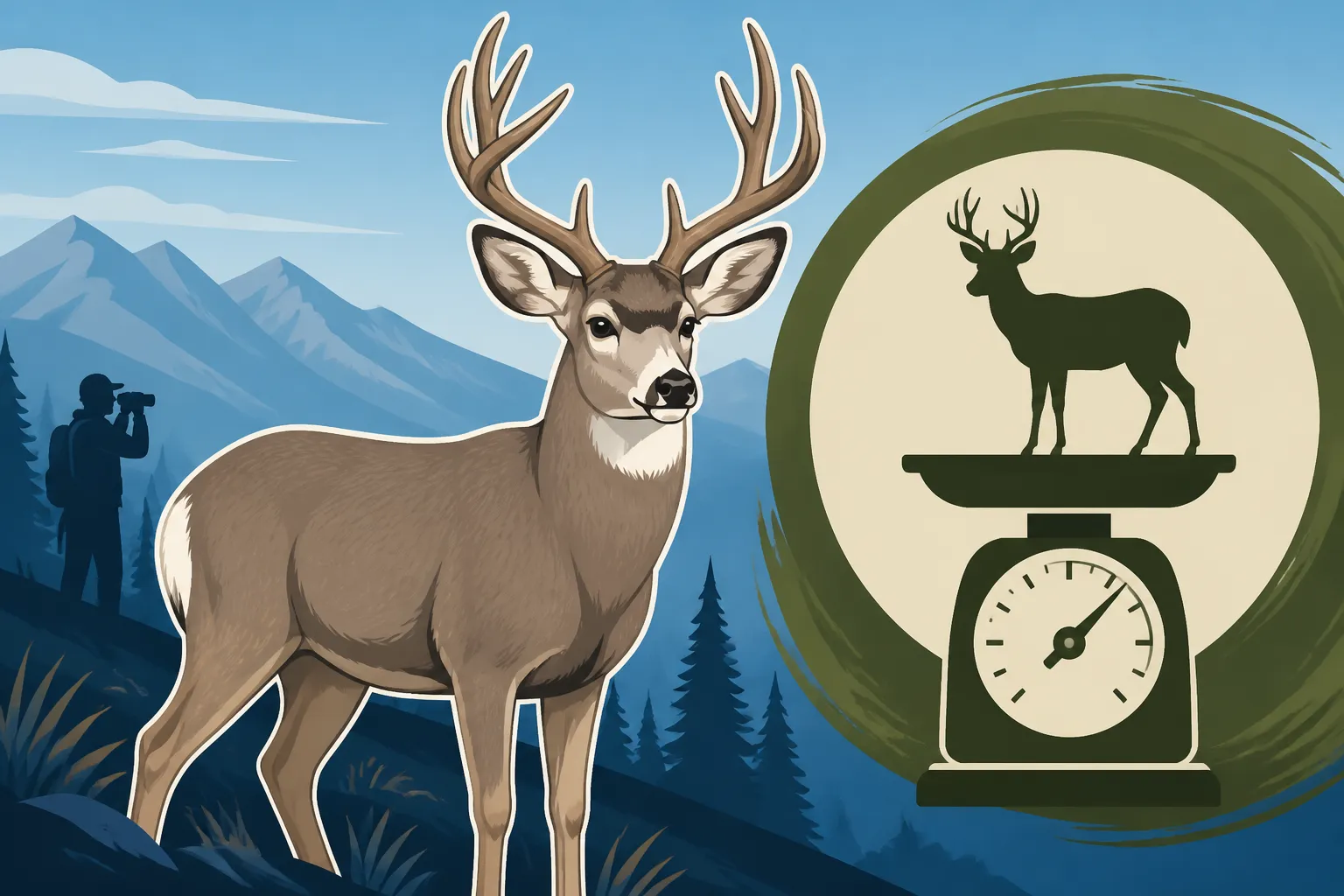
Generally, an adult mule deer buck in British Columbia might tip the scales anywhere from 175 to 300 pounds live weight. Now, that's a pretty broad range, right? It accounts for younger, perhaps two-and-a-half-year-old bucks, right up to the heavy-bodied, mature animals. Does, on the other hand, are typically lighter, usually falling between 120 and 180 pounds live weight. These aren't small animals by any stretch, and even a medium-sized doe can present a significant challenge to get out of rough country. The size and weight are heavily influenced by factors like age, genetics, and the richness of their local forage.
What Constitutes a "Big" Mule Deer in BC?
We all dream of that truly "big" deer, and in British Columbia, those dream bucks often come with impressive weight to match their antlers. A trophy-class mule deer buck, particularly those from the province's prime interior regions known for growing big deer, can easily push the upper limits of that 300-pound live weight figure, and sometimes even exceed it. These are the bucks that make you pause and reconsider your pack strategy. They have thick necks, deep chests, and a heavy overall appearance that stands out even among other mature deer. You'll often find these giants in areas with abundant feed and less hunting pressure, allowing them to reach their full potential. The chase for these heavyweights is part of what makes Mule Deer Across British Columbia's Interior such a sought-after experience.
Live Weight Versus Field Dressed: The Critical Difference for Hunters
This is where the rubber meets the road, or more accurately, where the deer hits the ground. Understanding the difference between live weight and field-dressed weight is absolutely crucial for planning how you'll get your animal out of the woods. It's a common point of frustration for new hunters, and even seasoned veterans can miscalculate when they're excited or exhausted.
Defining Field Dressed Weight
Field dressing involves removing the internal organs (viscera) of the animal shortly after the kill. This is done for several critical reasons: it cools the meat quickly, which is vital in British Columbia's often-mild early seasons; it reduces spoilage; and yes, it significantly reduces the overall weight you need to pack out. The field-dressed weight is what most hunters refer to when they talk about the "weight" of their harvested animal, as this is the form in which it's typically transported from the kill site.
So, how much does field dressing reduce the weight? It's a pretty substantial amount. You can generally expect a mule deer's field-dressed weight to be about 25-30% less than its live weight. This means a 250-pound live weight buck would become roughly 175-188 pounds once field dressed. That's still a lot of weight, but it's a far cry from the original, un-dressed animal. This reduction is why the first step after a successful harvest is almost always to get that deer field dressed, especially if you're alone or deep in the backcountry. Proper Field Dressing in British Columbia's Wet Weather is essential, as rain can complicate the process and potentially lead to contamination if not done carefully.
Calculating Approximate Meat Yield
While field-dressed weight gives you an idea of what you're packing, the actual meat yield is often what matters most for the freezer. This is the weight of usable, bone-in or boneless meat that you'll take home. This figure will be even lower than the field-dressed weight, as it excludes the hide, head, lower legs, and any bone or trim that isn't destined for the dinner table.
A good rule of thumb for estimating usable meat yield from a mule deer is approximately 50% of the live weight, or about 70-75% of the field-dressed weight. So, our 250-pound live weight buck, which field dressed at 175-188 pounds, would likely yield somewhere between 125 and 140 pounds of pure venison. This is a fantastic return for a season's worth of effort! It’s important to remember that these are averages, and factors like shot placement, the skill of the butcher, and how much bone-in meat you prefer will influence the final numbers. When you're dreaming about those delicious venison steaks, keep these figures in mind—it helps with planning freezer space and bragging rights!
Here's a quick reference table to help visualize these numbers:
| Mule Deer Type | Average Live Weight (lbs) | Average Field Dressed Weight (lbs) | Estimated Usable Meat Yield (lbs) |
|---|---|---|---|
| Mature Buck | 200 – 300 | 140 – 225 | 100 – 150 |
| Average Doe | 120 – 180 | 85 – 135 | 60 – 90 |
| Yearling | 100 – 150 | 70 – 110 | 50 – 75 |
Factors Influencing the Size of British Columbia Mule Deer
It's never just one thing that determines how big a mule deer gets. Think of it like a recipe: you need the right ingredients, cooked for the right amount of time, in the right environment. British Columbia offers a vast and varied landscape, and these variations directly translate to the size and weight of its mule deer populations.
Age and Genetics
Just like people, deer need time to grow. Age is arguably the single biggest factor in determining a mule deer's body weight and antler development. A buck really starts to put on mass and grow its most impressive antlers between 4.5 and 7.5 years old. Before that, much of their energy is still going into basic body growth. This is why strict antler restrictions, like British Columbia's Four-Point Antler Restriction, are often implemented: to allow younger bucks to mature and spread their genetics, theoretically leading to a healthier, heavier herd over time.
Genetics also play a huge, often unseen, role. Some deer simply have the genetic blueprint to grow larger bodies and bigger antlers, regardless of how good the feed is. This is why certain regions consistently produce larger animals; the genetics for robust growth are strong within those herds. It’s not just about finding a deer, but finding a deer from a lineage of big deer. Sites like GoHunt are great for researching these kinds of patterns and understanding herd dynamics.
Habitat and Nutrition Quality
You are what you eat, and so is a mule deer. The quality and abundance of forage in a deer's habitat directly influence its health, growth rate, and ultimately, its weight. Deer living in lush agricultural areas or regions with diverse, high-quality browse and consistent rainfall tend to be heavier than those in more arid or sparse environments. For instance, a deer thriving in an interior Douglas fir bench with abundant forbs and shrubs will likely be heavier than one scraping by on a drier, overgrazed range.
British Columbia's diverse ecosystems, from the rich grasslands of the Okanagan to the mosaic of cutblocks and mature timber in the Cariboo, offer varying levels of nutritional value. Areas that offer consistent access to water and a variety of food sources throughout the year, including winter browse, are crucial for deer to reach their full size potential. When you're scouting, pay attention to the health of the vegetation; it's a good indicator of what the local deer might be eating. Knowing What Mule Deer Eat in the Dry Interior can give you an edge in finding those prime areas.
Seasonal Fluctuations and Rut Impact
Mule deer weights aren't static; they fluctuate throughout the year. Deer are typically at their heaviest in late summer and early fall, having spent months gorging on lush vegetation to build up fat reserves for the coming winter. Bucks, especially, will be in peak condition just before the rut.
However, once the rut kicks in, typically in late October and November, things change dramatically. Bucks become incredibly active, focused almost entirely on breeding, often neglecting feeding for weeks. This intense activity, combined with reduced food intake, can cause them to lose a significant amount of weight—sometimes 20-30% of their body mass. This is why a buck harvested during the peak of the rut, while an exciting trophy, might not be as heavy as one taken in early September. Understanding When British Columbia's Mule Deer Rut Peaks is key, not just for hunting strategy but for managing expectations about the animal's condition. GoHunt also offers fantastic resources for understanding these seasonal changes.
Practical Considerations for Hunters: Planning Your Pack Out and Meat Care
Knowing the potential weight of your mule deer isn't just academic; it has serious implications for your hunt. British Columbia's terrain can be incredibly challenging, and getting a heavy animal out requires careful planning, the right gear, and often, a whole lot of grit.
Estimating Weight in the Field
Accurately estimating a mule deer's weight in the field is a skill that comes with experience. It's notoriously difficult, especially for less experienced hunters. When you spot a deer, try to assess its overall body mass, not just its antlers. Look for a deep chest, thick neck, and a full, rounded abdomen. Pay attention to how it moves; a truly heavy deer often moves with a more deliberate, powerful stride.
One useful trick is to compare the animal's body size to something familiar if possible, or even to the terrain itself. Is it dwarfing that stump? Is it noticeably wider than the average tree trunk? Take mental notes, and once you have the animal down, you can start to refine your estimations for future hunts. Using a quality spotting scope and binoculars, like those you might research on GoHunt, can help you get a better read on body condition before you even start your stalk.
Gear and Strategy for Packing Out a Heavy Deer
Let's not sugarcoat it: packing out a heavy British Columbia mule deer, especially from steep or remote terrain, is hard work. You're looking at multiple trips, potentially over rough ground. This is where your gear truly matters. A robust frame pack is non-negotiable. Don't skimp here; a cheap pack will make you regret every step. Good boots, trekking poles, and plenty of water are also essential.
Your strategy for getting the animal out will depend on its size and the terrain. For smaller deer or shorter distances, a whole deer on a pack frame might be feasible. However, for a heavy buck, quartering the animal is almost always the way to go. This involves breaking the deer down into its major muscle groups (two hindquarters, two front shoulders, backstraps, tenderloins, and neck meat). Each quarter, especially a hindquarter from a big buck, can weigh 40-60 pounds on its own. Now you're looking at multiple pack loads for yourself and any hunting partners. This is exactly why you need to understand Packing Out of British Columbia's Steep Country and have a solid plan.
Ensuring Proper Meat Care After the Harvest
With all that hard work to get the animal out, the last thing you want is to spoil the meat. Proper meat care begins immediately after the kill. Rapid cooling is paramount, which is why field dressing is the first step. If quartering, get those quarters hung in game bags where air can circulate. In warmer early seasons, this can be a real challenge. Carrying game bags that breathe is crucial.
If you're in the backcountry for an extended period, you'll need a plan for Keeping Meat Cool in an Early Season. This might involve finding a shady spot, using a small tarp to create additional shade, or even burying quarters in snow if you're hunting in the alpine. Remember that even in cooler weather, direct sun can quickly warm up meat. Always prioritize hygiene and keep the meat clean to prevent contamination. Your efforts here will directly translate to the quality of the venison in your freezer.
Disclaimer
This article is for general informational purposes only and does not constitute professional advice. Laws, prices and regulations vary by location and change over time. Consult a qualified professional for guidance on your specific situation.