Hunting a Second-Growth Timber Block
There's a unique challenge that many hunters in British Columbia face: trying to navigate and effectively hunt in a second-growth timber block. These areas, often a tangled maze of regenerating trees, dense underbrush, and challenging terrain, can feel impenetrable and overwhelming, leaving many feeling frustrated about finding game in what seems like perfect cover. This guide is here to demystify hunting these often-overlooked yet incredibly productive areas, helping you understand their appeal to wildlife and providing actionable strategies to make your next hunt a success.
Understanding Second-Growth Timber Blocks and Their Appeal
Second-growth timber blocks are a cornerstone of British Columbia's forested landscape, especially in areas with a history of logging. They represent a dynamic stage in forest regeneration, offering a distinct set of challenges and opportunities for hunters. To truly hunt them effectively, we first need to appreciate what they are and why game animals find them so appealing.
What Defines a Second-Growth Block?
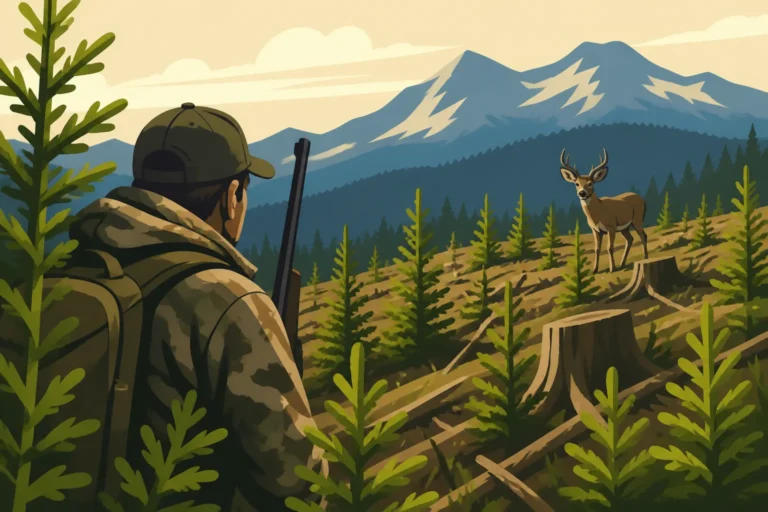
When we talk about second-growth timber, we're generally referring to forests that have regrown after the original "old growth" timber was harvested, often through clear-cutting. These blocks can range from relatively young, dense stands of saplings and brush to more mature, but still uniformly sized, trees that have begun to canopy. They're typically characterized by a much higher density of trees and undergrowth compared to older, more open forests. You might find a mosaic of different age classes within a larger area, from clearcuts that are just a few years old and choked with alders and willows, to blocks that are 20-30 years old with tightly packed conifers and a developing understory.
The ground in these areas can be incredibly variable. Often, you'll encounter a mix of logging slash, stumps, and uneven terrain that makes travel difficult. The soil might be disturbed, creating ideal conditions for new plant growth, but also presenting a tripping hazard. Identifying the exact age of a second-growth block can be crucial for understanding its potential for game, and resources like satellite imagery on platforms such as GoHunt can offer a valuable birds-eye view to help distinguish these stages, allowing you to focus your efforts.
Why Deer and Other Game Love These Areas
Despite the navigational challenges, second-growth timber blocks are absolute magnets for a variety of game species, particularly deer and elk. The primary reason is the abundance of food and cover they provide. In the early stages of regeneration, after a clearcut, sunlight can finally reach the forest floor, stimulating a burst of growth in broadleaf plants, shrubs, and grasses. Deer, in particular, thrive on this browse. Species like Sitka blacktail deer on the coast or mule deer in the interior will actively seek out these areas for their rich forage.
As the trees grow taller, the dense canopy begins to close in, but the initial burst of growth often leaves behind a thick understory. This dense vegetation provides crucial thermal cover, protecting animals from harsh weather, and even more importantly, security cover from predators and hunters. A mature second-growth stand might not have the same open browse, but the sheer density of the young trees offers unparalleled hiding spots. Elk also utilize these areas, often bedding down in the thickest parts during the day before moving to more open feeding areas at dawn and dusk. Even black bears will frequent these areas, especially if there's an abundance of berry bushes or other food sources hidden within the dense growth. Understanding what logging does to deer winter range can also offer insights into why certain areas are productive year-round.
Scouting and Planning Your Hunt in Second Growth
Hunting second-growth timber is less about random wandering and more about methodical, intelligent application of scouting and planning. These blocks can be frustrating if you don't have a solid game plan, but with the right approach, they can be incredibly rewarding.
Reading the Landscape: Identifying Key Features
Before you even step into a second-growth block, a significant amount of scouting can be done from afar, or more effectively, from home with the right tools. Your first step should always be to consult detailed topographic maps and satellite imagery. Look for variations in the timber density and age, which often indicate different logging phases. Pay close attention to the edges where second growth meets old growth, open clearings, or riparian zones. These transition areas are often high-traffic corridors for game moving between feeding and bedding areas.
Identify natural funnels, saddles, benches, and draws within the block. Even in dense timber, deer and elk will often follow the path of least resistance. Look for subtle elevation changes that create natural travel routes. Water sources are also critical; identify any creeks, springs, or damp areas that might draw game. On the ground, once you're in the area, look for sign – fresh tracks, rubs, scrapes, and droppings. Reading blacktail sign in wet ground, common in coastal second-growth, is an invaluable skill. Focus your efforts on the thickest, most secluded sections for bedding areas, and areas with ample browse for feeding. Remember, game animals feel safest where visibility is limited for predators, so the nastiest, hardest-to-penetrate parts of a second-growth block are often where they'll be.
Using Technology for Effective Scouting
In today's hunting world, technology is your best friend, especially when tackling complex landscapes like second-growth timber. Online mapping platforms are indispensable. Before you even set foot in the woods, platforms like GoHunt allow you to scrutinize satellite imagery, marking potential bedding areas, travel corridors, and access points. You can identify different stages of timber regeneration, locate old logging roads or skid trails that might offer easier access, and note distinct terrain features that can serve as waypoints or ambush points. Scouting a British Columbia management unit online is a game-changer for efficiency.
Using GPS on your phone or a dedicated unit is non-negotiable once you're in the field. Mark your entry points, potential game sightings, fresh sign, and any trails you discover. The dense nature of second growth can make it incredibly disorienting, and a GPS will prevent you from getting lost and help you navigate back to marked locations with ease. Many apps also allow you to download offline maps, which is crucial in British Columbia's backcountry where cell service is often non-existent. Furthermore, game cameras can be strategically placed along suspected travel routes or pinch points within the second growth to monitor animal activity and understand movement patterns without constant physical presence.
Hunting Strategies for Second-Growth Timber
Once you’ve scouted and planned, it’s time to put boots on the ground. Hunting second-growth demands specific tactics, often requiring a slower, more deliberate approach than hunting in open country.
Still-Hunting and Stand Hunting Tactics
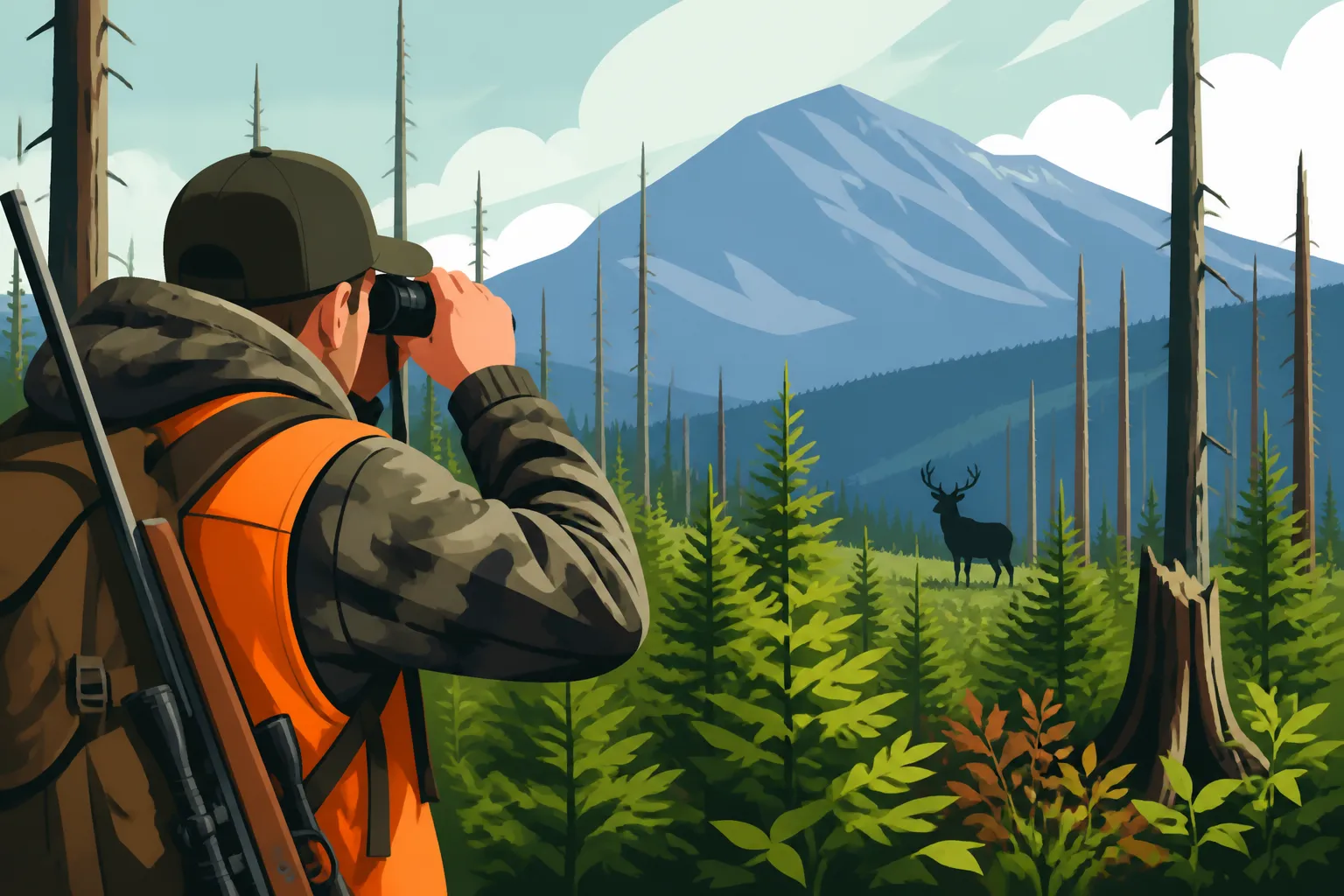
Still-hunting is arguably the most effective method for hunting dense second-growth timber. This isn't about covering ground quickly; it's about moving incredibly slowly, pausing frequently, and observing your surroundings. The key is to take one or two steps, then stop and thoroughly scan the area around you for several minutes before moving again. Use your binoculars to pick apart the dense cover, looking for horizontal lines (a deer's back) in a vertical world, patches of contrasting color, or the flick of an ear. The vast majority of deer are seen when they're standing still, trying to avoid detection, so give them time to make a mistake or reveal themselves. When still-hunting second growth for blacktail, paying close attention to the wind direction is paramount, as deer in thick cover rely heavily on their sense of smell.
Stand hunting can also be effective, especially if you've identified a well-used game trail, a funnel, or a feeding area within or on the edge of the second growth. Portable climbing stands or ground blinds can be set up in strategic locations, allowing you to remain still and blend into the environment. The trick is to identify where the animals are moving to or from, and intercept them. This might be along a ridge where a second-growth block meets an old-growth edge, or where deer transition from a dense bedding area to a clearcut for feeding.
Dealing with Dense Cover and Visibility Challenges
The defining characteristic of second-growth is its thick, often impenetrable, cover, which inherently leads to poor visibility. This is where your hunting skills are truly tested. First, embrace the challenge. Don't fight the cover; use it to your advantage. Move slowly and quietly, mimicking the natural movements of a predator. Use the dense growth to break up your silhouette as you move.
Shots in second growth are almost always at close range and often through small shooting lanes. Practice shooting from various awkward positions, including kneeling or sitting, and be prepared for quick, decisive shots. A rifle with a shorter barrel or a shotgun with slugs might be more manageable than a long-barreled magnum, especially if you're navigating tight spaces. For bowhunters, it means being acutely aware of your anchor points and how your limbs might snag on branches. The heavy cover also means that tracking game can be incredibly difficult. Always take time to carefully mark the spot of the shot and the animal's last known direction of travel. This is where having a good partner can come in handy, as two sets of eyes are always better than one when trying to pick apart an area.
Overcoming Common Challenges and Maximizing Success
Hunting in British Columbia's second-growth timber blocks presents unique logistical and environmental hurdles that, with proper preparation, can be successfully navigated.
Navigating Access and Road Networks
Second-growth timber blocks are almost universally associated with extensive logging road networks. While these roads offer vital access deep into the backcountry, they also come with their own set of challenges. Many forest service roads (FSRs) might be deactivated, overgrown, or require a high-clearance 4×4 vehicle. Others might be actively used by logging operations, necessitating extreme caution and the use of radio calls. Identifying open forest roads in British Columbia is a crucial first step in planning your access.
Beyond the main FSRs, smaller skid trails and old spur roads often spiderweb through the second growth. These can be excellent for walking silently or setting up stands, but they also mean more ground to cover and a higher chance of getting disoriented. Always carry detailed maps and a GPS, and be sure to mark your vehicle's location and primary routes. It's often advisable to park at the edge of a block and proceed on foot, or use an ATV/UTV for more extensive internal travel where permitted. Don't underestimate the time it takes to penetrate these areas; a kilometer on a map can feel like five in thick brush.
Adapting to Weather and Terrain
British Columbia's diverse climate means hunting conditions can change rapidly, particularly in areas prone to coastal rain or mountainous snow. Second-growth areas, with their dense canopy, can be surprisingly damp and cool, even on a sunny day. This means waterproof gear is essential, and good quality footwear with excellent ankle support is non-negotiable for traversing uneven terrain, stumps, and logging slash. Hunting in British Columbia's coastal rain is a common experience and requires appropriate preparation.
The terrain within second-growth blocks can be deceptively challenging. Steep slopes hidden by thick brush, blowdowns, and hidden ditches are common. Be mindful of your footing and move at a pace that allows you to react to unexpected obstacles. Fatigue can set in quickly when pushing through dense regeneration. Take frequent breaks, stay hydrated, and ensure you're carrying enough food. Also, be acutely aware of bear safety while hunting in British Columbia, as second-growth areas can be prime habitat for both black bears and grizzlies. The thick cover that provides security for deer also offers excellent cover for bears, making encounters more likely if you're not paying attention.
By understanding the unique environment of second-growth timber blocks and employing these focused strategies, you can transform what many see as an impenetrable thicket into a productive and exciting hunting ground. The rewards of successfully navigating and harvesting an animal from these challenging landscapes are truly something to cherish.
| Hunting Method | Best Use in Second-Growth | Pros | Cons |
|---|---|---|---|
| Still-Hunting | Actively searching dense cover, working into the wind. | Highly effective for finding game in thick areas; adaptable. | Requires extreme patience, quiet movement, and excellent observation skills; slow progress. |
| Stand Hunting | Intercepting game on known travel routes or feeding areas. | Allows for prolonged observation from an elevated or concealed position; reduces human scent dispersion. | Requires extensive prior scouting to identify productive spots; less adaptable if game patterns change. |
| Drive/Push | Organized effort with multiple hunters to push game towards waiting shooters. | Can be effective for moving wary animals out of dense pockets. | Requires multiple hunters and careful coordination; can be unsafe if not executed precisely. |
| Spot & Stalk | Less common within very dense blocks, more for edges or where clearings exist. | Excellent for open clearcuts or younger, more open second growth. | Difficult to execute where visibility is severely limited; requires advanced stalking skills. |
Disclaimer
Please be aware that hunting regulations and land access policies can change. Always consult the most current British Columbia Hunting and Trapping Regulations Synopsis and any local land management advisories before planning your hunt. Safety is paramount; ensure you have the necessary training, permits, and equipment for a safe and responsible hunting experience.