Camping at a Recreation Site While Hunting
Finding a comfortable, legal, and convenient place to set up camp while on a hunting trip in British Columbia can often feel like solving a complex puzzle. You’ve got your tags, your gear, and your target species in mind, but where do you actually lay your head at night that won’t break the bank or land you in hot water? This guide will walk you through the ins and outs of utilizing British Columbia's extensive network of Recreation Sites as your invaluable hunting basecamp.
Why British Columbia Recreation Sites Are a Hunter's Ally
When you're planning a hunting trip into the vast backcountry of British Columbia, accommodations can be a real sticking point. Hotels are expensive, often far from your hunting grounds, and don't quite offer the immersive experience you're after. Random camping on Crown land is an option, of course, but sometimes you crave just a few basic amenities and the peace of mind that comes with a designated, maintained spot. That's where British Columbia Recreation Sites truly shine as a hunter's best friend.
The Allure of Convenience and Cost
Let's face it, hunting in British Columbia can be a costly endeavor, from licenses and tags to fuel and specialized gear. Every dollar saved on accommodation is a dollar that can go towards better optics or another tank of gas to reach that distant ridge. Recreation Sites offer an incredible value proposition. They are generally much more affordable than private campgrounds or hotels, often operating on a minimal user fee that simply helps cover basic maintenance. This cost-effectiveness isn't just about saving money; it’s about stretching your hunting budget further, allowing you to stay out in the field longer or explore more distant regions. Imagine pulling into a site after a long day of Hunting Mule Deer in the Okanagan Breaks or Hunting British Columbia's Alpine in September, knowing you have a flat spot for your tent, a picnic table to prep dinner, and a fire ring to ward off the evening chill, all without draining your wallet. This convenience removes a layer of stress, letting you focus on the hunt itself.
Bridging the Gap Between Road Access and Remote Wilderness
Many of British Columbia's prime hunting areas are accessible via vast networks of British Columbia's Forest Service Road Network. These roads often lead to or pass by Recreation Sites, strategically located in areas that balance accessibility with proximity to good hunting grounds. You might find a site nestled beside a river that's a key migratory corridor for moose, or at the base of a mountain range known for producing big mule deer. These sites act as perfect staging points. You can drive your truck or ATV right in, unload your gear, and then either walk from camp or take a shorter drive to an advantageous starting point. They provide a vital middle ground: more established than simply pulling off a logging road into the bush, but far less developed and crowded than a typical provincial park. This blend means you can have a somewhat organized camp without feeling like you're far from the wild spaces you came to explore. For those who are just getting into hunting British Columbia, or even seasoned veterans exploring a new area, the predictability of a designated site, even a rustic one, can make a huge difference in trip enjoyment and success.
Understanding British Columbia Recreation Sites: What to Expect
British Columbia's Recreation Sites are a unique offering, distinct from the more developed Provincial Parks or private campgrounds. Understanding what they offer – and what they don’t – is key to a successful hunting trip.
Amenities and the Rustic Reality
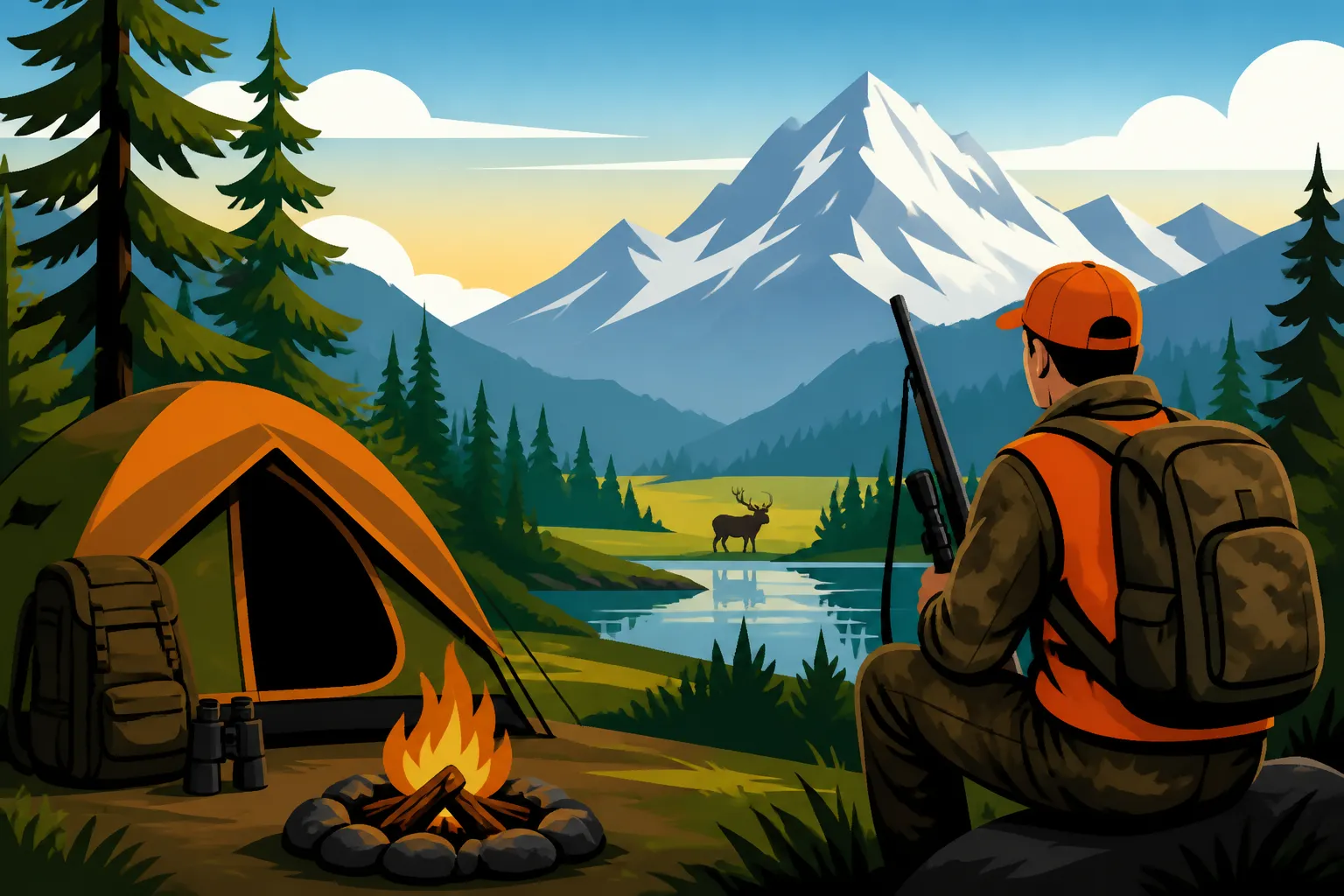
When you arrive at a BC Recreation Site, you should generally expect a more rustic experience. These aren't resort campgrounds with hot showers and power hookups. Instead, you'll typically find gravel roads, individual campsites with a picnic table, and a designated fire ring. The most common amenity you'll definitely see is a pit toilet or outhouse. Potable water is rare; assume you'll need to bring all your own drinking water or have a reliable filtering system for nearby natural sources. Garbage disposal is also usually not provided, meaning it's strictly "pack it in, pack it out." This minimalist approach is part of their charm for hunters. It keeps the fees low and the sites less crowded than their more amenity-rich counterparts. Think of it as an improved random camping experience rather than a "camping resort." The beauty lies in their simplicity and proximity to the wild, allowing you to focus on the hunt without unnecessary distractions or crowds. You’re trading some creature comforts for unparalleled access to the outdoors.
Navigating Fees and Self-Registration
Most Recreation Sites operate on a user-pay system, with fees collected via self-registration. When you enter a site, you'll typically find a kiosk with envelopes and a fee station. You fill out an envelope with your details, insert the cash fee (exact change is usually required), and deposit it into a secure box. You then tear off a stub to display at your campsite. It's an honour system, but enforcement does happen, and non-payment can lead to fines. Fees vary, but they are generally quite modest, designed to cover basic upkeep rather than generate significant revenue. Some sites, particularly more popular ones or those near urban centres, might have a designated host who collects fees and oversees the site. It's always a good idea to research the specific site you plan to visit online to confirm the fee structure and whether it's first-come, first-served or has any reservation system. While reservations for Rec Sites are less common than for Provincial Parks, they do exist for some popular locations.
Comparing to Other Camping Options
To give you a clearer picture, let's look at how British Columbia Recreation Sites stack up against other common camping choices for hunters. This comparison highlights why they often strike the perfect balance for those seeking adventure in the wild.
| Feature | BC Recreation Sites | BC Provincial Parks | Random Camping on Crown Land | Private Campgrounds |
|---|---|---|---|---|
| Amenities | Pit toilet, fire ring, table | Flush toilets, showers, water, sani-dumps (varies) | None | Full hookups, showers, stores, laundry |
| Cost | Low user fees | Moderate to high fees | Free | High fees |
| Access/Proximity to Hunt | Often excellent, adjacent to FSRs | Variable, can be restrictive for hunting | Excellent, direct access | Often limited, far from true wilderness |
| Crowds | Generally low to moderate | Can be very high | Very low | High |
| Reservation System | Mostly first-come, first-served; some reservable | Heavily reservation-based | N/A | Heavily reservation-based |
| Firearms in Camp | Permitted (stored safely) | Generally permitted (stored safely) | Permitted | Varies, check specific rules |
| Game Processing | Permitted (with care/distance) | Restricted/prohibited | Permitted | Generally prohibited |
As you can see, Recreation Sites offer a sweet spot. They provide a step up in basic infrastructure and management from pure random camping, while avoiding the often crowded and pricier environment of Provincial Parks or private RV parks, which aren't typically geared towards hunters needing to quarter an animal.
Practicalities for Hunters: Rules, Respect, and Logistics
Camping at a Recreation Site while hunting requires a bit more forethought than just rolling in and setting up your tent. Being a responsible hunter and camper ensures these valuable resources remain available for everyone.
Firearms, Game Processing, and Cleanliness
One of the primary concerns for hunters is the legality and safety surrounding firearms. At British Columbia Recreation Sites, firearms are generally permitted, provided they are stored safely and legally. This means unloaded, secured in a case or vehicle, and not openly displayed. Remember, even in a rustic campsite, you are still in a shared public space, and other users may not be comfortable with visible firearms. Always prioritize safety and respect. When it comes to game processing, Rec Sites offer more flexibility than provincial parks. You are generally allowed to process game at your campsite, but this comes with a huge responsibility. You must dispose of offal and carcasses properly and far from the immediate camp area. This means packing it out, burying it deeply away from water sources and trails, or scattering it widely in thick bush well away from human activity, if regulations allow and conditions are appropriate. Never, ever leave guts or hides in or near your campsite or a fire ring. This attracts predators, creates a public health hazard, and ruins the experience for future campers. Keep your campsite pristine; pack out everything you pack in, including all garbage, shell casings, and any remnants of your hunt. This commitment to cleanliness is vital for maintaining good relations with other users and preserving the natural integrity of these sites. It means more than just throwing your trash in the back of your truck; it means making sure there's no trace you were ever there. Meat Care in British Columbia's Warm Early Seasons can be a challenge, so planning how you'll handle processing and cooling your harvest is crucial.
Essential Bear Safety and Food Storage
British Columbia is bear country, and this is especially true in many of the wilder areas where Recreation Sites are located. Bear Safety While Hunting in British Columbia is not just a suggestion; it's a critical aspect of camping responsibly. You are guests in their home. This means rigorous food management. All food, cooking equipment, garbage, and anything else with a scent (even toiletries) must be stored securely to prevent attracting bears. Bear-resistant containers are ideal, but if you don't have one, storing items in your locked vehicle, out of sight and smell, is the next best option. Never store food in your tent. Cook away from your sleeping area if possible, and clean up immediately after meals. This includes scrubbing pots and pans, wiping down tables, and properly disposing of greywater. Be vigilant and carry bear spray, knowing how to use it. If a bear does wander into camp, make noise, make yourself look big, and never run. The more proactive you are in preventing attractants, the safer and more enjoyable your experience will be, and the less likely a bear will become habituated to human food sources, which often leads to unfortunate outcomes for the animal.
Finding Your Ideal Basecamp: Tools and Tactics
Successfully utilizing British Columbia Recreation Sites starts with good planning and knowing how to find the right spot.
Leveraging Online Resources and Mapping Apps
The primary resource for finding British Columbia Recreation Sites is the official BC Recreation Sites and Trails website. This government portal offers a comprehensive database, often with detailed descriptions, directions, maps, and information on amenities and fees for each site. It’s an invaluable tool for pre-trip planning, allowing you to identify sites near your chosen hunting grounds. However, official maps aren't always perfect or fully up-to-date. This is where modern mapping applications become indispensable. Many hunters rely heavily on powerful platforms like onX Hunt, which can display Crown land boundaries, Forest Service Roads, and often even pinpoint Recreation Sites. You can use onX Hunt to overlay these features, visualize access routes, and identify potential hunting areas surrounding a particular campsite. Similarly, while GoHunt is predominantly focused on Western US hunts, the underlying principles of detailed mapping and scouting it encourages are highly transferable. By using these tools in conjunction with the official government resources, you can scout potential camping locations from your living room, check road access, and get a realistic sense of the terrain. Always remember to download offline maps for your chosen area, as cell service is often non-existent once you leave paved roads and head into the bush. Scouting a British Columbia Management Unit Online is an excellent first step.
Choosing the Right Site for Your Hunting Needs
Selecting the perfect Recreation Site goes beyond just finding one on a map. You need to consider its strategic location relative to your hunting objectives. Are you targeting Moose Hunting British Columbia's Interior and need access to river bottoms or willow flats? Look for sites along major rivers or near wetland systems. Planning a Spot-and-Stalk Mule Deer in British Columbia hunt in open timber? Seek out sites that put you at the base of promising slopes or ridgelines. Consider the type of hunting you'll be doing. If you're going to be Horseback Hunting British Columbia's Backcountry, you'll need a site that has enough space for horse trailers and potentially a small corral area, or at least ample open ground. If your hunt involves significant packing out, proximity to the vehicle-accessible hunting area is critical. Also, think about the time of year. Early season hunts might benefit from sites at higher elevations to escape heat, while late-season hunts might require sites on more protected valley bottoms as snow starts to fall. Always check for any specific restrictions or closures, especially regarding fire bans during dry periods or temporary access issues on Forest Service Roads. Don't be afraid to drive a little further down a rougher road to find a less-used site that offers more solitude and direct access to unpressured hunting areas. Sometimes, the best basecamp is the one you have to work a little harder to reach.
Disclaimer
This article is for general informational purposes only and does not constitute professional advice. Laws, prices and regulations vary by location and change over time. Consult a qualified professional for guidance on your specific situation.