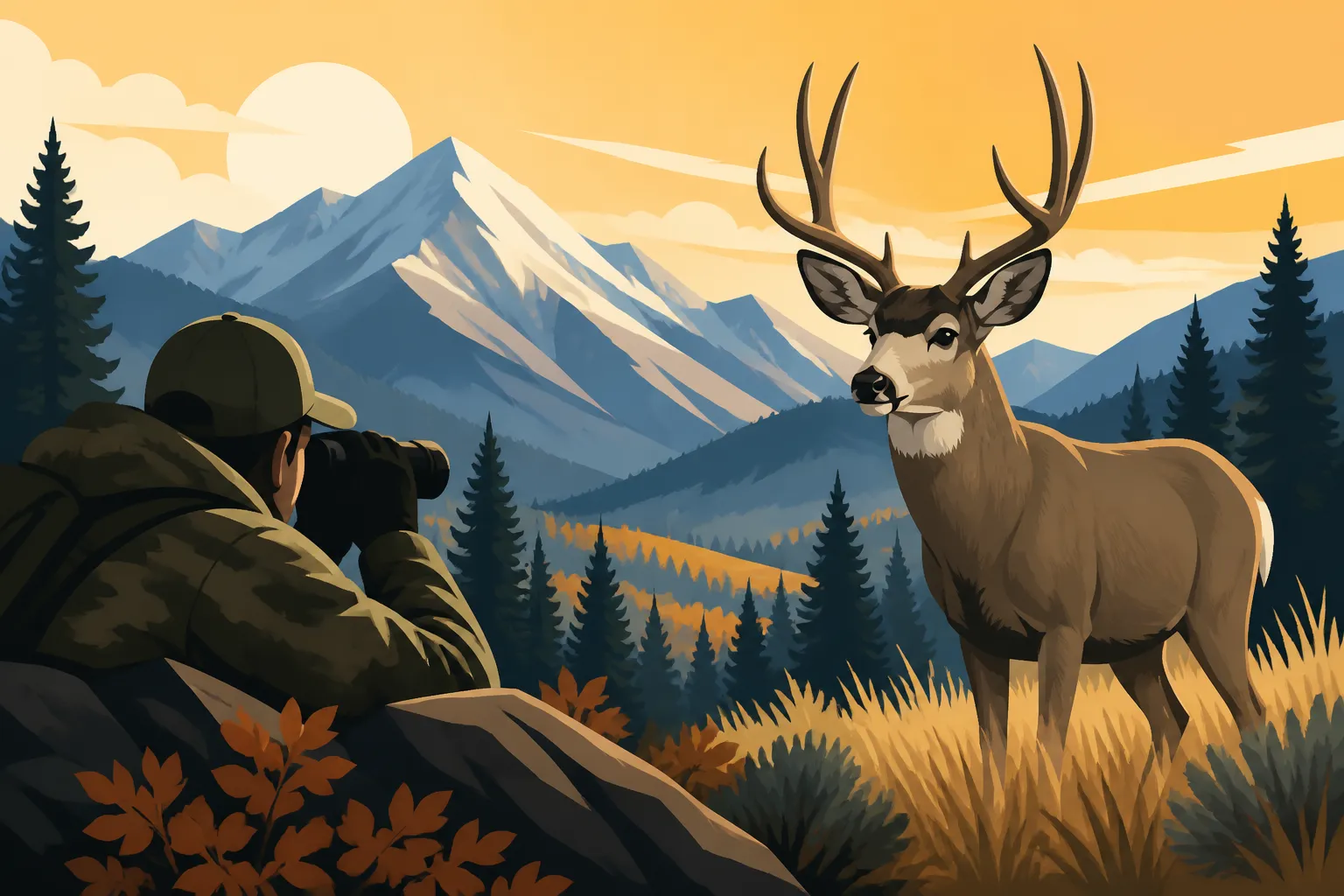
Mule Deer Hunting in British Columbia
Few experiences in British Columbia match the challenge and immense satisfaction of pursuing a mature mule deer buck. These magnificent animals, known for their large ears and distinctive bounding gait, offer some of the most rewarding hunting opportunities in the province. However, successfully hunting them often involves overcoming vast landscapes, understanding complex regulations, and mastering specific techniques. This comprehensive guide aims to equip you with the knowledge and strategies needed to increase your chances of success on your next British Columbia mule deer hunt, from deciphering habitat to executing a perfect stalk.
Understanding British Columbia's Mule Deer
Mule deer are iconic inhabitants of British Columbia's diverse landscapes, particularly within the vast interior. Their distribution and habits are deeply tied to the varied terrain and ecosystems across the province. Understanding where they live, what they eat, and how they behave is the cornerstone of any successful mule deer hunting strategy.
Where Mule Deer Roam in BC
British Columbia's mule deer population is primarily concentrated in the central and southern interior regions, stretching from the Cariboo and Chilcotin Plateaus down through the Thompson-Okanagan and into the Kootenay mountains. You'll find them thriving in areas characterized by a mosaic of open timber, expansive grasslands, and shrubby sagebrush benches. Unlike their black-tailed cousins on the coast, mule deer prefer more open, arid environments.
These deer are incredibly adaptable, moving between different habitats depending on the season and prevailing conditions. In spring and summer, they often disperse into higher elevations, frequenting subalpine meadows, forest openings, and the edges of recent clearcuts or burns where tender new growth provides ample forage. As autumn progresses and the first snows dust the peaks, they begin their migration to traditional winter ranges in lower valleys, often seeking out south-facing slopes that shed snow quickly and provide access to vital browse. Places like the Thompson-Okanagan region, with its diverse blend of dry grasslands, ponderosa pine forests, and riparian areas, are prime examples of mule deer strongholds. Understanding these seasonal movements is critical, as deer that were high on a mountain in September might be completely absent from that area come November.
Mule Deer Biology and Behavior
Mule deer possess a fascinating biology and exhibit distinct behaviors that keen hunters can learn to exploit. Their diet is varied, consisting primarily of browse (leaves and twigs from shrubs and trees), forbs (broad-leafed plants), and grasses. This dietary flexibility allows them to thrive in various habitats, but their preference for specific forage changes with the seasons. For example, during the hot, dry summer months, they might seek out succulent forbs in shaded draws, while in winter, they'll rely heavily on woody browse like willow, dogwood, or even juniper. Observing their feeding patterns can help you pinpoint areas of activity.
The rut, or breeding season, is perhaps the most anticipated time for mule deer hunters. In British Columbia, the mule deer rut typically peaks in early to mid-November, though significant pre-rut activity can be observed in late October, and post-rut behavior can extend into early December. During this period, bucks, often solitary for much of the year, become much more visible and less cautious as they actively search for does. This is when you're most likely to encounter a mature buck during daylight hours. Earlier in the season, outside of the rut, bucks tend to form bachelor groups or remain more reclusive, often bedding in dense cover during the day. Their daily routine usually involves feeding during the cooler parts of the day – dawn and dusk – and bedding down in sheltered areas during midday. A mature buck might weigh anywhere from 200 to 300 pounds live weight, with some exceptional specimens exceeding that, particularly in areas with good nutrition. Knowing "When British Columbia's Mule Deer Rut Peaks" can dramatically increase your odds, as can understanding their typical bedding habits.
Key Seasons and Regulations for Mule Deer
Navigating British Columbia's hunting regulations can feel like sifting through a dense textbook, but it's absolutely crucial for a legal and successful mule deer hunt. Understanding the difference between general open seasons and limited entry hunts, as well as specific antler restrictions and bag limits, is paramount before you even consider heading into the field.
General Open Seasons GOS vs. Limited Entry Hunting LEH
British Columbia offers two primary avenues for mule deer hunting: General Open Seasons (GOS) and Limited Entry Hunting (LEH). GOS hunts are often referred to as "over-the-counter" tags, meaning any licensed resident hunter can purchase a mule deer species licence and hunt during the designated season within specified Management Units (MUs). These seasons typically run in early fall (archery and sometimes early rifle) and then again in late fall, often aligning with the rut. The advantage of GOS is accessibility and flexibility, allowing hunters to explore various areas without the need to draw a specific authorization. However, GOS areas can experience higher hunting pressure, and the regulations might be more restrictive (e.g., antler-point restrictions) to manage herd populations.
In contrast, Limited Entry Hunting (LEH) draws are designed to allocate hunting opportunities for specific species, sexes, and sometimes antler classes, in specific MUs during defined periods. These draws are used to manage pressure and ensure sustainable harvests, particularly for highly sought-after species or areas with sensitive populations. Applying for an LEH requires careful planning, as you must submit your application well in advance of the hunting season. The odds of drawing an LEH authorization can vary widely, from nearly guaranteed in some less popular zones to extremely low for prime rut hunts in renowned areas. While LEH tags offer exclusive access to certain hunting periods or MUs, and often come with more liberal antler restrictions, the uncertainty of drawing one means you can't rely solely on them for your annual hunt. It’s essential to consult the provincial regulations synopsis for "British Columbia Deer Season Dates by Region" and other specifics before planning.
Antler Restrictions and Bag Limits
British Columbia employs various antler restrictions to manage its mule deer herds, with the most common being the "4-point or greater" rule. This regulation means that a buck must have at least four points (tines) on one side of its antlers, excluding the brow tines, to be legal for harvest. This rule is designed to protect younger bucks, allowing them to mature and contribute to the gene pool for several breeding seasons before they become eligible for harvest. Understanding "British Columbia's Four-Point Antler Restriction" is non-negotiable, and misjudging a buck in the field can lead to severe penalties. Always use your binoculars to carefully count points before making a decision. In some specific LEH zones, "any buck" authorizations might be available, offering hunters the opportunity to harvest a buck of any antler size, but these are often highly competitive draws.
Bag limits for mule deer in British Columbia are generally conservative, typically allowing for the harvest of one buck per hunter per year. However, this can vary by region and MU. Some LEH authorizations might allow for an additional antlerless deer harvest in specific circumstances, usually to manage localized populations or agricultural damage. It's imperative to consult the official regulations synopsis each year, as rules can change. Beyond antler restrictions and bag limits, hunters must also adhere to regulations regarding "British Columbia Hunting Licences and Fees" and acquire "British Columbia's Species Licences and Tags" specifically for deer. This includes a basic hunting licence, a provincial wildlife conservation surcharge, and the specific mule deer species licence. Always ensure you have all required documentation before heading out.
Essential Scouting and Planning
A successful mule deer hunt in British Columbia often begins long before you ever set foot in the woods. Thorough scouting and meticulous planning are critical, transforming a hopeful wander into a calculated pursuit. Leveraging modern technology alongside traditional field craft allows hunters to identify promising areas, understand deer movements, and develop a solid strategy.
Utilizing Technology for Scouting
In today's hunting world, digital tools have become indispensable for pre-season scouting. Start by delving into the British Columbia hunting regulations synopsis online. This document provides critical information on Management Unit boundaries, season dates, antler restrictions, and any specific notes for your chosen area. Once you've identified potential MUs, mapping platforms are your next best friend. Websites and apps like those offered by GoHunt, for instance, provide invaluable overlays of Crown land, private land, logging roads, topography, and even historical satellite imagery that can reveal hidden clearcuts or old burns that might attract deer. These tools allow you to virtually explore vast areas from the comfort of your home, identifying potential bedding areas, feeding zones, travel corridors, and water sources. Looking for south-facing slopes, which tend to melt out faster in early winter and offer crucial forage, or the fringes of dense timber where deer might feel secure, are great starting points.
Satellite imagery is particularly powerful. You can pinpoint specific features such as recent cutblocks, old growth pockets, or areas of specific vegetation that might hold deer. For example, a two or three-year-old burn might be an excellent spot for new growth that deer will frequent. By "Scouting a British Columbia Management Unit Online", you can mark potential access points, anticipate terrain challenges, and identify glassing knobs or saddles that funnel deer movement. This digital groundwork helps you narrow down vast tracts of land into manageable areas for physical reconnaissance, saving precious time and effort in the field. Remember, while technology is a powerful aid, it's only the first step.
Boots-on-the-Ground Reconnaissance
While digital scouting points you in the right direction, nothing replaces the invaluable knowledge gained from "boots-on-the-ground" reconnaissance. Physically exploring the terrain allows you to confirm your assumptions from maps and discover nuances that satellite images simply can't capture. Look for fresh deer sign: tracks (especially large ones indicating a mature buck), rubs on trees, fresh droppings, and well-used trails leading between feeding and bedding areas. Pay attention to pinch points, saddles, and creek crossings, as these are natural funnels for deer movement.
One of the most effective techniques for locating mule deer is glassing from elevated vantage points. Bring high-quality binoculars (10×42 or 12×50) and a spotting scope (15-45x or 20-60x) mounted on a sturdy tripod. Set up in a spot with a wide view, preferably overlooking diverse terrain such as a valley, a series of timbered ridges, or a large cutblock. Spend significant time systematically scanning every inch of the landscape, looking for even a flick of an ear, a patch of hide, or the tell-tale shape of antlers. Patience is key here; deer are incredibly camouflaged. This is exactly what we mean when we talk about "Glassing an Interior Hillside for Mule Deer." Moreover, understanding the subtleties of elevation and aspect is crucial for mule deer. Deer often favour south and west-facing slopes for bedding due to increased sun exposure and quicker snow melt, while north-facing slopes might offer cooler temperatures and denser cover in warmer weather. Pay attention to how wind currents move through the terrain, as deer will almost always try to use the wind to their advantage. Learning "How Elevation Moves British Columbia Game" will give you a significant advantage in predicting where deer will be at different times of the year and day.
Effective Hunting Methods and Strategies
Once you've done your homework and understand the landscape, it's time to put your hunting skills to the test. Successful mule deer hunting in British Columbia hinges on employing appropriate methods, adapting to the conditions, and understanding how deer react to pressure and terrain. Whether you prefer a methodical approach or a patient wait, mastering these strategies will serve you well.
Spot-and-Stalk Hunting
The spot-and-stalk method is arguably the most rewarding and effective way to hunt mule deer in British Columbia's open and semi-open country. It involves systematically glassing vast areas from a high vantage point to "spot" a deer, then carefully planning and executing a "stalk" to get within shooting range. This technique is particularly potent in the interior's rolling hills, open grasslands, and burned areas where visibility is good. The process begins with finding an ideal glassing perch. Once you've located a deer, especially a buck, the real chess match begins. You need to analyze the terrain, considering factors like wind direction, cover, and the deer's current activity.
The stalk itself is a delicate dance. You must use every fold in the land, every clump of trees, and every rock to your advantage, moving slowly, quietly, and deliberately. The wind is your absolute master; always ensure it's in your face or quartering across to avoid carrying your scent to the deer. Pay attention to your foot placement, avoiding snapping twigs or dislodging rocks. If the deer is feeding or bedded, time your movements when its head is down or obscured. It might take hours to close a few hundred yards, but the thrill of executing a perfect stalk and getting a shot opportunity is unparalleled. This is the essence of "Spot-and-Stalk Mule Deer in British Columbia," requiring immense patience, discipline, and an intimate understanding of the terrain.
Still-Hunting and Tracking
While spot-and-stalk excels in open country, still-hunting and tracking are highly effective tactics in denser timber, during inclement weather, or when snow blankets the landscape. Still-hunting involves moving through the woods at an incredibly slow pace, taking a few steps, then pausing to scan and listen for several minutes. The goal is to detect a deer before it detects you. This method requires extreme patience and acute observation skills. You're looking for subtle movements, a flash of an ear, a horizontal line in a vertical world, or the tell-tale gleam of an antler. Focus on areas where deer might be bedding down during the day, such as dense stands of timber on a north-facing slope, or along the edges of thickets.
When snow covers the ground, tracking becomes an invaluable skill. Fresh tracks can lead you directly to deer, especially if they indicate a large, lone buck. Pay attention to the size and depth of the tracks, looking for signs of a mature animal. Mule deer tracks are generally more heart-shaped than a whitetail's. Once you're on a fresh track, move slowly and deliberately, always anticipating the deer's next move. Deer often bed on benches or ridges where they can watch their backtrail. Circle wide ahead of their likely path, or use terrain features to approach from a different angle. If the deer is moving fast, it’s often spooked, and you might need to back off or try to circle ahead to intercept. This detailed attention to movement is what makes "Stalking a Bedded Buck in Open Timber" such a specialized and rewarding pursuit.
Ambush Hunting (Stands/Blinds)
While less common for mule deer than whitetails, ambush hunting from a fixed position like a tree stand or ground blind can be highly effective in certain situations, particularly when you've identified a consistent deer movement pattern. This strategy is best employed near active food sources, water holes, or along well-used game trails connecting bedding and feeding areas. During the rut, setting up near a natural funnel or a scrape line can put you in a prime position to intercept a cruising buck.
The key to successful ambush hunting is careful observation and preparation. Scout the area thoroughly beforehand to identify the most likely travel routes and feeding times. Set up your stand or blind well in advance to allow deer to habituate to its presence. Always consider the prevailing wind direction and use scent control measures religiously to avoid alerting deer to your presence. Dawn and dusk are typically the most productive times for ambush hunting, as deer are most active during these periods. Patience is your greatest ally here; sit still, be quiet, and remain vigilant, ready to capitalize on any opportunity that arises. This method can be especially fruitful in areas with limited visibility or where deer are particularly wary due to hunting pressure.
Gear and Equipment for British Columbia Mule Deer
Hunting mule deer in British Columbia means being prepared for diverse and often challenging conditions, from arid grasslands to snowy mountain slopes. Having the right gear, from your rifle to your boots, is not just about comfort; it's about safety, efficiency, and ultimately, success.
Rifles, Ammunition, and Optics
When it comes to rifles for mule deer, versatility and accuracy are key. Most hunters opt for popular, proven calibers that offer a good balance of flat trajectory and sufficient energy for clean kills on medium to large game. Calibers like the .270 Winchester, .30-06 Springfield, and .300 Winchester Magnum are excellent choices. A .270, for instance, offers a flat trajectory for those longer shots often encountered in open country, while the .30-06 is a classic all-around cartridge capable of handling any BC big game. If you anticipate shots at extended ranges or in particularly windy conditions, a .300 Win Mag provides extra punch and speed. Ensure your rifle is sighted in perfectly and you've practiced shooting from various field positions. Remember to confirm "Legal Rifle Calibres for Big Game" in the BC regulations.
Ammunition choice is equally important. Look for high-quality, controlled-expansion bullets designed for big game, such as Barnes TSX, Nosler AccuBond, or Hornady InterLock. These bullets are engineered to retain weight, penetrate deep, and expand reliably, ensuring ethical and quick harvests. Avoid varmint rounds or bullets designed for rapid fragmentation. As for optics, a high-quality riflescope (e.g., 3-9×40 or 4-12×40) with good light transmission is crucial for clear target acquisition in low light. Beyond the riflescope, investing in excellent binoculars (10×42 or 12×50) and a spotting scope (15-45x or 20-60x, on a tripod) is paramount for effective glassing, especially for identifying and judging mule deer at long distances. Top brands like Vortex, Leica, Zeiss, and Swarovski are popular choices among serious hunters for their clarity and durability.
Clothing, Footwear, and Essential Packs
British Columbia's weather is notoriously fickle, capable of shifting from warm sunshine to cold rain or snow in a matter of hours, particularly in the fall. Layering is not just a suggestion; it's a necessity. Start with a moisture-wicking base layer, add insulating mid-layers like fleece or down, and top it off with a waterproof and windproof outer shell. Look for durable, quiet fabrics in earth tones or camouflage patterns. Avoid cotton, as it retains moisture and loses its insulating properties when wet.
Footwear is critical for navigating BC's often rugged and steep terrain. Invest in comfortable, waterproof, and supportive hunting boots with good ankle support and aggressive tread. Brands like Salomon, Kenetrek, and Crispi are favourites among mountain hunters. Break them in thoroughly before your hunt to prevent blisters. For carrying your gear, water, and eventually meat, a well-fitting backpack is essential. A sturdy daypack (25-45L) works for shorter hunts, but if you plan to go deep or hunt areas where packing out meat over long distances is probable, a frame pack (60-90L) capable of comfortably carrying heavy loads is a game-changer. Models from Mystery Ranch, Stone Glacier, and Kifaru are often preferred. Learning to utilize "Packing Meat With a Frame Pack" properly will make your life significantly easier when you're miles from the truck. Also, always keep an eye on "Weather Windows in British Columbia's Mountains" to anticipate changing conditions.
Navigation, Safety, and Field Care
Safety in British Columbia's backcountry is paramount. Always carry multiple navigation tools. A reliable GPS unit (Garmin inReach, a modern smartphone with hunting apps like GoHunt, or a dedicated GPS device) loaded with detailed topographic maps is essential. Supplement this with a traditional compass and paper map, and know how to use them, especially where cell service is non-existent. A satellite messenger or two-way satellite communication device (like a Garmin inReach or Zoleo) is a must for emergency communication in remote areas.
Bear safety is another critical consideration, particularly in areas where grizzly bears might be present. Always carry bear spray (and know how to use it) and consider carrying a firearm for bear defense if you are properly trained and legally authorized. Being aware of your surroundings, making noise in dense cover, and knowing "What to Do If You See a Grizzly" are fundamental. A comprehensive first-aid kit, a sharp hunting knife, a headlamp, fire-starting supplies, and emergency shelter are also non-negotiable items. Once you've harvested an animal, proper field care is vital, especially in warmer early seasons. Have game bags ready, and know how to quickly and cleanly field dress your deer to facilitate rapid cooling of the meat. Understanding "Meat Care in British Columbia's Warm Early Seasons" is crucial to prevent spoilage and ensure a quality harvest.
Understanding Mule Deer Habitat in Specific BC Regions
British Columbia is a vast and ecologically diverse province, and mule deer habitat varies significantly from one region to another. Understanding these regional differences is key to focusing your hunting efforts and maximizing your success. The tactics you use in the open grasslands of the Cariboo will be vastly different from those employed in the timbered mountains of the Kootenays.
Hunting the Interior Plateau
The Interior Plateau, encompassing regions like the Cariboo, Chilcotin, Thompson, and Okanagan, is widely considered prime mule deer country in British Columbia. This expansive area is characterized by rolling hills, expansive grasslands, open ponderosa pine and Douglas fir forests, and sagebrush benches. These habitats provide ideal conditions for mule deer, offering a mix of open areas for feeding and observation, interspersed with timbered draws and thickets for cover and bedding. Mule deer here are often found ranging from valley bottoms to moderate elevations. During the early archery and rifle seasons, deer might still be higher up, utilizing cooler subalpine pockets and the fresh growth found in recent burns or clearcuts. As the weather cools and snow starts to fall, they typically migrate down to lower elevations, concentrating on south-facing slopes and traditional winter ranges.
Hunting the Interior Plateau presents unique challenges. Its sheer vastness can be overwhelming, and access might rely heavily on logging roads, some of which may be deactivated or require high-clearance 4×4 vehicles. The climate can also be extreme, with hot, dry conditions in early September and deep snow and bitter cold later in the season. Patience and thorough glassing are paramount in this open country. Concentrating your efforts around water sources, particularly during dry periods, can also be highly effective. The Okanagan Breaks, for example, is known for its rugged terrain where deer can thrive, and learning "Hunting Mule Deer in the Okanagan Breaks" can provide valuable insights into specific regional approaches. Utilizing online mapping tools from brands like GoHunt can be particularly useful in identifying the best access points and potential habitat features across these extensive landscapes.
Hunting the Kootenay Region
Moving east, the Kootenay region offers a completely different mule deer hunting experience. This area is defined by its rugged, towering mountains, deep river valleys, and extensive timbered slopes. Mule deer here often inhabit steeper, more densely forested terrain compared to their Interior Plateau counterparts. They typically spend their summers in high alpine and subalpine basins, feasting on lush forage. As fall progresses and winter approaches, these deer migrate down to lower-elevation winter ranges, often following specific creek draws and timbered ridges. The presence of significant snowpack in the Kootenays plays a crucial role in dictating deer movement, often pushing them down to more accessible lower slopes and valley bottoms where food is more readily available.
Hunting in the Kootenays often involves significantly more vertical gain and denser cover. Spot-and-stalk is still effective, but it might require more intense climbing to reach glassing points and more careful, slow stalks through thick timber. Still-hunting through creek bottoms or along ridge lines, especially during periods of light snow, can also be productive. Access can be challenging, with many areas requiring significant hiking or even horseback or ATV use to get away from road pressure. Understanding the intricate network of "Hunting a Kootenay Creek Draw" or navigating the steep slopes of "Hunting a Mountain Pass in British Columbia" are specific skills that will serve you well in this region. Look for benches, saddles, and small clearings within the timber that offer both feed and cover, as these are often mule deer hotspots in the Kootenays.
Advanced Tactics and Considerations
Beyond the fundamental techniques, there are advanced tactics and critical considerations that can elevate your mule deer hunting game in British Columbia. Adapting to the environment, understanding conservation implications, and honing your shot placement are all components of becoming a truly effective and ethical hunter.
Adapting to Weather and Terrain
British Columbia's diverse landscapes mean that weather and terrain will constantly challenge and influence your hunting strategy. Learning to adapt is crucial. When hunting in snow, for instance, your approach can shift dramatically. Fresh snowfall can make tracking easier, revealing the movements of deer you might otherwise miss. Deer often become more concentrated on winter ranges as snow levels increase, pushing them down from higher elevations. However, heavy snow can also make travel difficult for hunters and force deer into dense cover. It’s important to understand "How Elevation Moves British Columbia Game" and how snowpack dictates their descent. A soft snowfall can also quiet your approach, making still-hunting more effective.
Rain and fog, common especially in the western parts of the interior and transition zones, demand different tactics. Rain can dampen scent, making it harder for deer to smell you, but it also reduces visibility. Fog can be an advantage for getting close to deer undetected, but it severely limits your ability to glass and plan a stalk. In these conditions, still-hunting slowly and meticulously, relying more on your ears, becomes paramount. In steep country, working ridges and using elevation to your advantage is key. Deer will often bed just below a ridge top, where they can watch their backtrail and use thermals to detect danger. Approaching from above or using cross-ridge movements can be highly effective. Hunting "Hunting British Columbia's Alpine in Early September" for early season bucks requires peak physical fitness and a deep understanding of high-country navigation and weather patterns, which can change in an instant.
Ethical Hunting and Conservation
Being an ethical hunter is just as important as being a successful one. This means always prioritizing a clean, humane kill. Practice your shooting regularly, especially from field positions you might encounter while hunting, such as kneeling, sitting, or using a shooting stick. Always ensure you have a clear, unobstructed shot at a deer's vital organs before pulling the trigger. Follow up on every shot, even if you think you missed, as wounded animals can travel far. A well-placed shot and quick retrieval are hallmarks of a responsible hunter.
Conservation is an inherent part of hunting. In British Columbia, this includes adhering strictly to regulations such as "Rules on Wasting Game Meat." It is illegal to waste edible portions of game meat, emphasizing the importance of utilizing your harvest fully. Additionally, understanding the rationale behind regulations like "British Columbia's Four-Point Antler Restriction" highlights the province's commitment to managing deer populations sustainably, allowing younger bucks to mature and contribute to herd health. By following these rules, hunters directly contribute to the long-term health and abundance of British Columbia's mule deer, ensuring these magnificent animals continue to thrive for future generations. Respect for the animal, the land, and the regulations ensures that hunting remains a valued conservation tool.
Mule Deer Hunting Comparison: GOS vs. LEH
To summarize the key differences and considerations for hunting mule deer under General Open Seasons (GOS) versus Limited Entry Hunting (LEH) in British Columbia, the following table provides a quick reference. This can help you weigh your options when planning your next hunt.
| Feature | General Open Season (GOS) | Limited Entry Hunting (LEH) |
|---|---|---|
| Availability | Over-the-counter, anyone with a licence can purchase. | Draw system; application required, limited authorizations issued. |
| Access | Generally accessible, but can lead to higher hunter density. | Restricted access, often leading to lower hunter density. |
| Antler Restrictions | Typically more restrictive (e.g., 4-point minimum). | Can be less restrictive (e.g., "any buck") in specific zones. |
| Season Length/Dates | Fixed periods, often including early archery/rifle & rut. | Specific, often shorter windows within a defined Management Unit. |
| Planning Effort | Less upfront planning for tag acquisition, more for scouting. | Significant upfront planning for application, checking odds. |
| Success Rate | Can be lower due to pressure and restrictions. | Often higher due to less pressure and more liberal rules. |
| Flexibility | High; can change hunting areas more easily. | Low; tied to specific MU and dates on authorization. |
| Cost | Standard licence and tag fees. | Standard licence and tag fees plus an application fee per draw. |
| Ideal For | New hunters, flexible schedules, general exploration. | Experienced hunters, targetting specific bucks, dedicated areas. |
Disclaimer
Hunting in British Columbia carries inherent risks. This guide provides general information and strategies; however, it is the individual hunter's responsibility to understand and comply with all current provincial and federal hunting regulations, obtain necessary licenses and permits, and prioritize safety in the field. Conditions can change rapidly, and personal preparedness is essential.